IoT Omni Antenna | 900-930MHz 8dBi Gain
Specifications
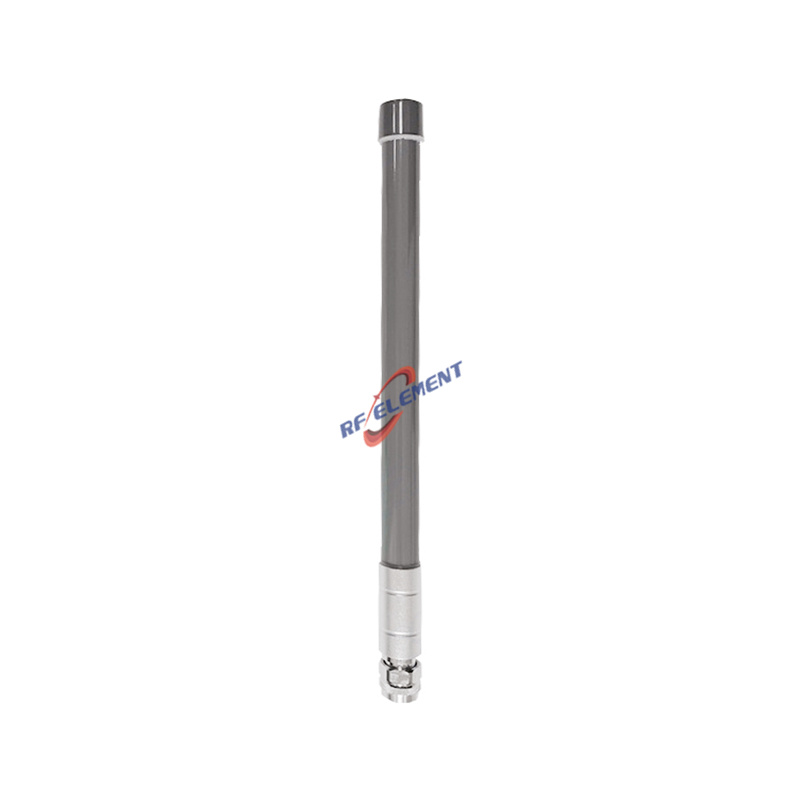
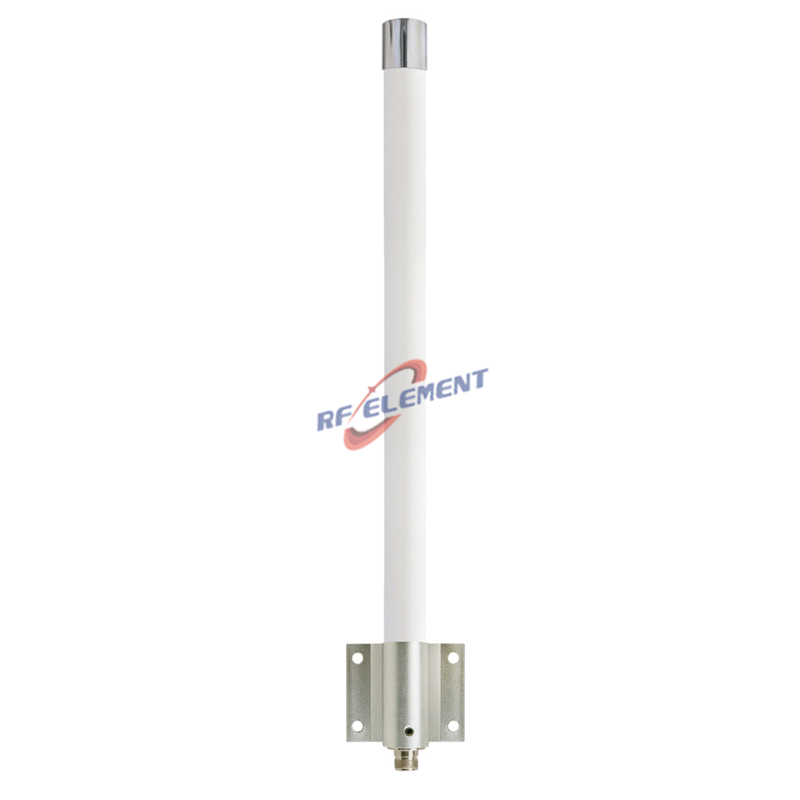
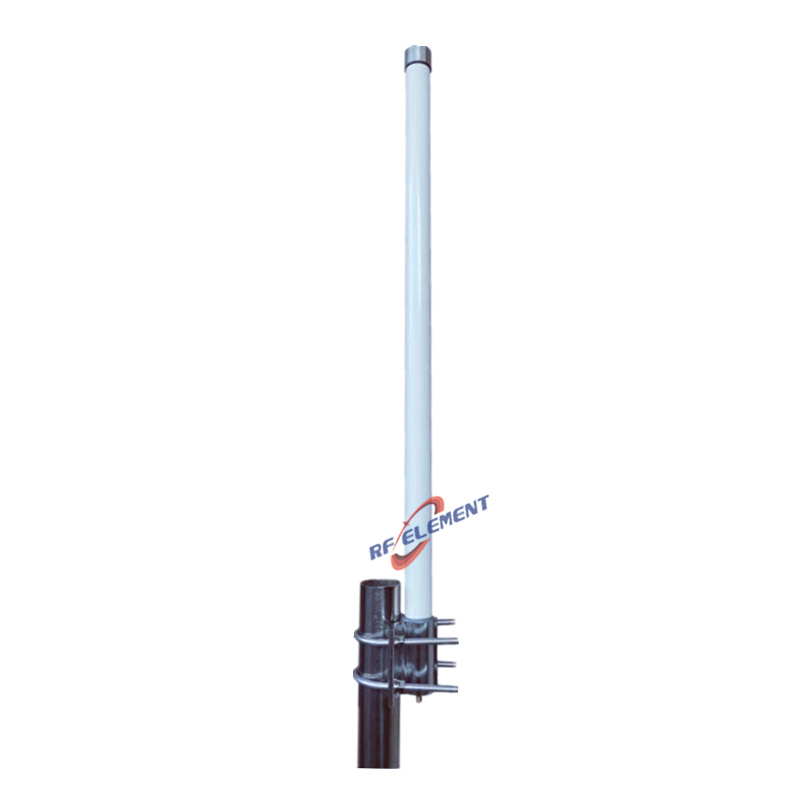
An 8 dBi omni for 900-930 MHz LPWAN and IoT gateways, on a 1540 mm fibreglass radome 42 mm in diameter, weighing 1.5 kg. The horizontal pattern is a full 360 degrees and the vertical beam is 16 degrees, VSWR is at or below 1.5 across the band, and the single port is available as N-Type male or N-Type female.
Sixteen degrees is a gateway pattern
At 8 dBi the vertical beam is narrow, and that shape suits a gateway mounted high above the sensors it serves. The beam leaves the antenna almost horizontally, reaches the ground at a distance set by the mounting height and then extends to the limit of the link budget. Directly under the antenna there is a cone with no coverage.
At 15 m height the beam reaches the ground at about 107 m and extends to roughly 2 km with a typical LoRa gateway and a 2 dBi sensor antenna. That is the geometry of a rooftop gateway serving a district: the sensors near the building are not covered by this antenna, and a second lower gain unit or a lower mounting point is needed for them.
Why 1540 mm for 8 dBi at 900 MHz
At 915 MHz the wavelength is about 328 mm, so a 1540 mm radome is roughly 4.7 wavelengths long. That length is what produces 16 degrees of vertical beam and 8 dBi of gain. A shorter antenna at the same frequency would have a wider beam and lower gain, which is the 5 dBi unit in the LoRa range.
The 42 mm diameter is wider than the 22 mm LoRa radome because the additional elements need more internal structure. It is still a slim profile for a 1.5 m antenna, and the wind load is modest on a 40 mm mast.
| Frequency Range | 900-930MHz | |
| Polarization | Vertical | |
| Gain(dBi) | 8 | |
| Horizontal Beamwidth | 360° | |
| Vertical Beamwidth | 16° | |
| Impedance | 50Ω | |
| VSWR | ≤ 1.5 | |
| Maximum Power | 50W | |
| Connector Type | 1 Port, N-Type Male or N-Type Female | |
| Antenna Dimension(mm) | Φ 42*1540 | |
| Net Weight | 1.5 kg | |
| Operating Temperature | -55° to +60° C (-67° to +140° F) | |
| Radome Material | Fiberglass | |
| Radome Color | White | |
| Mounting Options | Pole mounting | |
Coverage planning for a gateway
In a LoRa network the gateway is usually the highest point in the area and the sensors are at ground level, on walls or on meters. The 16 degree beam gives the gateway range but leaves the near field uncovered, so the plan should either place the gateway at the edge of the district rather than its centre, or accept that the nearest 100 m needs a second antenna.
Where the gateway must serve a compact area, mount it lower. At 8 m the inner edge moves in to about 57 m, which is a better fit for a single building or a campus.
Fibreglass and installation
The radome is white fibreglass, UV stable and stiff enough that a 1.5 m section does not need a guy wire. Clamp at the base and at a point about 700 mm up the radome; a single clamp at the base allows the top to oscillate in gusty wind and the movement shows up as packet loss rather than as a clean signal drop.
Keep the radome 200 mm clear of the mast. At 900 MHz a metal mast close to the antenna creates a null on one side, and in a LoRa network that null appears as a group of sensors that never join.
Ordering
Connector gender, radome colour and packing quantity are confirmed at order. Samples in 3-5 days, production in 15-25 days.
Where the sensors are concentrated in one direction rather than spread around the gateway, the 11 dBi IoT panel antenna uses a 55 degree beam on a 370 mm plate. For the dual-region LoRa version covering 868 and 915 MHz, the 8 dBi LoRa omni antenna covers both bands in a detachable two-part radome.
Send the gateway height, the sensor distribution and the required range. The height and the distribution together decide whether an omni or a panel is the right gateway antenna.
FAQ — IoT Omni Antenna
What is the IoT Omni Antenna used for?
What frequency band does the IoT Omni Antenna cover?
What are the key specifications of the IoT Omni Antenna?
Can RF element customize the IoT Omni Antenna for my application?
What is the MOQ and lead time for the IoT Omni Antenna?
How do I get a quotation for the IoT Omni Antenna?