4-Port 4G LTE Omni Antenna
- Supported Frequencies: 698-960MHz & 1710-2700MHz
- Gain: >4-6dBi
- VSWR: <1.8
- Polarization: Vertical
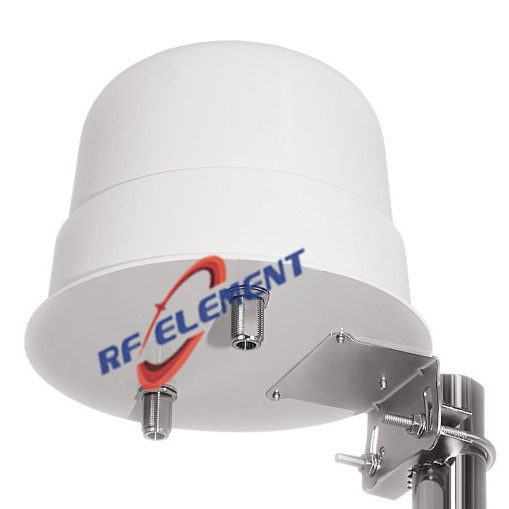
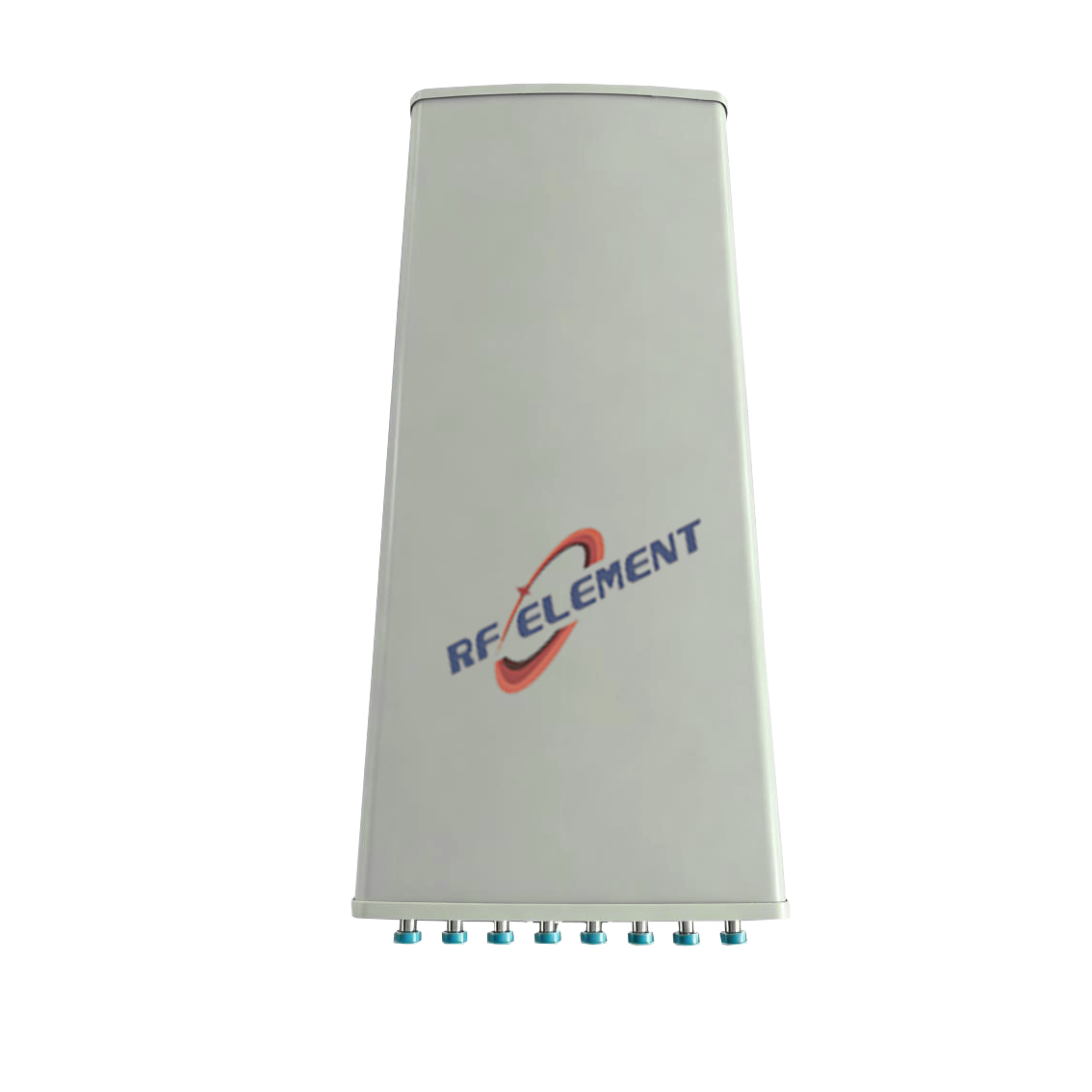
- Connector: 4*N-Type Female
Specifications
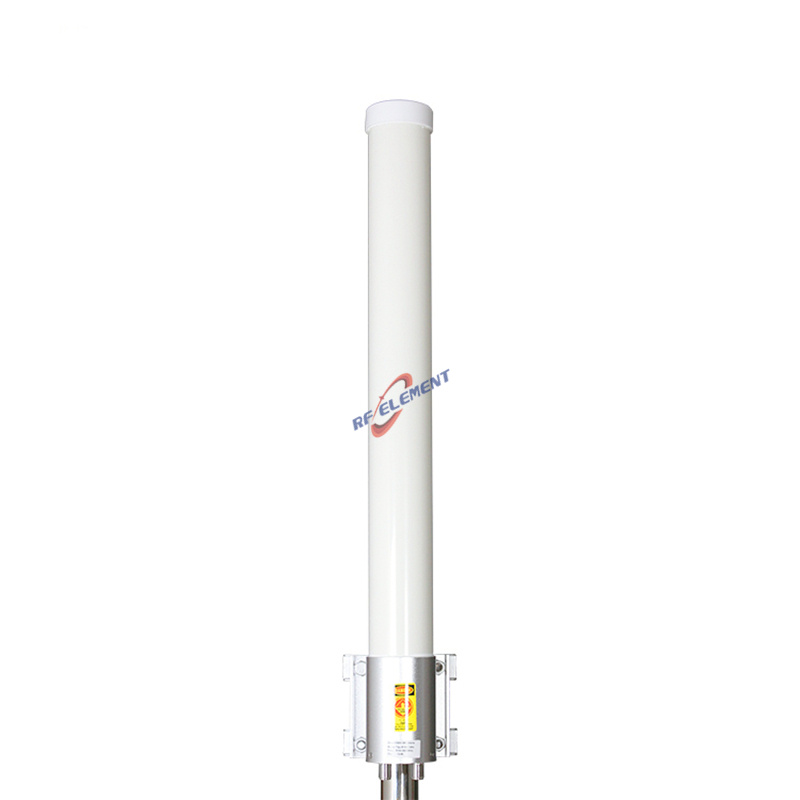
This 4-port 4G LTE omni antenna covers 698-960MHz and 1710-2700MHz with 4-6dBi vertical gain and four N-Type Female ports, giving an outdoor site four independent LTE feeds from a single housing. It was developed for coverage projects where the antenna has to be compact enough to mount on an existing pole and cheap enough to ship without freight becoming a line item in the budget.
Why four ports
Four ports let one antenna serve more than one radio chain. That might be two operators sharing a site, two separate LTE bands, or a 4x4 MIMO configuration that needs four decorrelated feeds. Building that from four separate omni antennas means four mounts, four cable runs and four lightning arresters, plus a tower that looks like a fence. Integrating the four into one radome keeps the installation to a single mechanical interface.
The electrical challenge is that the four port groups sit close together. Port-to-port isolation depends on the physical spacing and on how the radiating elements are arranged, and that arrangement is exactly what determines the antenna diameter. This is the trade-off that shaped the design.
Stacked or side by side
Typical sites include fleet and depot locations where several radios share one mast, and railway corridors where coverage follows the track rather than a population centre.
Two configurations were developed and compared. Placing two sets of omni antennas side by side in the horizontal plane produces the higher gain, because the aperture is wider, but it also produces a larger diameter, which means a heavier antenna, a bigger mount and a higher shipping cost.
Stacking the two sets vertically produces lower gain but keeps the diameter small, which makes the antenna easier to clamp to an outdoor pole and cheaper to ship in volume. After reviewing the deployment scenarios with the integrator, we selected the vertical stack: the gain still clears the 5dBi requirement, and the practical savings in transport and installation outweighed the extra decibels.
Each port group was then tuned to cover the full 698-2700MHz range rather than being split into a low-band and a high-band set, so any port can be connected to any radio without matching a port to a band. The mounting system was designed for outdoor poles and for the wind and ice loads that come with them.
Specifications
| Parameter | Value |
|---|---|
| Frequency range | 698-960MHz and 1710-2700MHz |
| Gain | 4-6dBi |
| VSWR | <1.8 |
| Polarization | Vertical |
| Ports | 4 x N-Type Female |
| Configuration | Vertical stack, outdoor pole mount |
Deployment notes
Four ports mean four feeders, so plan the cable route before the antenna goes up. Keep the runs equal in length if the radios combine or compare the branches, and label both ends of each cable, because a crossed port on a 4x4 radio produces a pattern that looks like an antenna fault and takes far longer to diagnose. Fit a surge arrester on each feeder and bond the mast to the site ground.
Omni coverage is the right choice when subscribers surround the site, but it is the wrong choice for a site at the edge of a service area, where a sector would put the same power into a useful direction. Check the site geometry before ordering: a four-port omni and a three-sector setup can look similar on a quote and behave very differently in the field.
Customization and ordering
Port count, band coverage, connector type and mounting hardware can be adapted, and a horizontal-configuration version is available where maximum gain matters more than diameter and shipping cost. The housing can be supplied in different colours, and OEM labelling and packaging can be applied.
Send the band plan, port count, gain requirement, mounting environment and quantity to sales@rfelement.com. Samples are typically ready in 3-5 working days and mass production in 15-25 working days.
FAQ — 4-Port 4G LTE Omni Antenna
What is the 4-Port 4G LTE Omni Antenna used for?
What frequency band does the 4-Port 4G LTE Omni Antenna cover?
What are the key specifications of the 4-Port 4G LTE Omni Antenna?
Can RF element customize the 4-Port 4G LTE Omni Antenna for my application?
What is the MOQ and lead time for the 4-Port 4G LTE Omni Antenna?
How do I get a quotation for the 4-Port 4G LTE Omni Antenna?