7GHz Microwave MIMO Parabolic Dish Antenna | 6400-7200MHz
- Supported Frequencies: 6400MHz-7200MHz
- Gain: >32dBi (with φ90cm parabolic dish)
- VSWR: <1.8
- Polarization: Horizontal + Vertical
Specifications
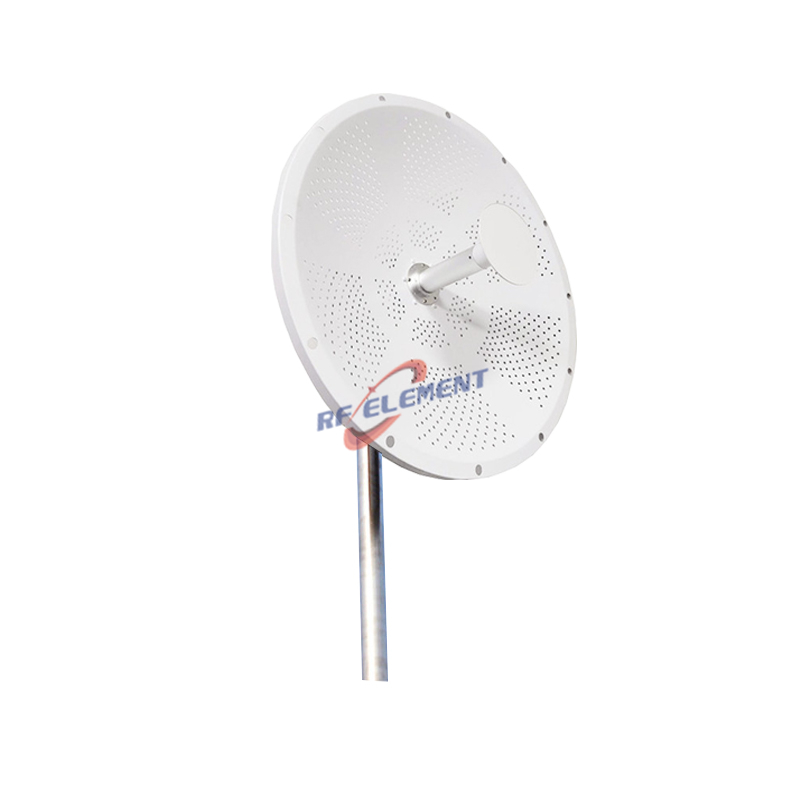
This 7GHz microwave MIMO parabolic dish antenna pairs a 90cm reflector with a custom dual-polarized feed to deliver more than 32dBi across 6400-7200MHz in a beamwidth under 3 degrees. It is made for point-to-point backhaul where the link has to stay available in rain and the tower can support a real dish, and it gives an operator two orthogonal channels in the same aperture instead of two separate antennas.
Why 7GHz for a long link
Antenna gain at a fixed reflector size rises with frequency, but rain attenuation rises faster. The 7GHz band sits in a useful middle ground: it offers far more gain per square centimetre of dish than 5GHz, while suffering less rain fade than 15, 18 or 23GHz links over the same path. For a link in the 10-30km range with a moderate rain region, that combination often produces a better availability figure than either a larger 5GHz grid or a smaller higher-band dish.
The wider channel allocations available in this band also mean the link can carry more capacity once the RF path is closed, which is why the antenna is specified as a MIMO unit rather than a single-polarized one.
Narrow beam, dual polarization
A 3 degree beam is a deliberate trade. It concentrates power on the far end, rejects interference from adjacent paths, and allows tighter frequency reuse in a dense backhaul network. The cost is alignment tolerance: at 7GHz a 3 degree beam means the far-end antenna has to be positioned within a fraction of a degree, and the mounting structure has to stay stiff in wind. A dish of this size on a flexible mast will drift off peak load, so the mount matters as much as the antenna.
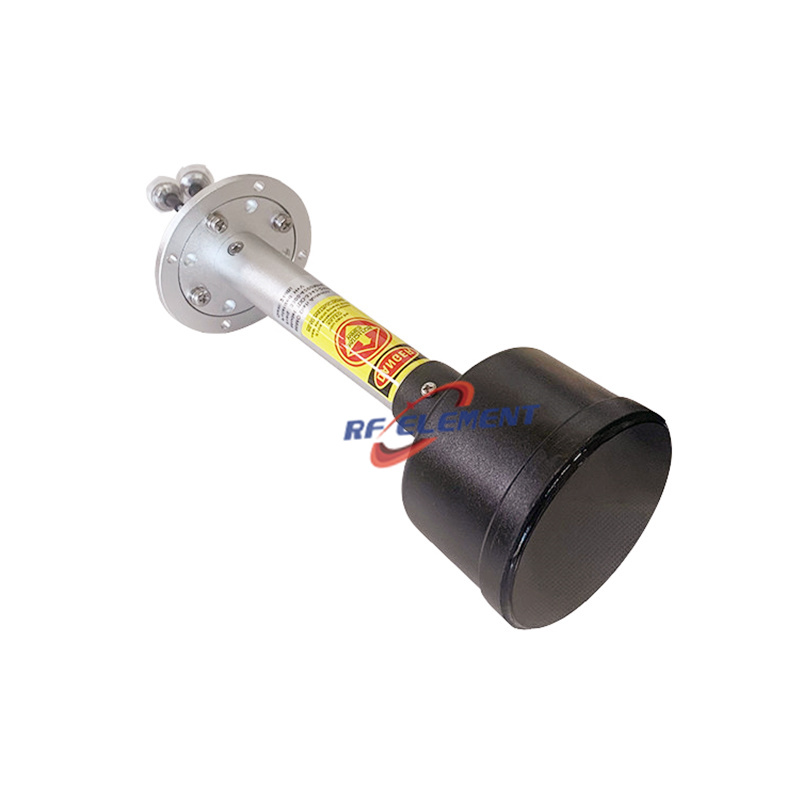
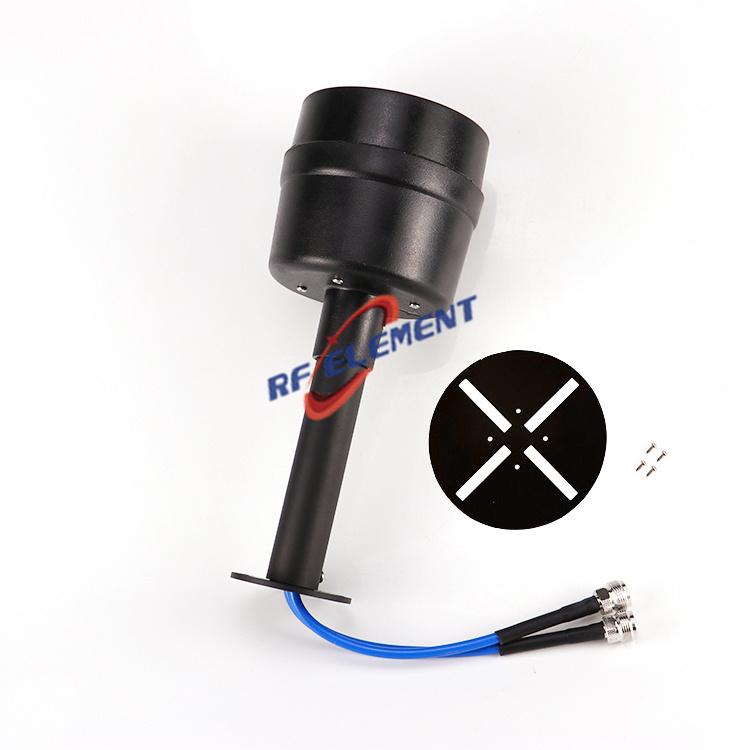
The dual-polarized feed was designed to work across the full 6400-7200MHz range with both polarizations active at once. Using horizontal and vertical ports on one reflector doubles the usable capacity per dish and keeps the tower loading to a single antenna and a single mount. The feed was optimized by simulation and then measured in a microwave anechoic chamber for gain and beamwidth in both planes before the design was released.
Specifications
| Parameter | Value |
|---|---|
| Frequency range | 6400-7200MHz |
| Gain | >32dBi with 90cm parabolic dish |
| VSWR | <1.8 |
| Polarization | Horizontal + vertical |
| Beamwidth | <3° in both planes |
| Reflector diameter | 90cm |
The released version measured above 33dBi with beamwidths of 3 degrees or less in both planes, which is slightly better than the specified figure and leaves margin for installation tolerance.
Alignment and installation
Use the optical sight on the mount for coarse alignment, then peak on received signal level for fine adjustment, alternating between the two polarization ports. Tighten the azimuth and elevation hardware in stages, because a 90cm dish can move a few tenths of a degree when the final bolts are torqued. Confirm the link budget after the mount has settled for a day; thermal movement on a steel mast often reveals itself in the first 24 hours.
Keep the radio close to the antenna to avoid losing the gain you just installed in the feeder, and fit a weatherproof boot on both connectors. The dish face should be clear of snow accumulation and of the tower's own structure in the main beam direction.
Customization and ordering
Reflector size, feed band, polarization arrangement, connector type and mount interface can be adapted to an existing link plan. Sub-band versions covering only the licensed portion of 6400-7200MHz are available where a regulator assigns a narrower slot.
Send the link distance, required availability, capacity and connector type to sales@rfelement.com. Samples are typically ready in 3-5 working days and mass production in 15-25 working days.
FAQ — 7GHz Microwave MIMO Parabolic Dish Antenna
What is the 7GHz Microwave MIMO Parabolic Dish Antenna used for?
What frequency band does the 7GHz Microwave MIMO Parabolic Dish Antenna cover?
What are the key specifications of the 7GHz Microwave MIMO Parabolic Dish Antenna?
Can RF element customize the 7GHz Microwave MIMO Parabolic Dish Antenna for my application?
What is the MOQ and lead time for the 7GHz Microwave MIMO Parabolic Dish Antenna?
How do I get a quotation for the 7GHz Microwave MIMO Parabolic Dish Antenna?