Why 698-960MHz Matters for 5G Directional Antennas | RF element
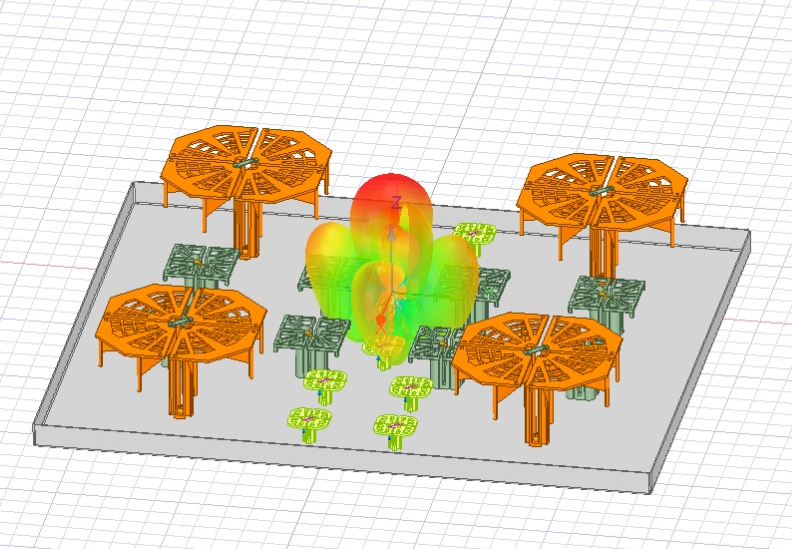
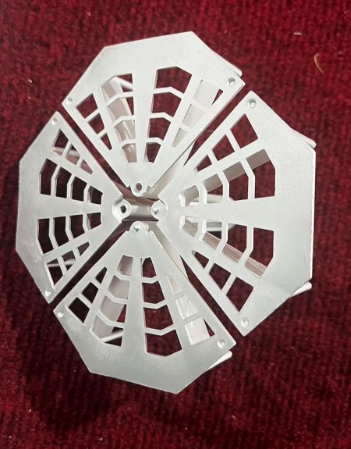
Take a look at the simulation image above. What you're seeing isn't just a pretty 3D render. It's the result of hours of electromagnetic modeling, material selection, and careful tweaking of element spacing. At the center of that array are die-cast aluminum radiators, and they're doing some heavy lifting in the 698-960MHz range.
If you've been in the telecom industry for a while, you already know this: everyone talks about mmWave and mid-band 5G, but the low-band spectrum—698 to 960MHz—is where the real coverage happens. It punches through walls. It travels for miles. And for operators building networks in rural areas or dense urban environments with lots of concrete, this band isn't optional. It's essential.
The Unsung Hero: Die-Cast Aluminum Radiators
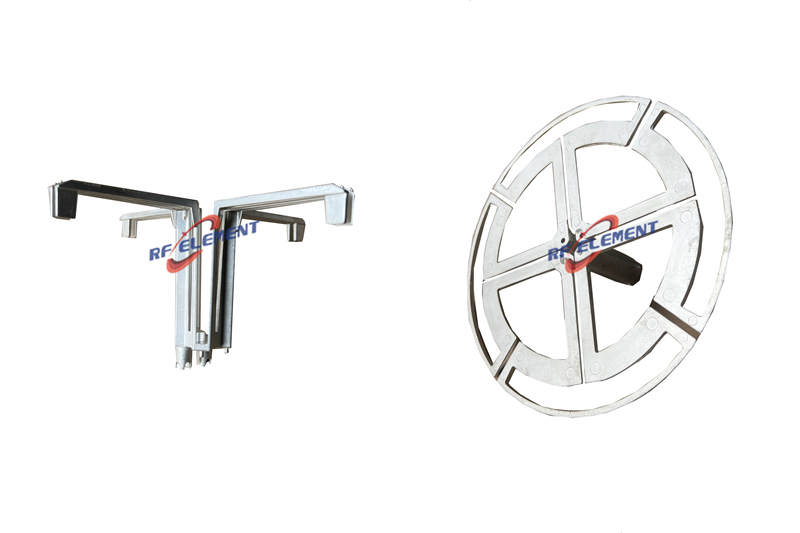
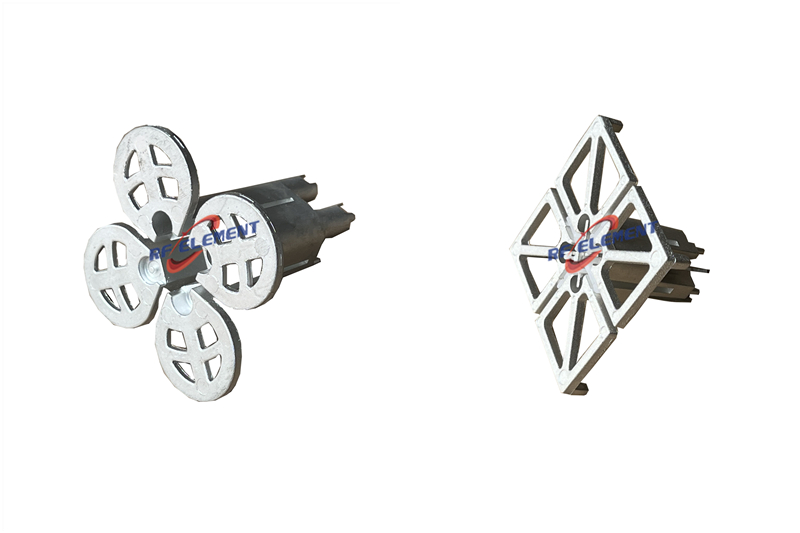
Here's something most people outside the RF world don't realize. The performance of a base station antenna doesn't just depend on the PCB or the feed network. It starts with the radiator—the physical piece of metal that actually radiates the signal.
We've been manufacturing die-cast aluminum radiators for years at our facility, and there's a reason we stick with this material and process. Aluminum gives you the conductivity you need without adding unnecessary weight. When you're mounting antennas on towers that already have to withstand wind, ice, and whatever else nature throws at them, every gram counts.
But the real magic is in the die-casting itself. When you're building an antenna array for 698-960MHz, consistency is everything. If one radiator is off by half a millimeter, the whole array's radiation pattern shifts. Die-casting gives us that repeatability. We can produce thousands of units, and each one performs the same way. That's not something you can always say about stamped or machined alternatives.
Simulation Before Prototype
Back to that image. Before we ever cut a mold or cast a single piece, we run full 3D electromagnetic simulations. And I mean full simulations—not just checking S-parameters in isolation, but modeling the entire array behavior. Mutual coupling between elements. Beamwidth across the full 700MHz span. Front-to-back ratio. Cross-polar performance.
Why does this matter? Because building a physical prototype for every design iteration is expensive and slow. With EM simulation, we can test twenty variations in a week instead of twenty weeks. We can see exactly where the sidelobes are going to spike, or where the gain drops off at the band edges. By the time we move to production, we already know the antenna is going to work.
From Our Factory to Your Tower
As a 5G antenna manufacturer, we've learned that specs on paper are one thing. What really counts is how the antenna performs after it's been sitting on a tower for five years, through monsoons and heatwaves and freezing winters.
That's why we don't just design antennas—we manufacture them too. Our 5G antenna factory handles everything from die-casting the radiators to final assembly and testing. We run PIM tests on every batch. We check gain patterns in our anechoic chamber. And because we control the whole process, when a customer needs something custom—a specific beamwidth, a unique mounting bracket, a multi-band configuration with 698-960MHz and 1710-2690MHz in one housing—we can actually deliver it without going through three different vendors.
Who Needs 698-960MHz Directional Antennas?
Pretty much anyone building serious 5G infrastructure. Rural operators use these for wide-area coverage with fewer cell towers. Urban operators use them for indoor penetration where higher frequencies just bounce off walls. And almost every modern multi-band base station antenna includes a 698-960MHz section because, frankly, the network wouldn't work without it.
We've shipped these antennas to operators in over 30 countries now. Some are standard panel designs. Others are RET antennas with remote electrical tilt for beam optimization. And some are completely custom builds that started with a customer saying, "We have a tower with these exact constraints—can you make something that fits?"
The answer is usually yes.
Let's Talk About Your Next Project
If you're sourcing 5G antennas and you've been burned by suppliers who overpromise and underdeliver, I get it. The RF component market is full of companies that can sell you a catalog part but can't help when you need something specific.
At RF element, we do both. Standard products when you need them fast. Custom engineering when you need something that actually solves your problem. Our die-cast aluminum radiators and simulation-driven design process are the foundation, but the real value is in the team behind it—engineers who understand that an antenna isn't just a component. It's the difference between a network that works and one that doesn't.
If you've got a project in the works, or you're just trying to figure out whether a 698-960MHz directional antenna makes sense for your deployment, reach out. We'd rather have a real conversation than send you a generic spec sheet.
TAG:Why 698-960MHz Matters for 5G Directional Antennas | RF element https://www.rfelement.com
698-960 MHz Directional Antennas - Frequently Asked Questions
How these antennas are designed, simulated and tested, from the radiator upward.
Is 698-960 MHz still relevant now that mid-band and mmWave get all the attention?
It is where coverage actually happens. Low band punches through walls and travels for miles, so for rural networks and for dense urban areas full of concrete it is not optional. Almost every modern multi-band base station antenna includes a 698-960 MHz section for that reason, and we have shipped these antennas to operators in more than 30 countries.
How much does the radiator matter compared with the PCB and the feed network?
It sets the ceiling. If one radiator in an array is out by half a millimetre the radiation pattern of the whole array shifts, and at 698-960 MHz the elements are large enough that this shows up in production, not only in simulation. Die-casting gives us the repeatability to build thousands of units that perform the same way, which is not something stamped or machined alternatives can always promise.
Do you build a physical prototype before simulating?
The other way round. Before a mold is cut we run full 3D electromagnetic simulation of the entire array - mutual coupling between elements, beamwidth across the whole 700 MHz span, front-to-back ratio and cross-polar performance - not just isolated S-parameters. That lets us test twenty design variations in a week instead of twenty weeks, and we know where sidelobes will spike or gain will drop at the band edges before committing to tooling.
How is each antenna tested before it leaves the factory?
PIM is tested on every batch, and gain patterns are measured in our anechoic chamber. Because we both design and manufacture - from die-casting the radiators through final assembly - we control the process that produces those numbers instead of assembling from third-party parts.
Can you combine 698-960 MHz with other bands in one housing?
Yes. Multi-band configurations such as 698-960 MHz and 1710-2690 MHz in a single housing are routine for us, and we also build RET antennas with remote electrical tilt for beam optimisation. When a customer arrives with a tower that has specific constraints, the usual answer is that we can make something that fits.
Trying to work out whether a 698-960 MHz directional antenna suits your deployment? Talk to our engineering team rather than reading another spec sheet.