Dual Band WiFi Omni Antenna | 2.4GHz/5GHz 12dBi
Specifications
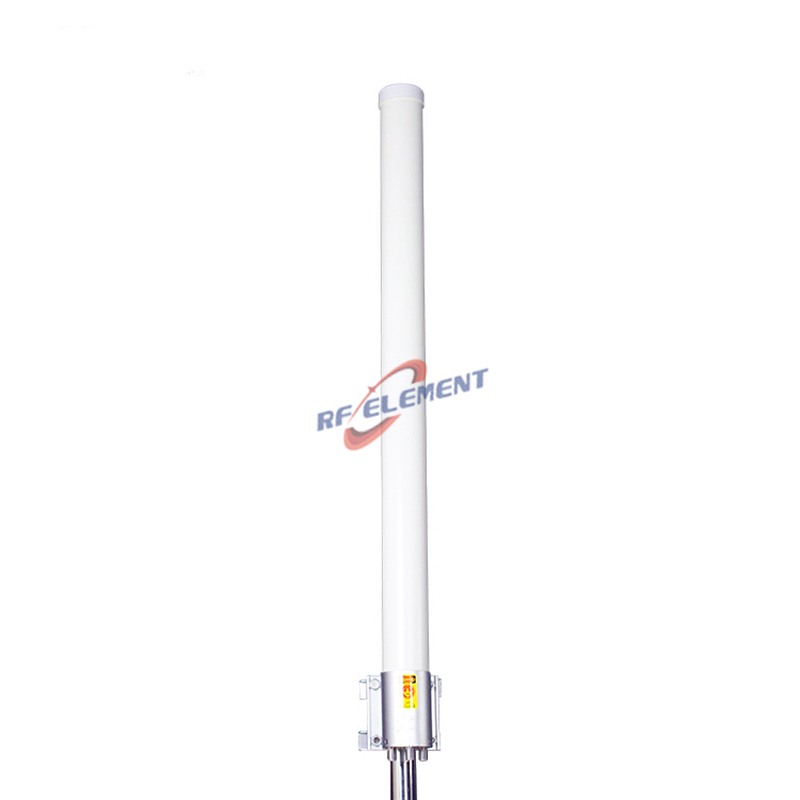
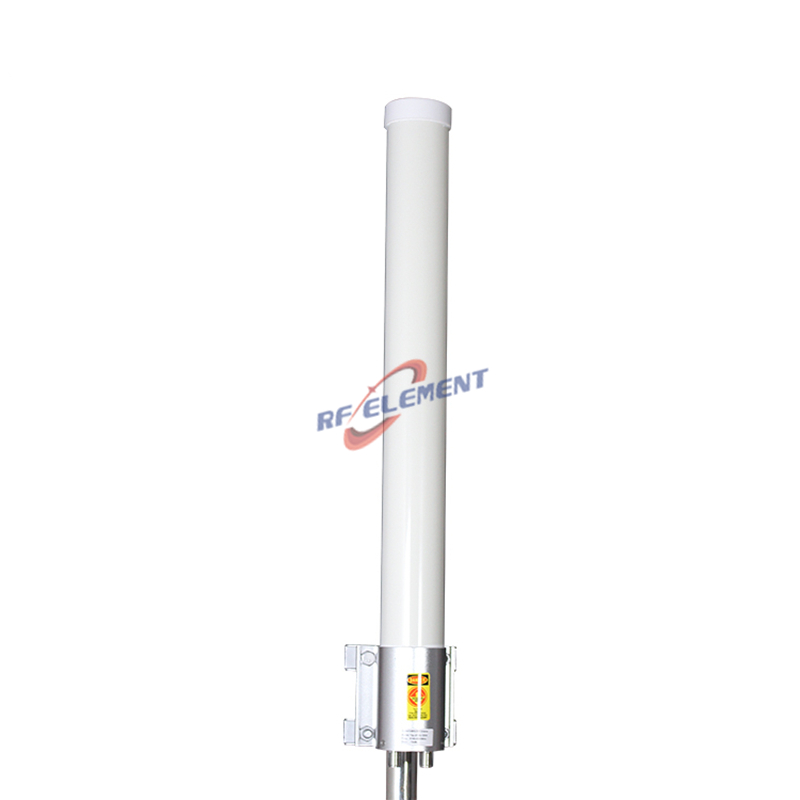
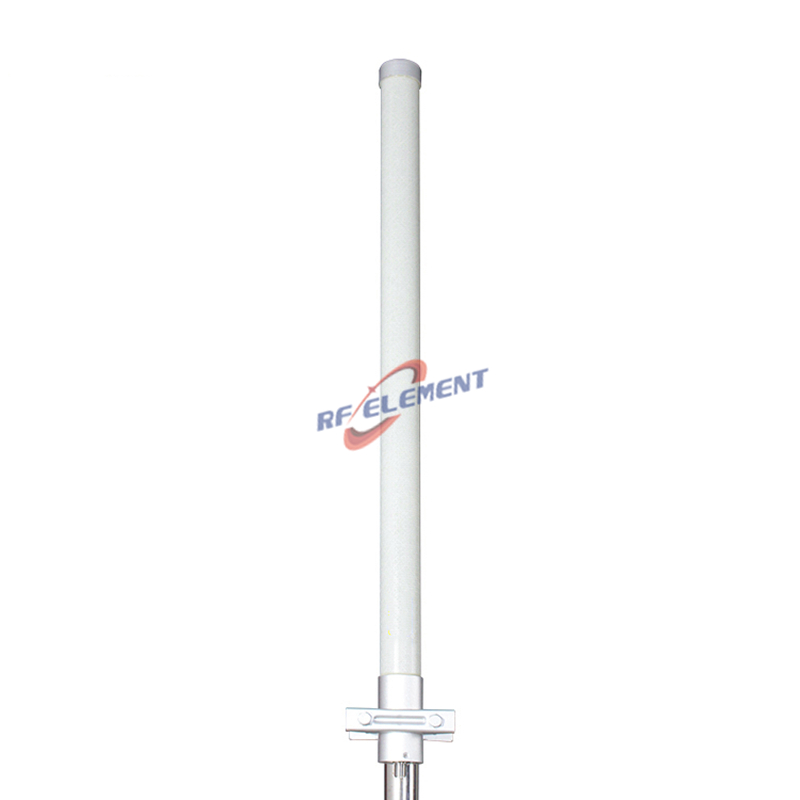
A dual-band omni that serves 2.4 and 5 GHz through a single N-Type female port, in a 1250 mm fibreglass radome 52 mm in diameter. Gain is 9 dBi at 2400-2500 MHz and 12 dBi at 5150-5850 MHz, with a 360 degree horizontal pattern, vertical beamwidths of 15 and 7 degrees, and VSWR at or below 1.8. The complete unit weighs 2.0 kg and hangs on a pole.
One feeder, two bands
The case for a single-port dual-band omni is cable economics and weatherproofing. A two-radio installation with separate 2.4 and 5 GHz antennas needs two feeders, two mast entries and two connector seals. This antenna needs one of each, and the internal diplexer splits the bands at the radiating element rather than in an external box that has to be mounted and sealed separately.
The trade is that the diplexer adds a small insertion loss in both bands and the antenna cannot be optimised independently for each. That is why the 2.4 GHz gain is 9 dBi here rather than the 13 dBi available from the dedicated single-band unit.
Why the two bands have different gain
Gain in an omni is set by the length of the radiating stack measured in wavelengths. The same 1250 mm aperture is about 10 wavelengths at 2.4 GHz and about 24 wavelengths at 5.8 GHz, so the vertical pattern compresses further at the higher band. The 15 degree beam at 2.4 GHz and 7 degree beam at 5.8 GHz are the direct result, and the 3 dB gain difference follows from the same geometry.
In use this means the two bands cover different footprints from the same mounting point. At 15 m height the 2.4 GHz beam reaches the ground at about 57 m, while the 5 GHz beam does not reach the ground until about 122 m. If both bands have to serve the same area, the antenna should be mounted lower than a 5 GHz only design would require.
| Frequency Range | 2400 – 2500 MHz | 5150 – 5850 MHz |
| Polarization | Vertical | |
| Gain(dBi) | 9dBi | 12dBi |
| Horizontal Beamwidth | 360° | |
| Vertical Beamwidth | 15° 7° | |
| Impedance | 50Ω | |
| VSWR | ≤ 1.8 | |
| Maximum Power | 50W | |
| Connector Type | 1 Port, N-Type Female | |
| Antenna Dimension(mm) | Φ52*1250 | |
| Net Weight | 2.0kg | |
| Operating Temperature | -55° to +60° C (-67° to +140° F) | |
| Radome Material | Fiberglass | |
| Mounting Options | Hanged on pole | |
Fibreglass at 1250 mm
A 1.25 m fibreglass radome at 52 mm diameter is the stiffest structure in this family relative to its length, which matters on an exposed mast. The 2.0 kg weight is concentrated in the base fitting, so the antenna should be clamped near the base and, on a tall pole, supported with a second clamp at mid-height to stop the radome oscillating in gusty conditions.
Fibreglass also keeps the pattern stable in ultraviolet exposure. Painted ABS at this length tends to chalk and can deform slightly in direct sun, which shifts the vertical beam by a degree or two over a season.
When a single feed is a limitation
A SISO dual-band antenna cannot serve a 2x2 or 4x4 access point on either band, because there is only one port. It is the right part for a dual-radio bridge, a long-range point-to-point link with a single chain per band, or a hotspot where the second stream would not be usable at range anyway.
It is also a poor fit where the 2.4 GHz coverage is the primary requirement and 5 GHz is secondary, because the 9 dBi figure is modest compared with the dedicated 13 dBi single-band unit. In that case two antennas and two feeders usually deliver better results despite the extra installation work.
Ordering
One N-Type female port, radome colour and packing quantity are confirmed at order. Samples in 3-5 days, production in 15-25 days.
Where the access point needs four chains on both bands, the dual band 4x4 MIMO omni antenna provides four N-Type ports in a 1250 mm radome. For a 3x3 radio with separate pigtails per band, the dual band 3x3 MIMO omni antenna uses six SMA connectors in a shorter housing.
Send the radio model, the number of chains and the required coverage radius in each band. The radius per band is the number that decides whether one dual-band antenna can serve both services from a single height.
FAQ — Dual Band WiFi Omni Antenna
What is the Dual Band WiFi Omni Antenna used for?
What frequency band does the Dual Band WiFi Omni Antenna cover?
What are the key specifications of the Dual Band WiFi Omni Antenna?
Can RF element customize the Dual Band WiFi Omni Antenna for my application?
What is the MOQ and lead time for the Dual Band WiFi Omni Antenna?
How do I get a quotation for the Dual Band WiFi Omni Antenna?