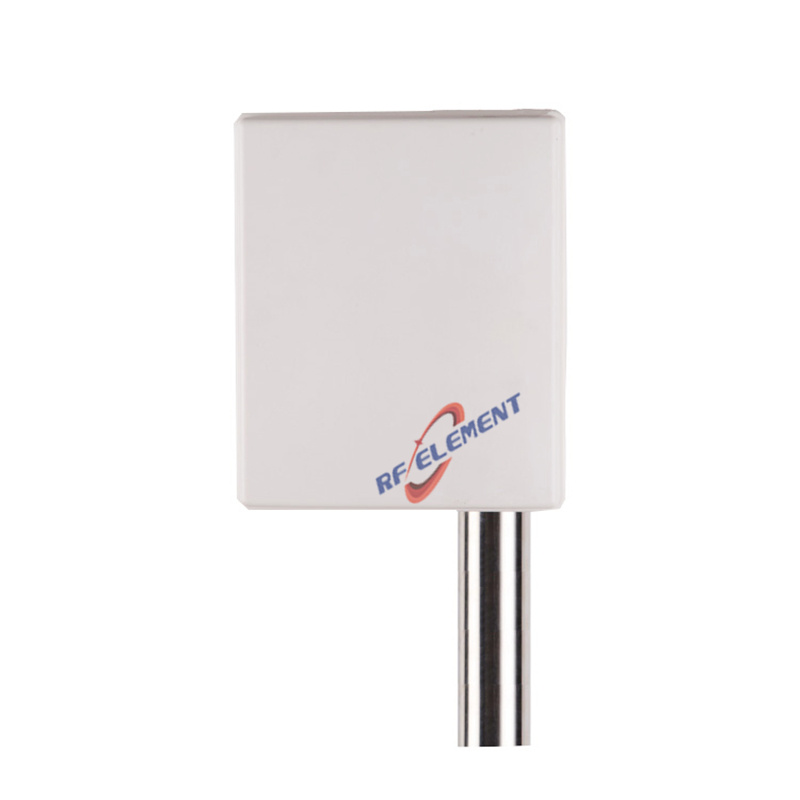
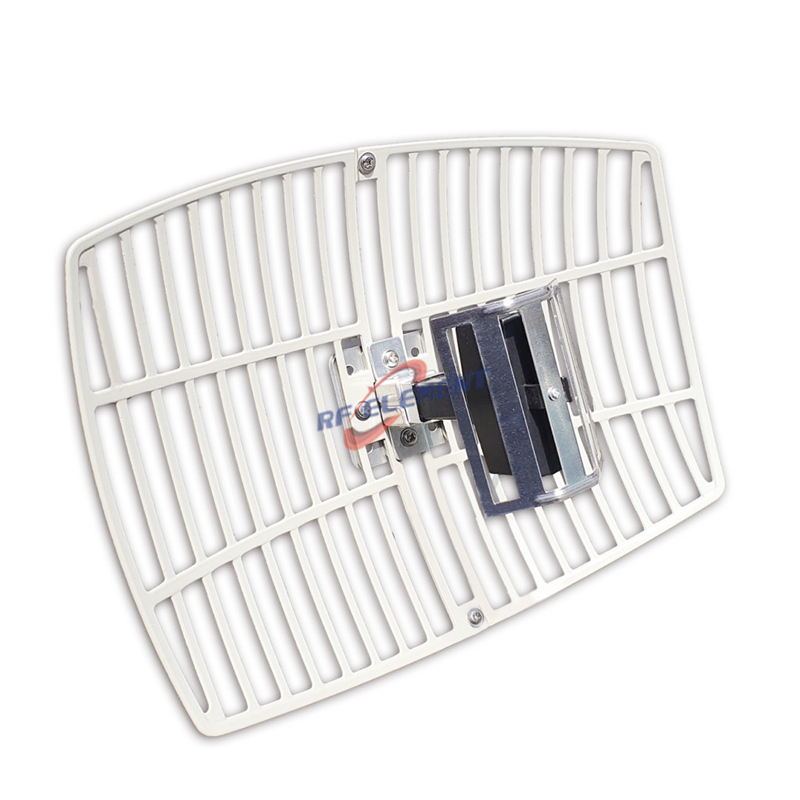
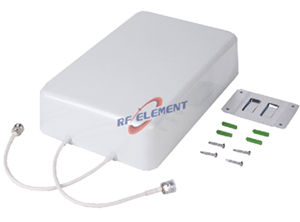
5GHz Flat Panel Antenna for Enhanced WiFi Bridging
- Supported Frequencies: 5150-5850MHz
- Gain: 18dBi
- VSWR: <1.8
- Polarization: Vertical
Specifications
This 5GHz flat panel antenna delivers 18dBi across 5150-5850MHz from a sealed aluminum housing, and it is designed to be built into an access point rather than bolted on beside one. It gives WiFi bridging and point-to-point links directional gain without the wind load and visual bulk of a grid or dish, and the flat profile keeps the installed depth close to the AP enclosure itself.
18dBi from a flat radome
Gain in a flat panel comes from aperture area and from how efficiently the radiating array uses it. A panel with this gain at 5.8GHz is large enough to be directional but still flat enough to mount on a wall or a short pole, which is the middle ground between an omni that cannot reach and a dish that is awkward to install. The 5150-5850MHz span covers the whole 5GHz WiFi band rather than a single channel group, so one antenna model serves every 5GHz deployment in a project.
VSWR is held below 1.8 across the band, which matters more than a low figure at the centre frequency: a bridge radio channel-hops or changes channel under DFS rules, and an antenna that is only matched at mid-band will show a different link quality after a channel change.
Designed around the access point
The antenna was developed with an access point manufacturer whose AP board had to sit directly behind the radiating surface. That constraint shapes both the electrical and the mechanical design: the array has to work with a ground plane and circuitry immediately behind it, and the housing has to provide the weather seal for the AP board as well as for the antenna.
We designed the circuit board for the 5150-5850MHz band to integrate with the client's AP circuitry, so the transition from the radio to the radiator is short and controlled. The enclosure is aluminum, chosen because it is light, dimensionally stable and weather-resistant, and because it can be sealed to protect both the antenna and the AP board from rain and dust without adding a separate outer box.
Specifications
| Parameter | Value |
|---|---|
| Frequency range | 5150-5850MHz |
| Gain | 18dBi |
| VSWR | <1.8 |
| Polarization | Vertical |
| Enclosure | Aluminum, weatherproof |
| Integration | Designed for AP board mounting |
Deployment notes
For a point-to-point bridge, align on the far end using the radio signal level rather than the visual sight, then lock the mount and confirm the level after a wind cycle. Keep the panel clear of metal signage and roof edges inside the beam; a flat panel has a wider beam than a dish, which makes alignment forgiving but also makes it more sensitive to nearby obstructions that clip one side of the pattern.
Mount the unit with the cable entry pointing down, use a drip loop, and seal the connector even though the housing is weatherproof. In hot climates, leave the specified clearance around the aluminum housing so that the AP board inside does not run above its temperature rating.
Customization and ordering
Panel dimensions, gain, band coverage, connector position and enclosure finish can be adapted to an existing AP platform, and the housing can be tooled to accept a specific board outline and mounting pattern. Cable assemblies and weatherproof connectors can be supplied with the unit.
Send the AP board dimensions, band plan, gain target and connector position to sales@rfelement.com. Samples are typically ready in 3-5 working days and mass production in 15-25 working days.
FAQ — 5GHz Flat Panel Antenna for Enhanced WiFi Bridging
What is the 5GHz Flat Panel Antenna for Enhanced WiFi Bridging used for?
What frequency band does the 5GHz Flat Panel Antenna for Enhanced WiFi Bridging cover?
What are the key specifications of the 5GHz Flat Panel Antenna for Enhanced WiFi Bridging?
Can RF element customize the 5GHz Flat Panel Antenna for Enhanced WiFi Bridging for my application?
What is the MOQ and lead time for the 5GHz Flat Panel Antenna for Enhanced WiFi Bridging?
How do I get a quotation for the 5GHz Flat Panel Antenna for Enhanced WiFi Bridging?