

5GHz WiFi Antenna
Welcome to the RF element 5GHz WiFi antenna product center. As a professional 5GHz WiFi antenna manufacturer, we offer a full range of high-performance 5GHz WiFi antennas including 5GHz omni antennas, 5GHz yagi antennas, 5GHz panel antennas, 5GHz sector antennas, 5GHz grid antennas, and 5GHz parabolic dish antennas. Our products support the 5GHz band (5150-5850MHz) with flexible MIMO configurations (2x2, 3x3, 4x4), ideal for outdoor wireless networks, point-to-point links, high-bandwidth backhaul, and surveillance systems.
Our 5GHz WiFi antenna product line includes:
- 5GHz Omni Antennas: 360° coverage for broad area networking.
- 5GHz Yagi Antennas: Directional high-gain for point-to-point links.
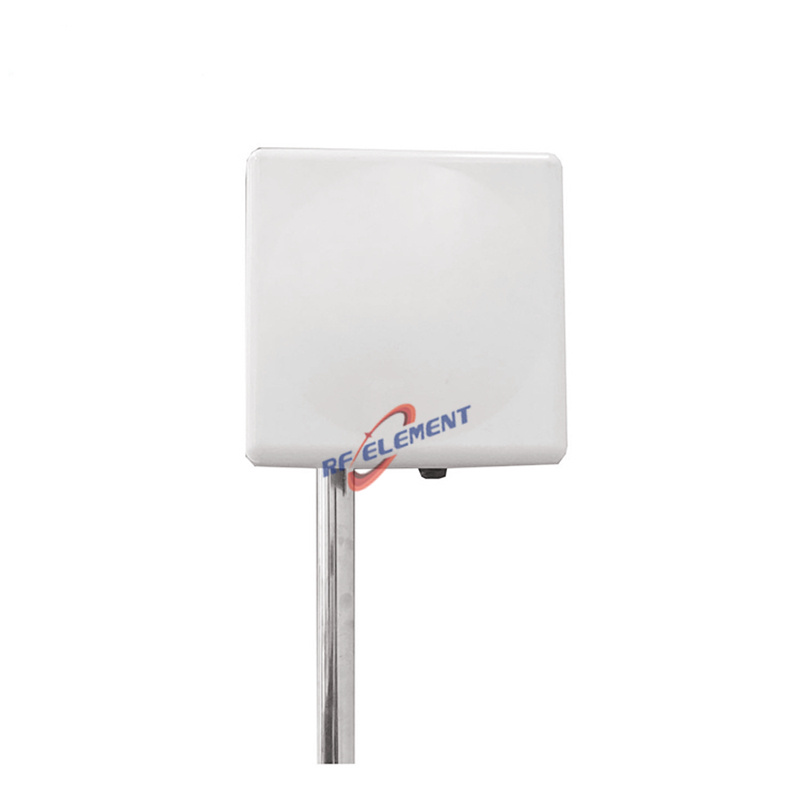
- 5GHz Panel Antennas: Compact directional solutions for focused coverage.
- 5GHz Sector Antennas: Wide-angle sector coverage for base stations.
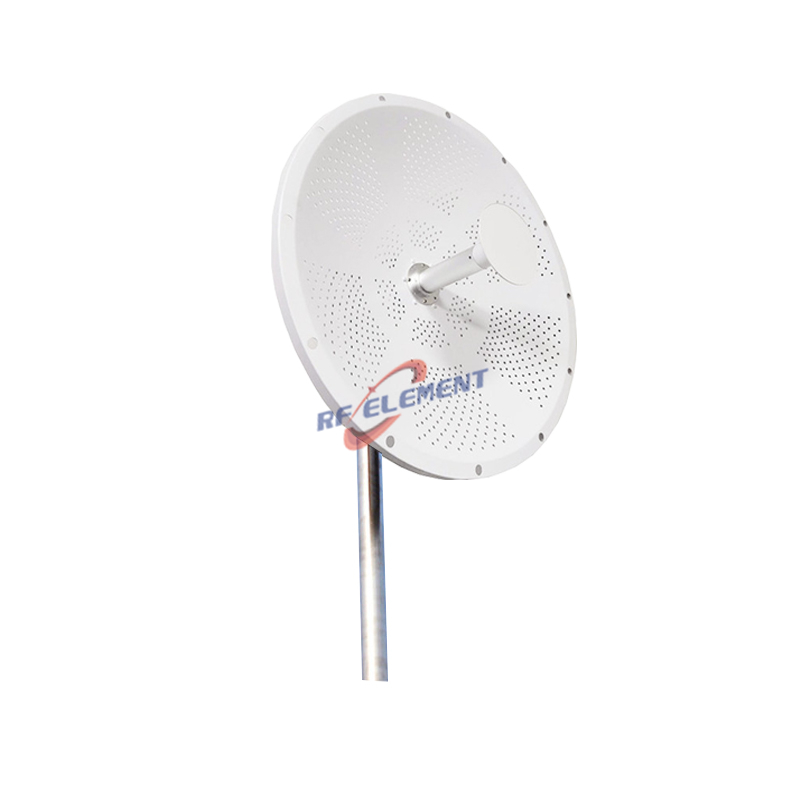
- 5GHz Grid & Dish Antennas: Ultra-long-distance backhaul solutions.
All 5GHz WiFi antennas undergo rigorous testing to ensure exceptional performance and durability in outdoor environments. Whether you need standard products or customized 5GHz WiFi antenna solutions, our engineering team is ready to provide expert support. Contact us for a quote.






5GHz WiFi Antenna Selection Guide
All 5GHz models on this page — fiberglass omni, MIMO sector, flat panel, parabolic dish and bridge types — with gain, beamwidth and dimensions taken from each product specification sheet.
| Model | Type | Frequency | Gain (dBi) | Beamwidth (H × V) | Size (mm) | Best for |
|---|---|---|---|---|---|---|
| 5GHz WiFi 9dBi Fiberglass Omni Antenna | Omni, omni | 5150-5850 MHz | 9 | 360° × 12° | Φ22 × 560 / Φ20 × 560 | Wide-area 360° hotspot coverage |
| 5GHz WiFi 12dBi MIMO Omni Antenna | Omni, omni, MIMO | 5150-5850 MHz | 12 | 360° × 7° | Φ75 × 650 | Wide-area 360° hotspot coverage |
| 5GHz WiFi 15dBi MIMO Directional Sector Antenna | Sector, directional, MIMO | 5150-5850 MHz | 15 | 90° × 8° | 510 × 128 × 58 | Base-station style sector coverage |
| 5GHz 18dBi Wireless Bridge Panel Antenna With Aluminum Enclosure | Wireless bridge panel, directional | 5150-5850 MHz | 18 | 30° × 20° | 305 × 305 × 25 (antenna) 220 × 220 × 60 (enclosure) |
Point-to-point WiFi bridge link |
| 5GHz WiFi 19dBi MIMO Directional Sector Antenna | Sector, directional, MIMO | 5150-5850 MHz | 19 | 90° × 7±1° | 770 × 115 × 60 | Base-station style sector coverage |
| 5GHz WiFi 20dBi Directional Panel Antenna | Panel, directional | 5150-5850 MHz | 20 | 13° × 14° | 305 × 305 × 25 | Point-to-point or coverage panel link |
| 5GHz WiFi 29dBi Dual Polarized 60cm Parabolic Dish Antenna | Parabolic dish, directional, MIMO | 4900-6000 MHz | 28 - 30 (±0.5) | 5±0.5° × 5±0.5° | Φ600 | Long-distance point-to-point backhaul |
| 5GHz WiFi 34dBi Dual Polarized 90cm Parabolic Dish Antenna | Parabolic dish, directional, MIMO | 4900-6000 MHz | 31 - 34 (±0.5) | 4±0.5° × 3±0.5° | Φ900 | Long-distance point-to-point backhaul |
For long 5GHz links the dish and panel types give the extra link budget, while the omni and sector types cover access-point sites. Send the link distance and the band through contact us and our engineers will confirm the best fit.
5150–5850 MHz Is Not One Band
Every model on this page is quoted as 5150–5850 MHz, and electrically they all cover it. What changes inside that span is the regulatory treatment: part of it is indoor-only, part of it requires radar detection, and only the top 125 MHz is free of DFS. That is why one 5 GHz antenna can behave perfectly on 5.8 GHz and keep dropping channels on 5.3 GHz — the antenna is the same, the rules are not.
| Sub-band | Range | DFS | What it means on site |
|---|---|---|---|
| UNII-1 | 5150–5250 MHz | No | Indoor use at low EIRP in both the US and the EU. Good for high-density indoor APs, not for outdoor bridging |
| UNII-2A | 5250–5350 MHz | Yes | Radar detection and a channel availability check before transmit. An AP on this band may sit silent for the check window after every boot or channel change |
| UNII-2B | 5350–5470 MHz | Yes | Available in the US but lightly used; not part of the EU plan, so equipment sold into Europe usually skips it |
| UNII-2C | 5470–5725 MHz | Yes | The widest DFS block, and where most outdoor 5 GHz capacity sits in Europe. Weather radar here causes long vacates, which is the usual cause of a link that drops for minutes at a time |
| UNII-3 / ISM | 5725–5850 MHz | No | No radar rules, higher permitted EIRP, and the band most point-to-point bridges are planned on. Also the most congested in dense areas |
Antenna gain interacts with DFS in a way that surprises people: radar detection is specified at the receiver, so a high-gain directional antenna hears weather radar from much further away and the AP vacates the channel more often. If a 5.5 GHz link keeps dropping while the same hardware on 5.8 GHz is stable, the fix is usually the channel plan, not a different antenna.
Gain Is Not the Same Thing as Link Budget
EIRP is radio power plus antenna gain minus cable loss, and regulators cap EIRP rather than radio power. A 34 dBi dish fed by a 30 dBm radio would radiate about 64 dBm EIRP — roughly 2.5 kW — far above any 5 GHz limit, so the radio has to be turned down until the total is legal. Adding antenna gain only helps if the radio can stay inside the limit; past that point the extra dBi buys nothing but a narrower beam that is harder to aim.
The cheaper decibel is usually in the cable. At 5.8 GHz, RG58 loses close to 1 dB per metre, so a 3 m run can cost as much as the difference between a 29 dBi and a 34 dBi dish. Foam-dielectric low-loss cable loses about a quarter of that, which is why long outdoor runs are worth re-cabling before they are worth re-antennaing.
Path clearance matters more than either. The first Fresnel zone at mid-path on a 5 km link at 5.8 GHz has a radius of about 8 m, and the usual rule is to keep 60% of it clear — roughly 4.8 m — above ground, rooftops and foliage. A dish aimed perfectly at the far end still fades if a tree grows into that ellipse.
Where 6 GHz Fits, and Where These Models Stop
Wi-Fi 6E and Wi-Fi 7 add 5925–7125 MHz, with the EU opening 5945–6425 MHz. The 29 and 34 dBi dishes on this page are quoted to 6000 MHz because that is where their feed and polariser were designed; the bottom of the 6 GHz block is covered, the rest is not. A 5 GHz antenna cannot simply be re-labelled for 6E — the feed geometry and the gain-versus-frequency curve both shift, and the VSWR at 7 GHz is unknown until it is measured. If 6E is on the roadmap, specify it as a new design rather than an extension of an existing part.
The Wi-Fi antenna page covers the 2.4, 5 and 6 GHz split in more detail, and the 2.4 GHz and dual-band pages cover the bands below this one.
What to Send for a 5 GHz Antenna Quote
- Link type: point-to-point backhaul, point-to-multipoint sector, or indoor coverage, and the number of links per site.
- Distance and terrain profile, including the height available at each end and whether the first Fresnel zone is clear.
- The channels actually licensed or planned — 5.8 GHz only, or DFS bands as well.
- MIMO configuration and radio model, so the ports and polarisations can be matched.
- Mounting: mast diameter, wind load zone and cable run length, which decides the connector and the cable grade.
Send those five points and engineering replies within 1–2 working hours with a model, its pattern cut and its VSWR sweep; catalogue samples ship in 3–5 days. The antenna selector filters by band, gain and mounting, the WISP page covers subscriber and base-station combinations, and the catalogue lists every 5 GHz model with its beamwidth.
Related Reading
Technical notes from our engineering team on 5GHz and microwave antenna deployment.
- Dual Polarized 7GHz Microwave Dish Antenna
How our dual-polarized 7GHz parabolic dish doubles capacity on a single microwave hop.
- 5G Millimeter Wave Antenna Outlook
Where mmWave fits alongside Sub-6GHz, and what it demands from antenna design.
- 5GHz MIMO Dish Antennas in Service
Field notes on deploying 5GHz MIMO dishes where link margin matters more than cost.
- Dual Band Sector Antenna: 2.4/5.8 GHz Selection Guide
Pairing a 5 GHz radio with a dual band sector: what the 5.8 GHz pattern gives up, and what it keeps.
- 5GHz MIMO Sector Antenna for 360-Degree Coverage
A real US deployment: four 90° sectors combined into a single 5.8 GHz 360-degree pattern.
Industry Applications
5 GHz is where fixed wireless capacity lives. These deployments depend on clean patterns and tight beamwidths.
- WISP and fixed wireless antennas
Point-to-point backhaul and subscriber links both live in this band.
- Marine and offshore antennas
Coastal and ship-to-shore links are 5 GHz bridges behind a sealed housing.
5GHz WiFi Antenna - Frequently Asked Questions
Questions our engineers are asked most often about the 5GHz WiFi antenna line.
Which frequency range do your 5GHz antennas cover?
Standard models cover 5150-5850MHz, which includes the 5.1GHz, 5.2GHz, 5.3GHz, 5.4GHz and 5.8GHz sub-bands. The high-gain parabolic dish antennas are specified even wider, at 4900-6000MHz, so they also work for fixed wireless access and licensed links near the band edges.
What is the highest gain available in this series?
The strongest models are dual-polarized parabolic dish antennas: 29dBi on a 60cm reflector and 34dBi on a 90cm reflector, both covering 4900-6000MHz. They are intended for long-distance point-to-point wireless bridge links.
Which antenna should I use for point-to-point versus point-to-multipoint?
For point-to-point links, use the 29dBi / 34dBi parabolic dishes or the directional panel and yagi models. For point-to-multipoint from a site, the 15dBi and 19dBi MIMO sector antennas give controlled sector beamwidths, and the 9-12dBi fiberglass omni antennas cover a full circle.
Are MIMO and dual-polarized versions available?
Yes. The omni, sector and dish models are offered in 2x2 MIMO / dual-polarized configurations with measured port isolation, and the 18dBi wireless bridge panel antenna comes with an aluminum enclosure for harsh environments.
What are your MOQ and lead times for 5GHz antennas?
Sample lead time is 3-5 working days and mass production lead time is 15-25 working days. MOQ depends on the model and configuration: send us the frequency band, gain, polarization and connector you need and we will confirm it together with the quotation.
Still have a question? Send us your specification - we reply within 1-2 working hours.