

450MHz Antenna
Welcome to the RF element 450MHz antenna product center. As a professional 450MHz antenna manufacturer, we offer a full range of high-performance 450MHz antennas for UHF professional mobile radio (PMR) and critical communications applications. Unlike the 433MHz ISM band used primarily for low-power IoT and license-free devices, the 450MHz frequency range (450-470MHz) is widely allocated for licensed professional services including public safety, utilities (smart grid), oil & gas, transportation, and industrial two-way radio systems. These applications demand higher reliability, rugged construction, and often higher transmit power capabilities.
Our 450MHz antenna product line includes:
- 450MHz Omni Antennas: 360° coverage for wide-area PMR networks and base station communications.
- 450MHz Yagi Antennas: Directional high-gain for point-to-point links and remote site connectivity.
- 450MHz Panel Antennas: Compact directional solutions for sector coverage and in-building distribution.
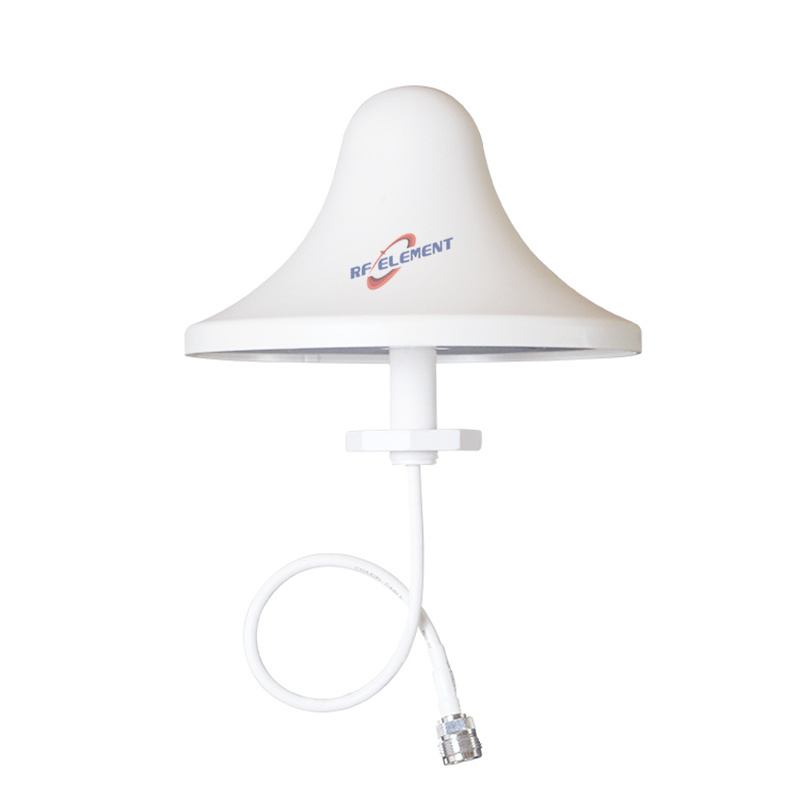
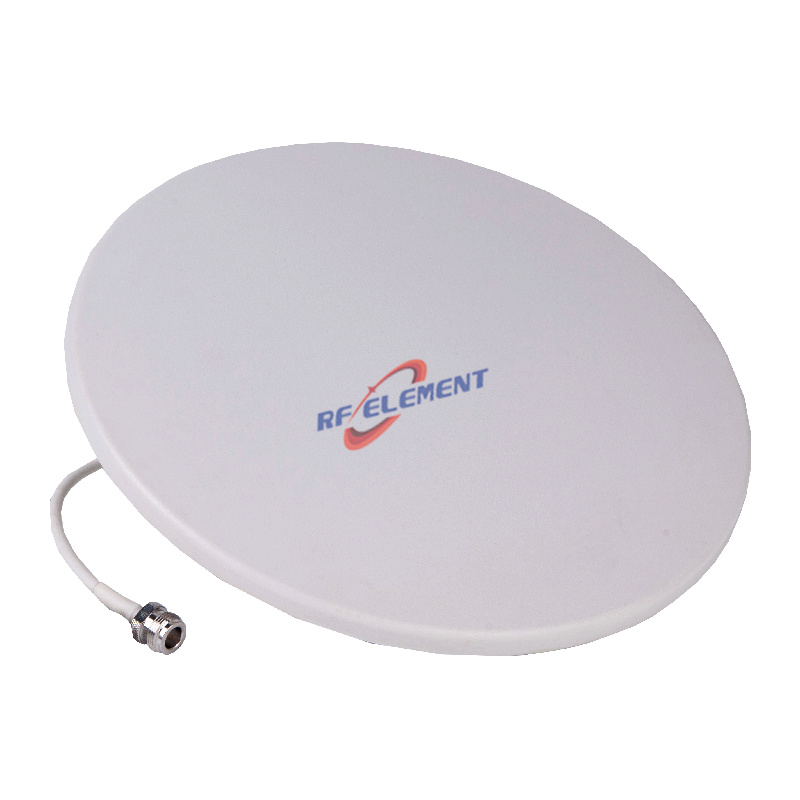
- 450MHz Ceiling Antennas: Discreet indoor antennas for facility-wide coverage in industrial plants or offices.
All 450MHz antennas are engineered to meet the stringent requirements of professional PMR systems, offering excellent VSWR, high gain, and durable construction. Whether you need standard products or customized 450MHz antenna solutions for your critical communication network, our engineering team is ready to provide expert support. Contact us for a quote.


450MHz Antenna Selection Guide
All 450MHz models on this page in one table — the detachable fiberglass omni, the MIMO panel, the yagi and the indoor ceiling types — with gain, beamwidth and size read from every product specification sheet.
| Model | Type | Frequency | Gain (dBi) | Beamwidth (H × V) | Size (mm) | Best for |
|---|---|---|---|---|---|---|
| VHF/UHF Antenna Indoor Omnidirectional Ceiling Antenna | Ceiling, omni | 380-520 MHz | 2 - 3.5 (±0.5) | 360° | 280 × 280 × 18 | In-building DAS and indoor coverage |
| UHF Antenna Indoor Omnidirectional Ceiling Antenna | Ceiling, omni | 450-470 MHz | 3 | 360° × 80° | Φ166 × 98 | In-building DAS and indoor coverage |
| UHF Antenna Outdoor Detachable Fiberglass Omni Antenna | Omni, omni | 450-470 MHz | 6 | 360° × 35±2° | Φ38 × 1200 | Wide-area 360° outdoor coverage |
| UHF Antenna Outdoor MIMO Directional Panel Antenna | Panel, directional, MIMO | 450-470 MHz | 9 | 70° × 65° | 450 × 450 × 40 | Focused sector or point-to-point coverage |
| UHF Antenna Outdoor Directional Yagi Antenna | Yagi, directional | 450-470 MHz | 10 | 65° × 60° | 815 × 370 × 80 | Long-range point-to-point link |
Around 450MHz the choice usually comes down to an omni for wide area coverage and a yagi or panel for a longer directional link. Send the link distance, the site type and the mounting height through contact us and our engineers will confirm the model.
450-470MHz Antenna Selection for PMR, Utilities and Public Safety
The 450-470MHz range is the traditional home of professional mobile radio: PMR and PAMR networks, utility telemetry and licensed public-safety links. It is a narrow allocation with tall obstacles in the way, so the antenna choice is decided by terrain more than by gain.
Pattern first, gain second
At 450MHz the wavelength is around 66cm, which means a 10dBi Yagi is already a metre of boom and needs a heading that will not move. In rolling ground or a built-up site, a 6dBi omni at the top of the mast usually outperforms a higher-gain directional aimed by map — the extra gain buys distance the terrain removes anyway. Choose directional only when both ends are fixed, surveyed and within line of sight.
Indoor and in-vehicle cases
Inside a tunnel, a plant room or a vehicle, the constraint flips to size and mounting. A 3dBi ceiling omni with a low profile covers a gallery far better than a panel bolted to a wall at head height, and it survives cleaning and accidental contact. Where the same radio has to serve both 450-470MHz and a VHF link, a single 380-520MHz wideband ceiling antenna removes one part from the bill of materials.
| Design | Frequency | Gain (dBi) | Pattern | Where it fits | Model |
|---|---|---|---|---|---|
| Fiberglass omni, detachable | 430-470MHz | 6 | 360 degrees | Mast-top coverage across mixed terrain | 450MHz omni antenna |
| MIMO panel, dual polarity | 450-470MHz | 9 | Sector | Site coverage where two branches are driven | 450MHz MIMO panel antenna |
| Yagi, directional | 450-470MHz | 10 | Directional | Fixed point-to-point where both ends are surveyed | 450MHz Yagi antenna |
| Ceiling omni | 450-470MHz | 3 | 360 degrees | Tunnels, plant rooms and in-building radio coverage | 450MHz ceiling antenna |
| Wideband ceiling omni | 380-520MHz | 3 | 360 degrees | One part covering both VHF and 450-470MHz links | VHF/UHF ceiling antenna |
All five are built on the same die-cast and fiberglass processes as the rest of our UHF range, and every model is available with a custom connector or cable length — see custom antenna manufacturing for what an OEM build changes.
LTE 450 and PMR: Which Sub-Band Are You Actually On?
“450MHz” is a label, not one allocation. The band holds licensed PMR trunking, LTE Band 31 and LTE Band 72, and they do not share the same edges. An antenna cut for the wrong one either clips the downlink at 467 MHz or rolls off at the low end — check the plan before comparing gain figures.
| Allocation | Uplink | Downlink | Typical user | What the antenna has to do |
|---|---|---|---|---|
| PMR / PAMR / DMR trunking | 450–470 MHz, channelised at 12.5 or 25 kHz | Same band, duplex spacing set by the licence | Utilities, transport, security and plant operations | Hold VSWR across the whole 20 MHz, because the channel plan moves within it |
| LTE Band 31 | 452.5–457.5 MHz | 462.5–467.5 MHz | Private LTE, smart grid and regional carriers | Reach 467.5 MHz on the downlink; a 450–460 MHz part will not |
| LTE Band 72 | 451–456 MHz | 461–466 MHz | LPWA and private LTE rollouts | Same 450–470 MHz hardware; ask for the band-edge VSWR curve |
| Wideband 430–470 MHz | 430–470 MHz | — | Sites mixing 433 MHz telemetry with 450 MHz radio | One antenna for both, accepting a gain compromise at the band edges |
Every 450–470 MHz model on this page covers Band 31 and Band 72 in both directions, with the 20 MHz allocation inside the specified range rather than at its edge. Where a radio is sensitive near 467 MHz, we supply the measured band-edge VSWR and gain curve rather than a single mid-band figure — the same data that goes into the anechoic chamber report.
450 MHz, 433 MHz and 470–510 MHz Are Three Different Jobs
These three are often quoted interchangeably and should not be. 433 MHz is a licence-free ISM band for short-range telemetry; 450–470 MHz is licensed professional radio with a channel plan; 470–510 MHz is the metering and smart-grid allocation used in China. Licensing, channel width and the pattern that suits the site all differ, so the antenna follows the plan rather than the nearest round number.
| Band | Licensing | Typical link | What to order | Band page |
|---|---|---|---|---|
| 433.05–434.79 MHz | Licence-free ISM | Sensor telemetry, agriculture, sub-GHz IoT | 5 dBi outdoor omni, 8 dBi panel, 3 dBi ceiling omni | 433 MHz antennas |
| 450–470 MHz | Licensed PMR; LTE Band 31 / 72 | Voice and data trunking, utility links | 6 dBi omni, 9 dBi MIMO panel, 10 dBi yagi — the models on this page | This page |
| 470–510 MHz | Regional metering allocation | Smart grid, load control, metering concentrators | 470–860 MHz log periodic for fixed links; a band-specific omni is built to order | LoRa and ISM antennas |
| 698–2700 MHz | Licensed cellular | 4G and 5G backhaul and coverage | Panel, MIMO and omni models by band | 4G LTE antennas |
What We Need to Quote a 450 MHz Antenna
- The allocation and duplex spacing the radio is licensed for — PMR plan, Band 31, Band 72, or a mixed site.
- Site type and mounting: mast top, wall, tunnel or in-vehicle, plus the height above local clutter.
- Feeder type and run length, so the loss at 450 MHz can be subtracted before the gain is chosen.
- Connector at the radio end, and whether the same part has to work on a second band.
- Sample and volume quantities; samples ship in 3–5 days and production in 15–25 working days.
Send the licence band and the site layout and we will confirm one model per role rather than a list — engineering replies within 1–2 working hours. For the full UHF range in one place, see RF products; for sites that also carry LoRa or 900 MHz links, the LoRa antenna page maps those plans.
Related Reading
Technical notes from our engineering team on 450MHz UHF antenna selection.
- A Guide to Choosing the Right UHF Antenna
Type, gain and coverage questions to settle before picking a UHF antenna for public safety work.
- VHF Antenna & UHF Antenna: Dual-Band Solutions for Public Safety and Industrial IoT
Dual-band VHF/UHF coverage for first responders and industrial IoT, including the 400-512 MHz UHF band.
Industry Applications
The 450-470 MHz band is the workhorse of public safety, mining and rail. These pages cover the deployments that depend on it.
- Public safety antennas
Narrowband UHF reaches further per watt than any cellular band, which is why it stays in service.
- Mining communication antennas
Underground voice and telemetry still rely on low-band penetration through rock.
- Railway and metro antennas
Track-side and tunnel links use the same low-band advantages in a confined geometry.
450MHz Antenna - Frequently Asked Questions
Questions our engineers are asked most often about the 450MHz professional radio antenna line.
How is 450MHz different from the 433MHz ISM band?
The 433MHz band is license-free ISM, meant for low-power devices. The 450MHz range covered here is 450-470MHz, which is allocated to licensed professional mobile radio (PMR) and critical communications networks, so the antennas are engineered for professional infrastructure rather than consumer devices.
Which antenna types are available for 450-470MHz?
The line includes a 6dBi detachable fiberglass omni antenna (430-470MHz), a 9dBi MIMO directional panel antenna (450-470MHz), a 10dBi directional yagi antenna (450-470MHz), a 3dBi indoor ceiling antenna, and a wide 380-520MHz ceiling model that also covers the band.
Can these antennas be used for LTE 450 or private network base stations?
Yes. The 450-470MHz panel, yagi and omni models are specified for the whole band and are commonly used for LTE450, CDMA450 and PMR infrastructure. The MIMO panel provides dual-polarized ports for 2x2 receive diversity.
What performance data comes with a 450MHz antenna?
Each model is swept for VSWR across the full operating band, and gain and radiation patterns are measured in our own microwave anechoic chamber. Measured data can be supplied with evaluation samples so your RF planning is based on figures, not estimates.
What are your MOQ and lead times for 450MHz antennas?
Sample lead time is 3-5 working days and mass production lead time is 15-25 working days. MOQ depends on the model and configuration: send us the frequency band, gain, polarization and connector you need and we will confirm it together with the quotation.
Still have a question? Send us your specification - we reply within 1-2 working hours.