

Dual Band WiFi Antenna
Welcome to the RF element dual band WiFi antenna product center. As a professional dual band WiFi antenna manufacturer, we offer a full range of high-performance dual band WiFi antennas including dual band omni antennas, dual band panel antennas, dual band sector antennas, and dual band grid antennas. Our products support both 2.4GHz (2400-2500MHz) and 5GHz (5150-5850MHz) frequency bands with flexible MIMO configurations (2x2, 3x3, 4x4), ideal for reducing interference and congestion in outdoor wireless networks, point-to-point links, video streaming, online gaming, and other high-bandwidth applications.
Our dual band WiFi antenna product line includes:
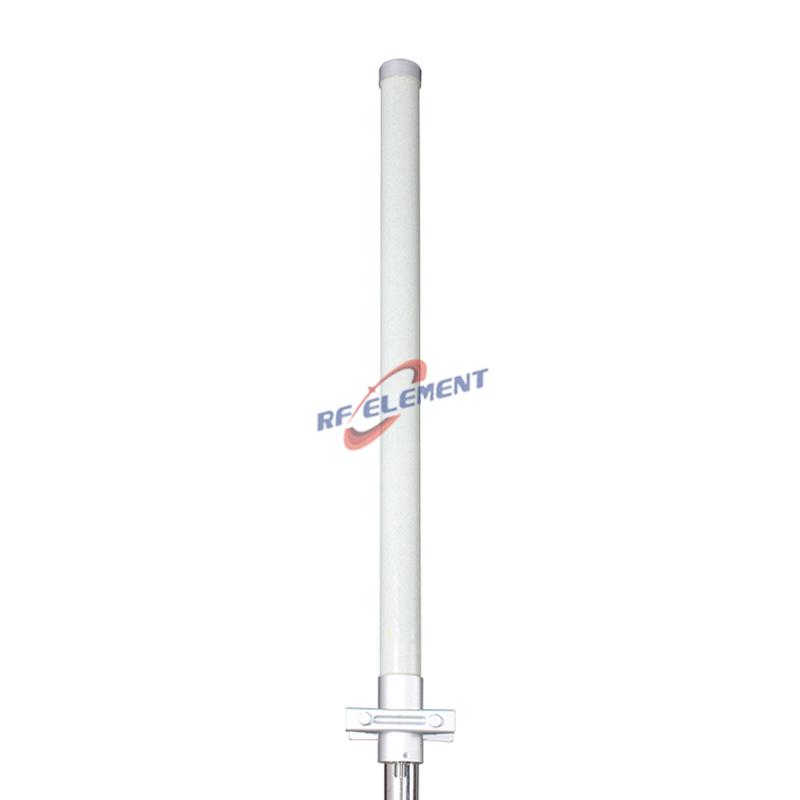
- Dual Band Omni Antennas: 360° coverage for broad area networking with both 2.4/5GHz support.
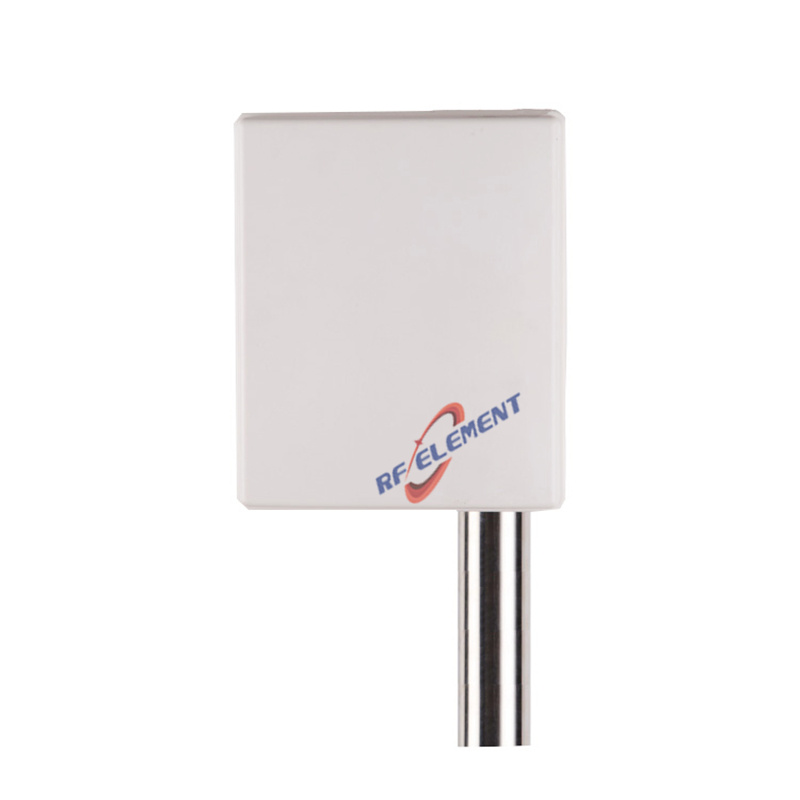
- Dual Band Panel Antennas: Compact directional solutions for focused dual band coverage.
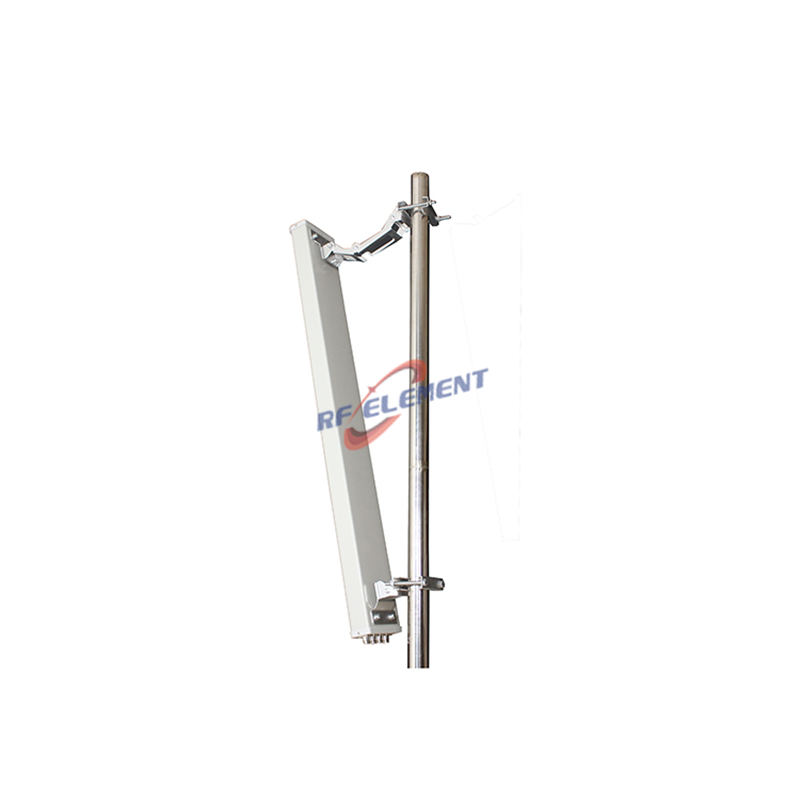
- Dual Band Sector Antennas: Wide-angle sector coverage for base stations and access points.
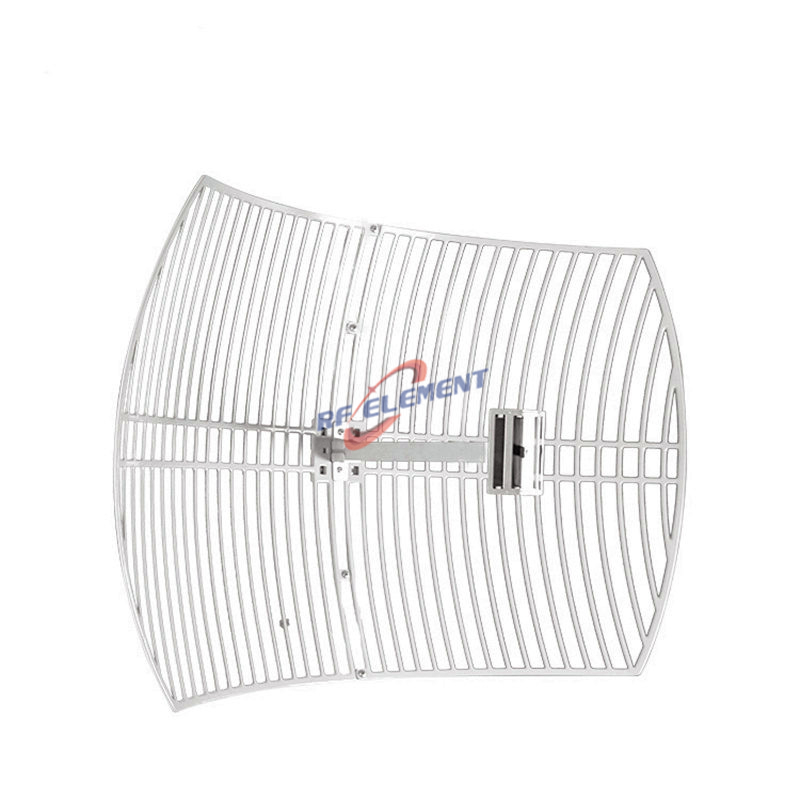
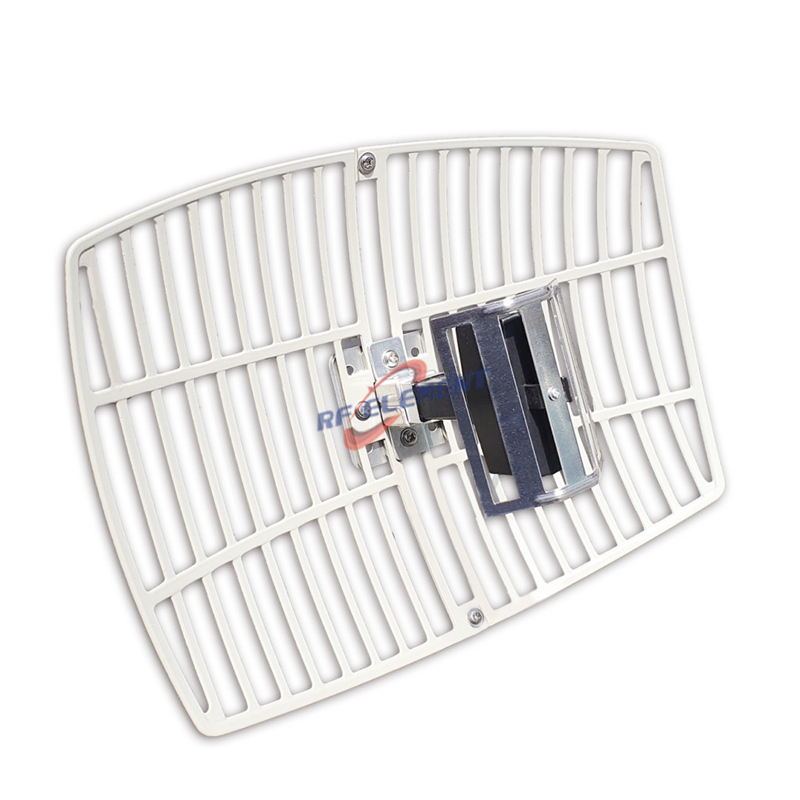
- Dual Band Grid Antennas: High-gain directional antennas for long-distance point-to-point links.
All dual band WiFi antennas undergo rigorous testing to ensure exceptional performance and durability in outdoor environments. Whether you need standard products or customized dual band WiFi antenna solutions, our engineering team is ready to provide expert support. Contact us for a quote.



Dual Band WiFi Antenna Selection Guide
The complete dual band line on this page, covering 2400-2500MHz and 5150-5850MHz in one radome. Where two values are shown in a column they are listed in 2.4GHz / 5GHz order.
| Model | Type | Frequency | Gain (dBi) | Beamwidth (H × V) | Size (mm) | Best for |
|---|---|---|---|---|---|---|
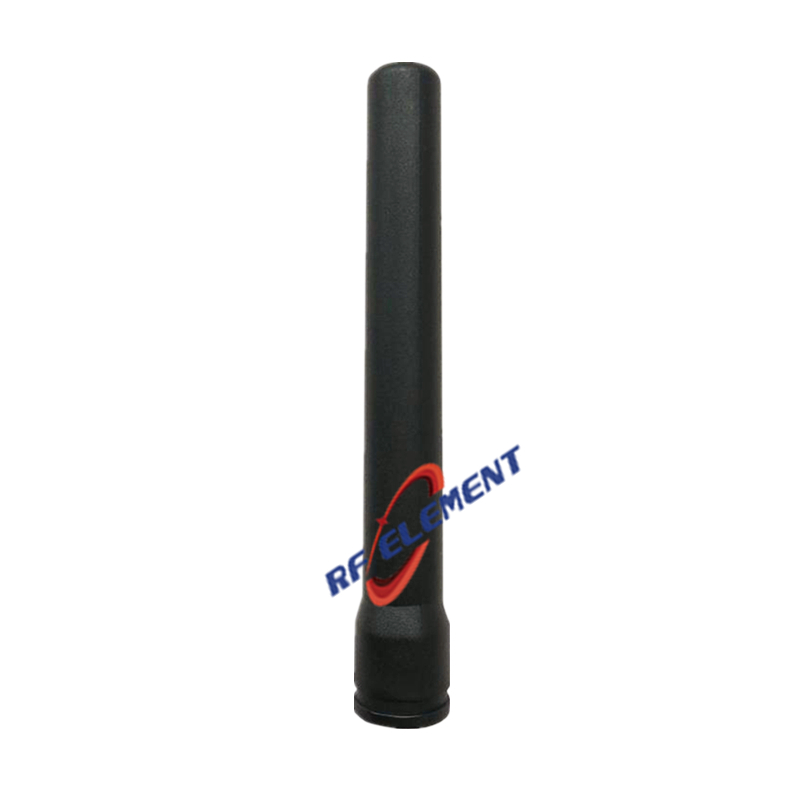
| Dual Bands WIFI Omni Rubber Duck Antenna | Rubber duck, omni | 2400-2500 / 5150-5850 MHz | 2 / 2.5 | 360° × 65° / 360° × 60° | 80 (L) | Router, CPE and access point antenna |
| 2.4GHz/5GHz 8dBi 3x3 MIMO Dual Band WiFi Omni Antenna | Omni, omni, MIMO | 2400-2500 / 5150-5850 MHz | 7.5 / 8 | 360° × 28° / 360° × 25° | Φ132 × 280 | Wide-area 360° hotspot coverage |
| 2.4GHz/5GHz 9dBi 4x4 MIMO Dual Band WiFi Omni Antenna | Omni, omni, MIMO | 2400-2500 / 5150-5850 MHz | 8 / 9 | 360° × 10° / 360° × 9° | Φ75 × 1250 | Wide-area 360° hotspot coverage |
| 2.4GHz/5GHz High Gain 12dBi Dual Band WiFi Omni Antenna | Omni, omni | 2400-2500 / 5150-5850 MHz | 9 / 12 | 360° × 15° / 360° × 7° | Φ52 × 1250 | Wide-area 360° hotspot coverage |
| 2.4GHz/5GHz 14dBi 4x4 MIMO Dual Band WiFi Panel Antenna | Panel, directional, MIMO | 2400-2500 / 5150-5850 MHz | 12 / 14 | 50° × 60° / 45° × 40° | 239 × 190 × 35 | Point-to-point or coverage panel link |
| 2.4GHz/5GHz 16dBi 4x4 MIMO Dual Band WiFi Sector Antenna | Sector, directional, MIMO | 2400-2500 / 5720-5850 MHz | 14 / 16 | 65° × 15° / 90° × 7° | 980 × 128 × 58 | Base-station style sector coverage |
| 2.4GHz/5GHz 15dBi Dual Band WiFi Parabolic Grid Antenna | Parabolic grid, directional | 2400-2500 / 5150-5850 MHz | 15 / 16 | 16° × 21° | 300 × 400 | Long-distance point-to-point backhaul |
| 2.4GHz/5GHz High Gain 19dBi 4x4 MIMO Dual Band WiFi Panel Antenna | Panel, directional, MIMO | 2400-2500 / 5150-5850 MHz | 16±1 / 18±1 | 30° × 18° / 25° × 16° | 350 × 350 × 45 | Point-to-point or coverage panel link |
| 2.4GHz/5GHz 22dB High Gain Dual Band WiFi Grid Antenna | Parabolic grid, directional | 2400-2500 / 5150-5850 MHz | 21 / 22 | 12° × 15° | 600 × 900 | Long-distance point-to-point backhaul |
Dual band models let one antenna serve both WiFi bands, which keeps the mast and cabling simple. Send the two bands you need through contact us and our engineers will confirm which model covers them.
One Radome, Two Antennas
A dual band antenna is not one radiator that happens to work at two frequencies. In almost every model on this page there are two sets of elements inside the same radome — one cut for 2400–2500 MHz, one for 5150–5850 MHz — which is how the antenna covers both bands without an external diplexer in the cable run. Knowing which construction a model uses tells you what it will and will not do on a real site.
| Construction | How the bands are combined | What it gives you | Where it is used |
|---|---|---|---|
| Two arrays, one radome | Separate 2.4 and 5 GHz element sets on a common feed board, each with its own port or port pair | Gain and vertical beamwidth can be set independently for each band, and the two bands stay isolated by construction rather than by a filter | Most omni, sector and panel models on this page |
| Broadband element, internal combining | One wideband radiator with an internal matching network that covers both bands | Compact and cheap, which is why router and CPE antennas are built this way, but the gain is a compromise at both ends | Rubber duck and small CPE antennas |
| Wideband element to 6 GHz | A single element designed flat from 2.4 to 7 GHz | Needed for tri-band and Wi-Fi 6E, and not obtainable by re-tuning a 2.4/5 GHz part | Tri-band designs, built to order |
The construction also explains the radome size. On a fibreglass omni the 2.4 GHz array is the long one — 1.25 m of it in the 9 dBi model — because the vertical beamwidth and gain on that band are set by how many elements fit along the length. The 5 GHz array rides in the same tube and needs far fewer millimetres for the same gain.
Why the 5 GHz Gain Is Not 7.5 dB Higher
Reuse the same physical aperture at both frequencies and physics says the 5 GHz gain should be about 7.5 dB higher, because gain scales with aperture measured in wavelengths and 20·log10(5800/2442) = 7.5 dB. The tables on this page show 1 to 3 dB instead: 9/12, 12/14, 14/16, 16/18, 21/22.
The missing decibels are a design choice, not a measurement error. Each band gets its own array, and the 2.4 GHz array is deliberately made longer than the minimum so it can hold both the gain and a usable vertical beamwidth. A 2.4 GHz omni squeezed to the aperture a 5 GHz design would need ends up with a very wide vertical beam and correspondingly low gain — fine for a router, poor for a 200 m hotspot. What you are buying in a dual band model is a matched pair of patterns, not the theoretical maximum on either band.
Isolation, MIMO and Concurrent Dual Band
Modern access points run 2.4 and 5 GHz at the same time, and some run 4×4 on both. That makes port-to-port isolation a specification worth asking for rather than assuming. If the isolation between a 2.4 GHz transmit port and a 5 GHz receive port is poor, the 2.4 GHz carrier desensitises the 5 GHz receiver and the second band loses throughput exactly when the site is busiest. Ask for the isolation figure measured across both bands, not just within one.
MIMO count has a second trap on dual band parts. A 4×4 radio needs four chains per band; a model described as 4×4 may mean four dual-band ports or four ports per band, and the two are not interchangeable. Match the port count to the radio before ordering, and check the polarisation of each pair — two dual-polarised elements can serve four chains only when the polarisations line up with the radio ports.
Where Dual Band Stops
Wi-Fi 6E and Wi-Fi 7 add 5925–7125 MHz, with the EU opening 5945–6425 MHz. A 2400–2500 / 5150–5850 antenna cannot be extended into that range by re-tuning: the element lengths, the feed spacing and the gain-versus-frequency curve all change, and the VSWR above 6 GHz is unknown until it is measured. If the site plan includes 6E, specify a tri-band design from the start rather than adding a second antenna later. The Wi-Fi antenna page sets out the 2.4, 5 and 6 GHz split, and the 2.4 GHz and 5 GHz pages cover the single-band models and their DFS rules.
What to Send for a Dual Band Antenna Quote
- The radio model and its port map: how many chains per band, and whether 2.4 and 5 GHz run concurrently.
- Which 5 GHz sub-bands are planned, since 5725–5850 and the DFS blocks need different approvals on site.
- Coverage shape: 360° omni, a sector angle, or a point-to-point panel, with the height available.
- Isolation requirement between bands if the radio transmits on both at once.
- Mounting, cable run and connector, so feeder loss at 5 GHz is counted before the gain is chosen.
Send those five points and engineering replies within 1–2 working hours with a model, its pattern cuts on both bands and its isolation figure; catalogue samples ship in 3–5 days. The antenna selector filters by band and mounting, the WISP page covers subscriber and base-station combinations, and the catalogue lists every dual band model with its gain on each band.
Related Reading
Technical notes from our engineering team on dual band WiFi antenna design.
- Dual Polarized 7GHz Microwave Dish Antenna
How our dual-polarized 7GHz parabolic dish doubles capacity on a single microwave hop.
- Advantages of Dual Band WiFi Antennas
Running 2.4GHz and 5GHz from one antenna: coverage trade-offs and when it pays off.
- Dual Band Sector Antenna: 2.4/5.8 GHz Selection Guide
When one radome has to cover both 2.4 and 5.8 GHz: band-by-band beamwidth, gain and port decisions.
Industry Applications
Dual-band covers the range of 2.4 GHz and the capacity of 5 GHz in one unit. These deployments size the link on both.
- WISP and fixed wireless antennas
Subscriber radios fall back to 2.4 GHz when rain or distance closes the 5 GHz link.
- DAS and in-building antennas
In-building Wi-Fi distribution shares the ceiling and the cabling with the cellular DAS.
Dual Band WiFi Antenna - Frequently Asked Questions
Questions our engineers are asked most often about the dual band 2.4/5GHz WiFi antenna line.
Which bands does a dual band WiFi antenna from RF element cover?
Each model is specified over both the 2.4GHz band (2400-2500MHz) and the 5GHz band (5150-5850MHz) in a single radome, so one antenna serves 2.4GHz and 5GHz radios at the same time without a diplexer.
What antenna types are available in the dual band range?
The line includes fiberglass and MIMO omni antennas (8dBi 3x3, 9dBi 4x4 and 12dBi versions), 4x4 MIMO panel antennas at 14dBi and 19dBi, a 16dBi 4x4 MIMO sector antenna, a 15dBi parabolic grid antenna, a 22dBi high-gain grid antenna, and a 2dBi dual band rubber duck antenna for indoor and portable devices.
Which model gives the highest gain on both bands?
The 22dBi high gain dual band grid antenna is the strongest, followed by the 19dBi 4x4 MIMO panel and the 16dBi MIMO sector. These are directional models suited to outdoor point-to-point and point-to-multipoint deployments.
Do the dual band antennas support 3x3 and 4x4 MIMO radios?
Yes. Several omni models are specified as 3x3 or 4x4 MIMO, and the panel and sector models are available as 4x4 MIMO with dual-polarized ports. Isolation between ports is measured in our anechoic chamber, not estimated.
What are your MOQ and lead times for dual band antennas?
Sample lead time is 3-5 working days and mass production lead time is 15-25 working days. MOQ depends on the model and configuration: send us the frequency band, gain, polarization and connector you need and we will confirm it together with the quotation.
Still have a question? Send us your specification - we reply within 1-2 working hours.