

433MHz Antenna
Welcome to the RF element 433MHz antenna product center. As a professional 433MHz antenna manufacturer, we offer a full range of high-performance 433MHz antennas for ISM band applications. Our products cover the 428-438MHz frequency range, including 433MHz omni antennas, 433MHz yagi antennas, 433MHz panel antennas. Designed for both indoor and outdoor use, these antennas ensure reliable connectivity for remote monitoring, wireless telemetry, industrial automation, smart agriculture, and other IoT deployments.
Our 433MHz antenna product line includes:
- 433MHz Omni Antennas: 360° coverage for broad area IoT networks.
- 433MHz Yagi Antennas: Directional high-gain for long-distance point-to-point links.
- 433MHz Panel Antennas: Compact directional solutions for focused coverage.
All 433MHz antennas undergo rigorous testing to ensure exceptional performance and durability. Whether you need standard products or customized 433MHz antenna solutions, our engineering team is ready to provide expert support. Contact us for a quote.


433MHz Antenna Selection Guide
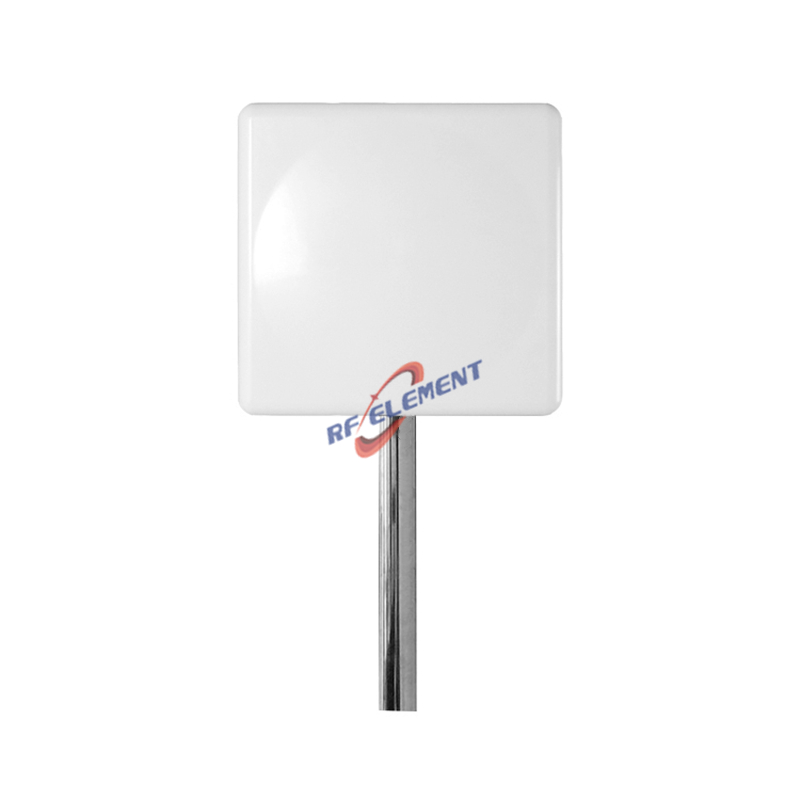
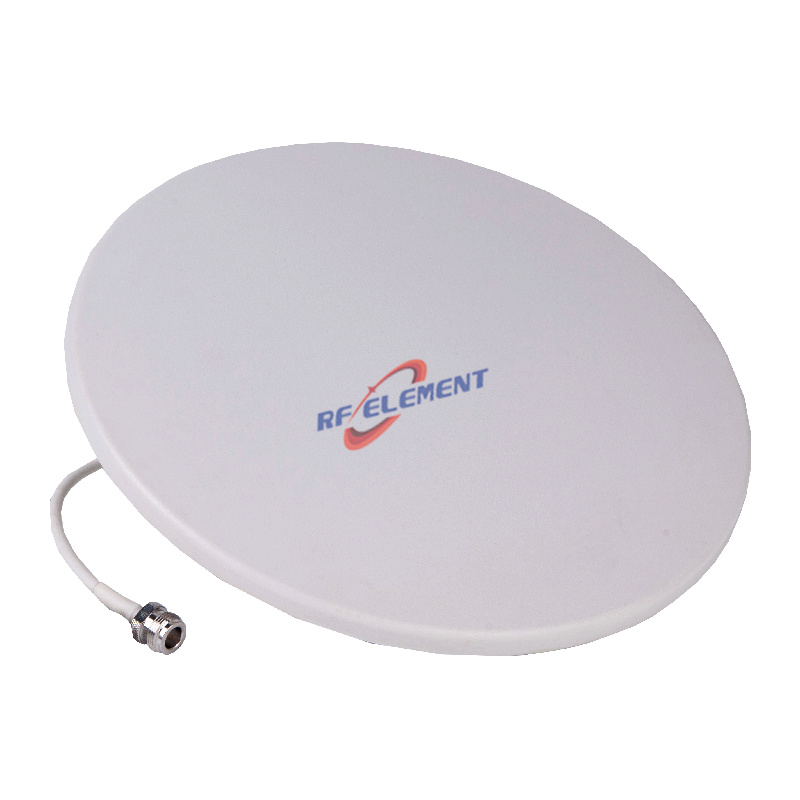
Every 433MHz model on this page compared in one table — the outdoor fiberglass omni, the directional panel and the wideband VHF/UHF ceiling type. Frequency, gain, beamwidth and dimensions are taken from each product specification sheet.
| Model | Type | Frequency | Gain (dBi) | Beamwidth (H × V) | Size (mm) | Best for |
|---|---|---|---|---|---|---|
| VHF/UHF Antenna Indoor Omnidirectional Ceiling Antenna | Ceiling, omni | 380-520 MHz | 2 - 3.5 (±0.5) | 360° | 280 × 280 × 18 | In-building DAS and indoor coverage |
| UHF Antenna Outdoor Fiberglass Omnidirectional Antenna | Omni, omni | 428-438 MHz | 5 | 360° × 30° | Φ20 × 1200 | Wide-area 360° outdoor coverage |
| UHF Antenna Outdoor Detachable Fiberglass Omni Antenna | Omni, omni | 450-470 MHz | 6 | 360° × 35±2° | Φ38 × 1200 | Wide-area 360° outdoor coverage |
| 433MHz ISM Antenna Outdoor Directional Panel Antenna | Panel, directional | 428-438 MHz | 8 | 78° × 65° | 395 × 375 × 45 | Focused sector or point-to-point coverage |
The 433MHz ISM band carries remote control, telemetry and short-range data links, and across most sites either the omni or the panel type will fit. Send the coverage area and the mounting position through contact us and our engineers will confirm the pattern and gain you need.
433 MHz, 868 MHz or 915 MHz: The Band Is Decided by the Regulator
All three are licence-exempt ISM bands, and they are not interchangeable. The band is fixed by the country of deployment and by the type approval of the radio module, and the antenna has to sit inside the exact sub-band that approval names. A 428–438 MHz panel on a device certified for 470–510 MHz is out of band no matter how good its VSWR looks on the bench.
| Band | Rule that governs it | Practical limit | What the band does well | Antenna family |
|---|---|---|---|---|
| 433.05–434.79 MHz | ETSI EN 300 220 and national SRD plans across Europe, Asia and Africa | Tens of milliwatts ERP with a duty-cycle limit — built for short bursts, not continuous streaming | Remote controls, alarm and door sensors, pulse metering, workshop telemetry where a few hundred metres is enough and the antenna must stay small | 428–438 MHz 5 dBi fiberglass omni and 8 dBi panel |
| 863–870 MHz | ETSI EN 300 220 (Europe) | 25 mW ERP at 1 % duty cycle as the general plan; the 869.4–869.65 MHz sub-band allows 500 mW at 10 % | EU868 LoRaWAN and Sigfox, smart metering — the longest legal range in Europe, at the cost of a 36-second-per-hour transmit budget | 868 MHz antenna range |
| 902–928 MHz | FCC Part 15.247 (North America), comparable plans in Australia, New Zealand and Latin America | 1 W conducted, 4 W EIRP with a 6 dBi antenna, using FHSS or digital modulation | US915 LoRaWAN, RFID, and links that need genuine power headroom rather than a tight ERP ceiling | 915 MHz antenna range |
| 470–510 MHz / 923 MHz | China SRD plan; AS923 plans in Japan and APAC | Region-specific and power-limited; the channel plan, not the antenna, decides feasibility | CN470 LoRaWAN and APAC metering rollouts | LoRa antenna selection by region and 450 MHz band |
What a Band Change Costs You in Decibels
Free-space path loss rises with the logarithm of frequency: 20·log10(868/433) = 6.0 dB. In free space, 6 dB is also exactly what you lose by doubling the distance. In plain terms, a link that reaches 800 m on 433 MHz reaches about 400 m on 868 MHz at the same transmitter power and the same antenna gain. The band is not better or worse; it is simply a different exchange rate between frequency and distance.
Two other numbers matter more than most buyers expect. First, 868 MHz and 915 MHz are only 20·log10(915/868) = 0.5 dB apart, so choosing between them is a regulatory decision, never an RF one. Second, the antenna has to grow as the frequency drops: a 5 dBi omni in this 433 MHz range is 1200 mm long, while the same 5 dBi at 868 MHz is 600 mm. On a mast with a wind-load limit or inside a cabinet, that difference decides the design before any link budget is run.
433 MHz and 450 MHz get confused constantly because both are described as “UHF”. They are separate allocations with different products: see the 450 MHz band page for the LTE Band 31 and Band 72 sub-bands, and the LoRa band guide for the CN470 plan.
Why More Gain Does Not Cover the Ground Under the Mast
Gain and vertical beamwidth are the same fact written two ways: add 3 dB and the beam covers half the solid angle. The table above shows it in this range — 5 dBi at 360° × 30° and 6 dBi at 360° × 35°. A narrow vertical beam is aimed at the horizon, so the lower edge of the main lobe only reaches the ground at a calculable distance: on a 12 m mast with a 35° beam that distance is 12 / tan(17.5°) ≈ 38 m. Raise the same antenna to 20 m and the ring moves out to about 64 m. Everything inside that radius is served by sidelobes and ground reflection, not by the main lobe, and field-strength readings there will look erratic.
That is why a sensor field wrapped around the mast is usually not a higher-gain omni job. The practical fixes are a lower-gain omni, a lower mounting height, or two antennas — one wide-beam unit for the near ring and one higher-gain unit pointed at the far cluster. If the site needs a sector rather than 360°, a panel at 78° × 65° gives you a pattern you can downtilt, which an omni never can.
What to Send with an RFQ
- Exact sub-band — 433.05–434.79 MHz and 428–438 MHz are not the same order, and the 430–470 MHz version on this page is a third.
- Mounting height and coverage shape — a radius around the mast, or a bearing and distance to one remote end.
- Omni or sector — 360° for a node cluster, a panel where the traffic sits in one direction.
- Connector and run length — RG58 costs roughly 0.3 dB/m at 433 MHz, so a 10 m run takes about 3 dB, which is half the transmit power before the antenna is even reached.
- Environment and volume — indoor or outdoor, wind and ice load, and the annual quantity, so the mechanical build is quoted once rather than revised later.
Send the five items above to our engineering team and you get a model, a pattern and a quotation back, usually within one to two working hours. If you are still comparing form factors, start from the antenna selector, or read the industrial IoT antenna guide for how 433 MHz sits alongside LoRa, NB-IoT and Wi-Fi on the same site.
Related Reading
Technical notes from our engineering team on 433MHz UHF antenna selection.
- A Guide to Choosing the Right UHF Antenna
Type, gain and coverage questions to settle before picking a UHF antenna for public safety work.
- UHF Yagi Antenna: The Solutions for Long-Range Communication
Directional precision and high gain across 300 MHz to 3 GHz: where a UHF Yagi earns its place.
Industry Applications
433 MHz is the default band for short-range industrial telemetry. These deployments are built on it.
- Industrial IoT antennas
Sensor networks trade duty cycle for battery life, and the antenna has to match both.
433MHz Antenna - Frequently Asked Questions
Questions our engineers are asked most often about the 433MHz ISM antenna line.
Which frequency range do your 433MHz antennas actually cover?
The dedicated 433MHz ISM models are specified over 428-438MHz. Where a wider sweep is useful, we also offer UHF fiberglass omni antennas covering 430-470MHz and a VHF/UHF ceiling antenna covering 380-520MHz, both of which include the 433MHz ISM center frequency with margin.
What applications are these 433MHz antennas built for?
They are designed for the 433MHz ISM band used by license-free telemetry, remote control, wireless alarm, utility meter reading and low-power IoT devices, in both indoor and outdoor installations.
Should I choose an omni or a directional 433MHz antenna?
Use the 5-6dBi fiberglass omni antennas when endpoints appear around the whole site, such as a gateway or base station serving a radius. Use the 8dBi directional panel antenna when the traffic concentrates on one direction, for example a fixed link between two buildings.
Is there an indoor option for 433MHz?
Yes. A 3dBi omnidirectional ceiling antenna covering 380-520MHz is available for indoor coverage of 433MHz systems, with a low-profile radome for discreet mounting.
What are your MOQ and lead times for 433MHz antennas?
Sample lead time is 3-5 working days and mass production lead time is 15-25 working days. MOQ depends on the model and configuration: send us the frequency band, gain, polarization and connector you need and we will confirm it together with the quotation.
Still have a question? Send us your specification - we reply within 1-2 working hours.