The 5G Signal Coverage Solution by 5G MIMO Panel Antenna
A coverage system, not a single box
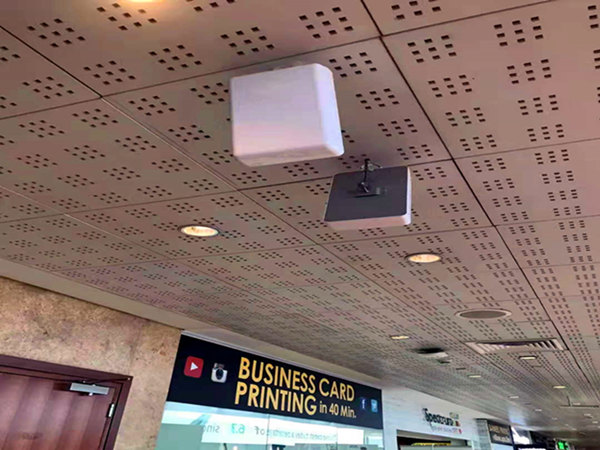
Indoor 5G coverage projects fail in a predictable way: someone picks one attractive antenna, mounts it in the middle of the floor, and discovers that the far corners still show one bar. Coverage is a chain — an outdoor donor antenna that feeds the system, a repeater or base station in between, and service antennas that distribute the signal where people actually are. Each link in that chain has a different job, and we build a panel family that covers all three roles, so this article walks the chain in order with the real numbers attached.
Role one: the donor antenna on the rooftop
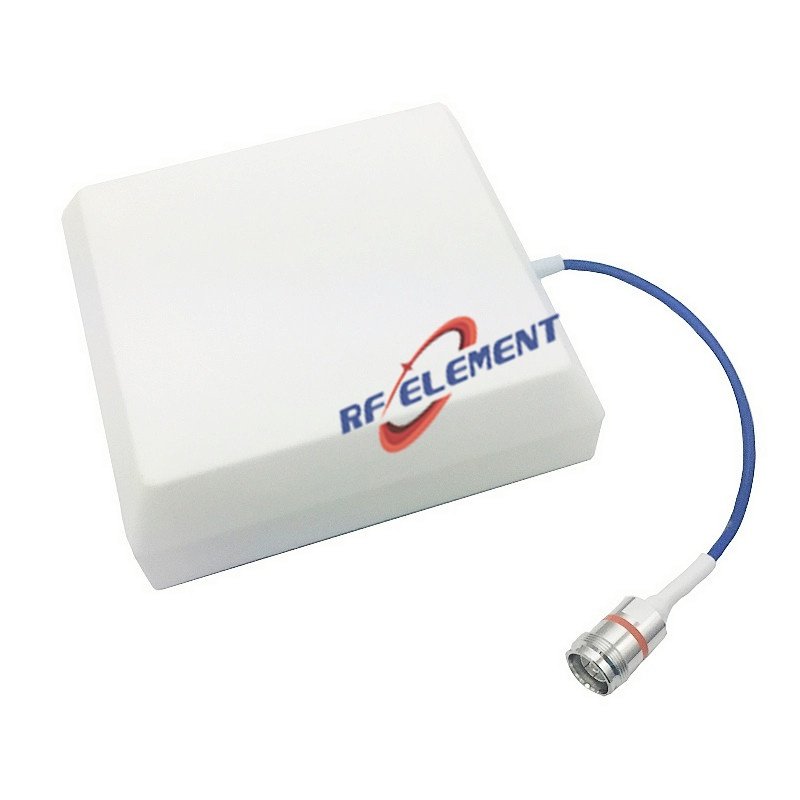
The donor antenna sits outside, points at the macro cell, and its gain budget directly determines how much signal the repeater has to work with. Our high-performance outdoor 2x2 MIMO panel publishes 8 dBi in the 1710-2700 MHz mid-band with ±45° polarization and a beam that narrows from 80° to 35° across its sub-bands — the narrowing is deliberate, because a donor antenna that sees the wrong sector imports interference along with signal. Two 4.3-10 ports feed a 2x2 radio, isolation is specified from 10 dB up to 25 dB depending on sub-band, and the whole unit weighs 1.0 kg in a 310 × 230 × 73 mm housing rated −153 dBc @ 2×20 W.
Role two: the wall-mount distribution panel
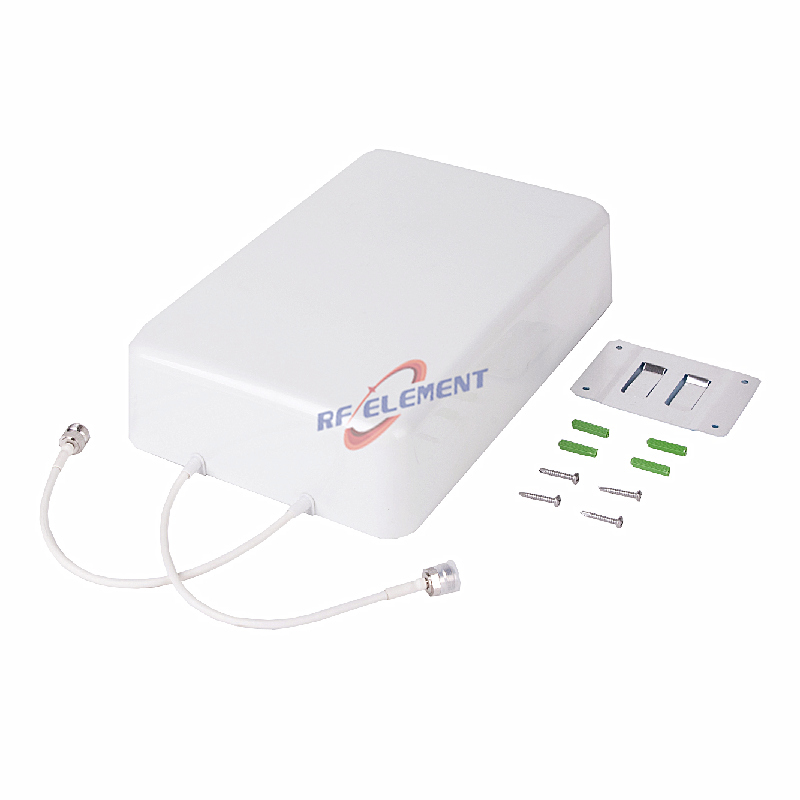
Inside the building, the signal needs to be re-radiated with control. Our indoor wall-mount MIMO panel covers the full 698-4200 MHz service range with 8 dBi at 806-960 MHz easing to 5 dBi at 3800-4200 MHz — the taper reflects physics, not a shortcut, because lower frequencies carry farther indoors and need less antenna gain to do their job. Port isolation tightens from 10 dB on the lowest sub-band to 25 dB in the 3.8-4.2 GHz range, the 2-port interface suits a MIMO booster directly, and at 1.0 kg it mounts on a drywall anchor without a structural bracket.
Role three: the service layer, panel or omni
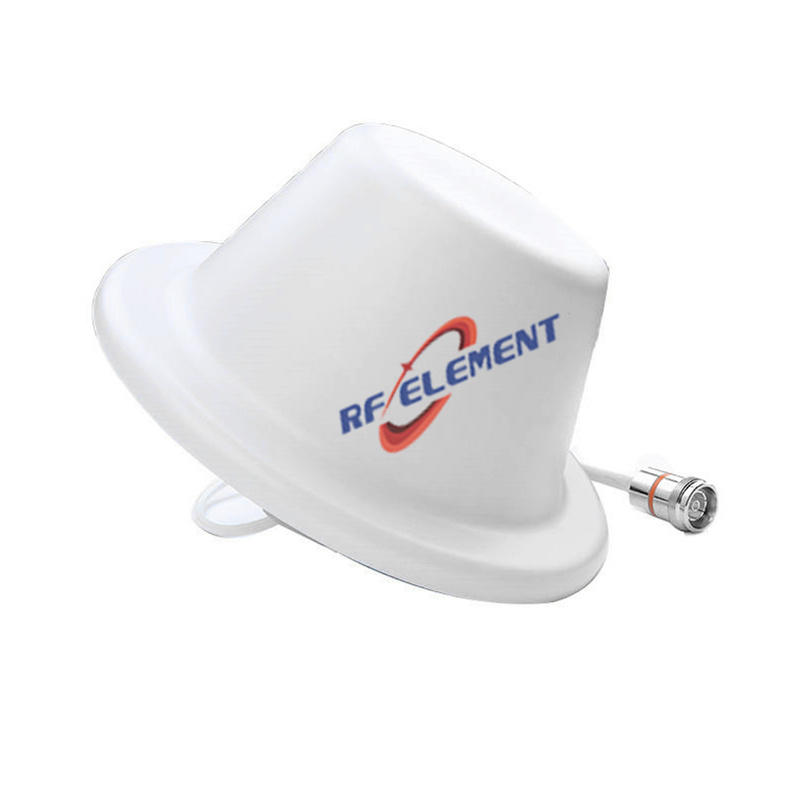
Corridors and long rooms want directionality; open halls want uniformity. The single-port signal booster panel weighs 0.4 kg, measures 165 × 155 × 50 mm, and delivers 5 dBi at 698-806 MHz rising to 7 dBi mid-band, with a −153 dBc rating that keeps it compatible with the donor chain above. For open areas, the full-band ceiling omni radiates 360° with a gain ladder from 1.5 dBi at 698-806 MHz to 5.5 dBi in the 5 GHz sub-bands — the only unit in the chain that also covers 5150-6000 MHz, which matters when the same ceiling infrastructure must serve WiFi 6 alongside cellular.
Where the panel is the wrong choice
Single small room, one carrier — a repeater-plus-panel chain is overkill; one ceiling omni on the booster output is cheaper and covers a square room more evenly.
Donor path shorter than 10 meters — if the outdoor macro signal is already strong at the window, skip the donor antenna entirely and couple the booster from an indoor point; the donor link adds cost and one more weatherproofing failure mode.
High-density open office — dozens of low-power ceiling units beat three high-power panels, because panel overreach creates strong signal near the wall and interference zones in the middle where devices transmit back at full power.
Scaling up: when the mid-band needs its own layer
The chain above serves the sub-3 GHz operators well, but mid-band-only deployments — an enterprise private network on n78, or a campus overlay at 3.3-3.8 GHz — deserve their own service layer. The dedicated n78 MIMO panel concentrates 12 dBi into a 65° × 28° pencil of coverage, which suits a conference hall or a production floor where seats are fixed and the aim point never moves. Where PIM discipline dominates — think sites with public-safety transmitters sharing the structure — the two-port low PIM MIMO panel holds the −150 dBc intermodulation mark at full 2×20 W carrier power across the whole 698-3800 MHz span while holding VSWR at or below 1.8, so the same antenna survives both a 700 MHz legacy carrier and a fresh mid-band overlay.
Reading the numbers as a system
The three roles above are designed to share one spec language: every unit quotes VSWR per sub-band, and every MIMO unit states its isolation ladder explicitly. That consistency is what lets an integrator chain them — donor panel into repeater into distribution panels — without re-doing the link budget per component. Send your floor plan and the donor site coordinates to sales@rfelement.com, and we will return a suggested role assignment with the matching models, their full sub-band tables, and mechanical drawings. Samples leave production in 3-5 working days; volume scheduling is quoted per project size.
TAG:The 5G Signal Coverage Solution by 5G MIMO Panel Antenna https://www.rfelement.com