5G Antenna Manufacturer: Custom Solutions from Design to Die-Casting
An antenna and the housing around it are usually bought from two different companies, and the gap between them is where projects lose weeks. Both are made in our plant in Zhaoqing, which has been running since 2017: the radiators, the cast and machined metal that carries them, and the shells that close them up. That is the practical meaning of a 5G antenna manufacturer working from design through to die-casting, and it is worth being precise about what it does and does not buy you.
What putting the radio and the metal under one roof changes
Most of the value is not in price. It is in where tolerance is allowed to accumulate. When an antenna is designed by one company and its enclosure by another, the mounting bosses, the ground path and the clearance between radiator and shell are negotiated across two drawings that nobody owns end to end. Move a shell wall by a millimetre to clear a casting draft and the radiation pattern changes; nobody measures it until the first article comes back. Under one roof the shell revision and the radiator revision land on the same sheet, and the engineer who signs off the casting is the engineer who measured the gain.
The second difference shows up in tooling. Casting and moulding decisions are expensive to reverse, so they belong early, at the point where the electrical design is still flexible. A die-cast body with a wall thick enough to hold a threaded insert can be the better answer once annual volumes run to four figures, while a machined part wins at quantities counted in dozens; that trade only becomes visible when both answers sit on one table.
The three ways an antenna gets a metal or plastic body
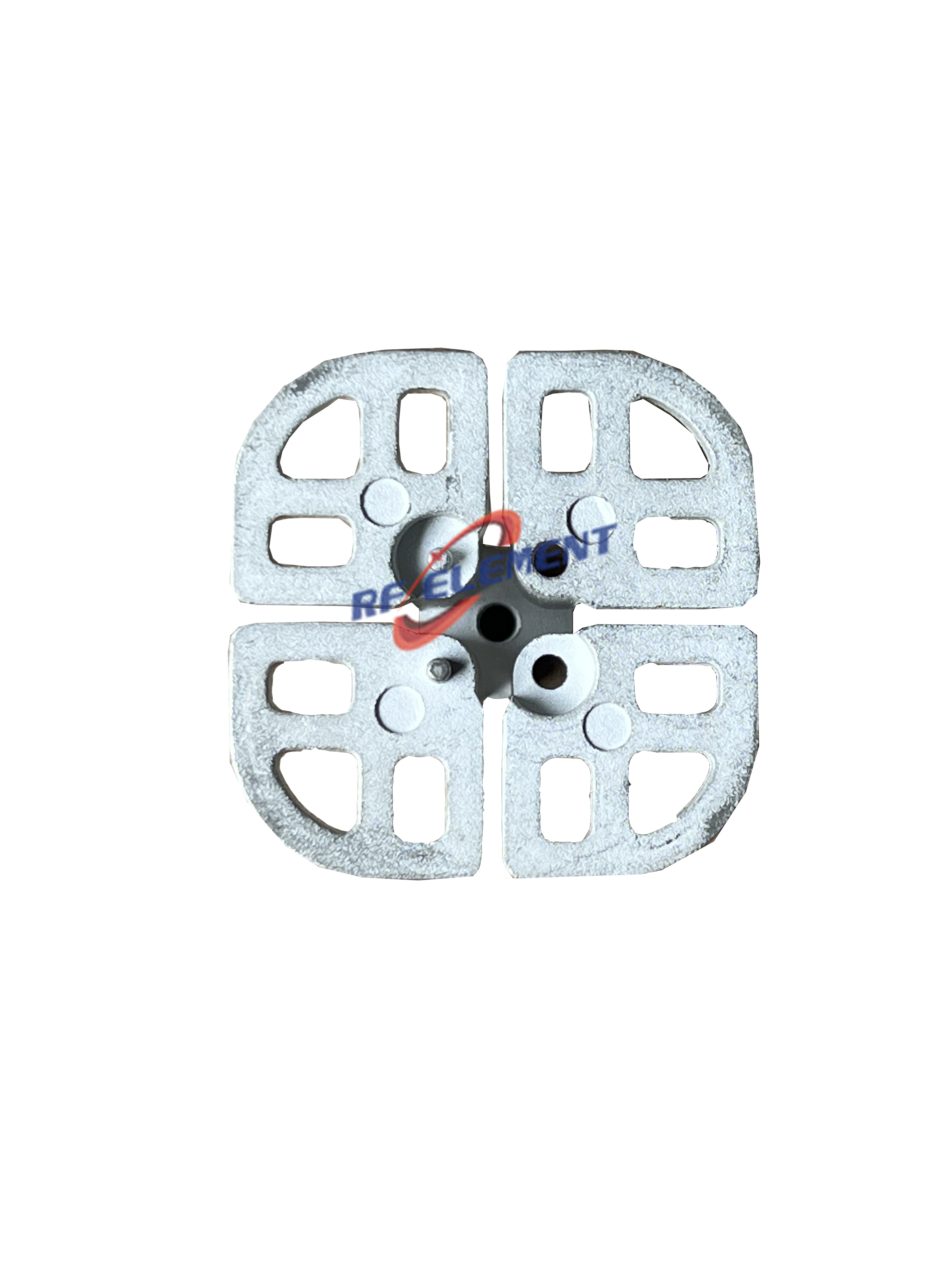
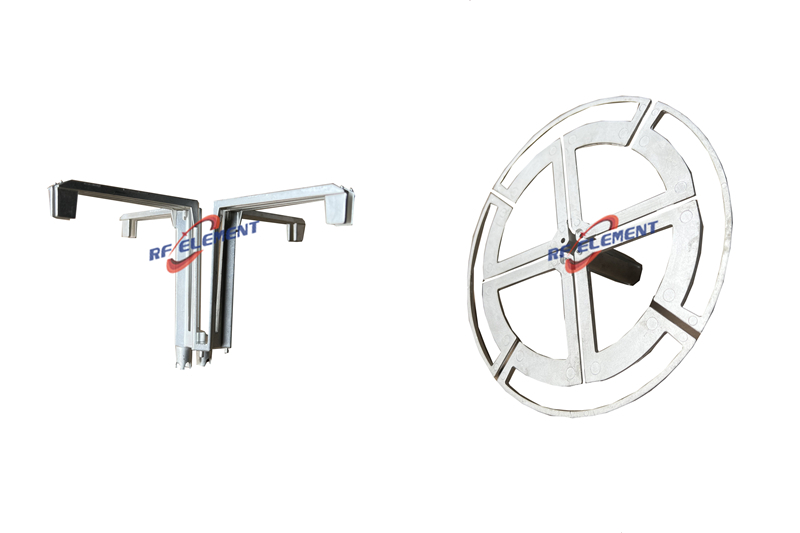
Aluminium die-casting suits parts that are shaped, shielding or load-bearing, and that are wanted in volume. Two radiating elements in our range make the case. The n78 element is a casting 33 mm square and 23 mm deep, weighing 7 grams, and it covers 3300-3800 MHz; the 698-960 MHz element is the bigger of the pair at 73 mm square and 93 mm tall, 80 grams. Both are aluminium, both are sandblasted and plated, and both are rated from 55 degrees below zero to 60 above. Casting is what makes that kind of shape affordable once the annual quantity justifies a tool.
CNC machining is the route for prototypes, for short runs, and for features that have to hold a figure a casting will not promise, such as a connector bore or a mounting face that must sit flat against a mast bracket. It needs no tool, which makes it the natural process for a first article even when production will end up as a casting.
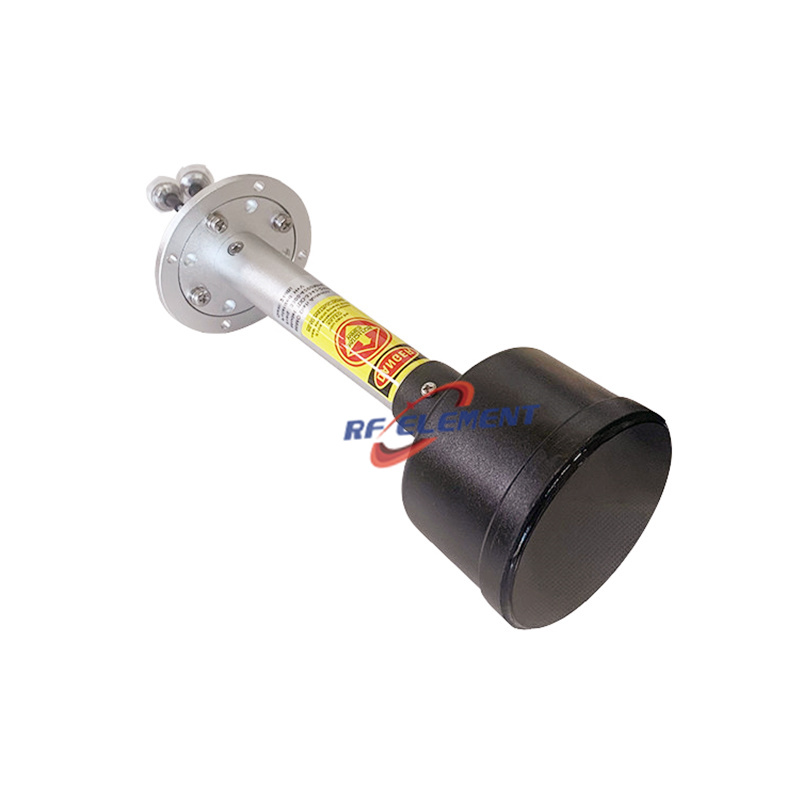
Plastic injection covers the non-metallic shells. The 2x2 MIMO outdoor panel measures 310 mm by 230 mm by 73 mm and closes in a moulded ABS cover, with the finished unit, both ports included, weighing 1.0 kg. Where the cover also has to pass the signal and survive a decade of weather, the shell becomes a fibre-reinforced tube, which is what the n78 omni uses: a 42 mm diameter fibreglass mast tube 630 mm long, holding 11 dBi with a 360 degree horizontal pattern and just eight degrees of vertical beam.
Watch Our Die-Casting & CNC Process for Anti-Drone Enclosures
Watch how the die-casting and CNC lines build an anti-drone antenna housing - the same in-house tooling behind the metal parts of our 5G and multi-band antennas.
When the housing is an electrical part, not packaging
A wall is a dielectric slab, and at microwave frequencies a slab in front of a radiator shifts both the pattern and the match. A shell specification is therefore never only mechanical. Three figures from the panel above show how tightly the two are coupled: the same 2x2 panel holds VSWR inside 1.8 across 698-4200 MHz, separates its front and back lobes by 10 dB or more, and maintains 20 dB of isolation between the two polarised ports, all with a moulded cover on. The fibreglass omni keeps its full 360 degree pattern with the tube in place. Change the wall material or thickness, or the air gap behind it, and those numbers move. A supplier who treats the cover as a cosmetic item will hand you an antenna that measured well on the bench and behaves differently on the mast.
The same logic runs through the fiberglass radome work we do for radar heads: there the wall is chosen for what it does to the signal first and for weather protection second, and both requirements have to be settled before the mould is cut. The practical consequence for a buyer is that cover, bracket and radiator belong in one conversation. Split them, and the schedule is what pays.
Where one supplier for both is genuinely the wrong choice
We would rather lose the scope than carry a job that should not be one, so here are the cases that point away from a single-source antenna-plus-enclosure project. The first is a buyer who already owns the tooling: if your moulds and castings exist and are running on your own line, moving them to us buys a requalification cycle and nothing else, and matching your existing shell is a much smaller job than replacing it. The second is the indoor fitting whose body is a catalogue item in a standard size and colour; there is no integration problem to solve, and two catalogue purchases will be quicker than one project. The third is a first trial run of a few dozen units, where casting tooling has to be amortised over units that do not exist yet; at that quantity a machined part or a drawn profile is the honest answer even though the piece price is higher. None of this is an argument against custom work, only for choosing the process after the quantity is known.
One more request reaches us that is not a design job at all. A standard antenna that needs a different colour, a logo printed on the shell or a customer-specific carton is finishing and packaging work; treating it as a custom project adds a release cycle for no engineering gain.
What ships with the hardware
Two things travel with a shipment beyond the goods themselves. The first is measured data. Each low-PIM antenna is swept in our anechoic chamber on site and holds -150 dBc on a two-tone test at 20 W per tone, and the plot goes into the crate rather than into an internal file. The second is the record of what the part was built to: the drawing revision, the alloy or polymer used, and the finish applied, so that a repeat order three years later is the same part and not merely a look-alike. Our antennas ship to more than thirty countries from four production lines, and the custom work that has come out of the same building includes a sector antenna for a mining network, a counter-drone omni that radiates five bands from a single housing, and a parabolic dish for the 6-7 GHz band.
Where to start
Bring four things: the frequency range the antenna has to work over, the space it has to fit into, the environment it has to survive, and roughly how many you expect to build a year. Bandwidth and gain follow from the first two, materials and finish from the third, and the process choice, casting against machining against moulding, from the fourth. Connector, mounting, colour and packing are details we can settle in the first exchange.
If a standard part already meets the requirement, we will say so before quoting a project; the catalogue runs from UHF through to microwave designs in the 13 GHz region, and a fair share of enquiries that arrive as custom jobs are closed by an existing model plus a different bracket or shell. Where the project is real, the first answer usually arrives within a couple of working hours. Send the four inputs through contact us, and if you would prefer to see what the integrated route has already produced, the delivered projects page collects them.
TAG:5G Antenna Manufacturer: Custom Solutions from Design to Die-Casting https://www.rfelement.com