5G MIMO Ceiling Antenna: High-Performance Indoor Connectivity Solutions for Modern Networks
The final metre of an indoor network is a disc screwed to a ceiling tile, and it is the metre nobody plans until the complaints start. The radio room is finished, the DAS or the booster is commissioned, and whatever hangs above the meeting room decides what the hundred people under it actually get. Our ceiling line exists for that decision, and the piece this article turns on — the MIMO ceiling antenna for 5G DAS — is the one that carries two independent signal paths through a single ceiling point instead of one.
What two ports on a ceiling actually buy
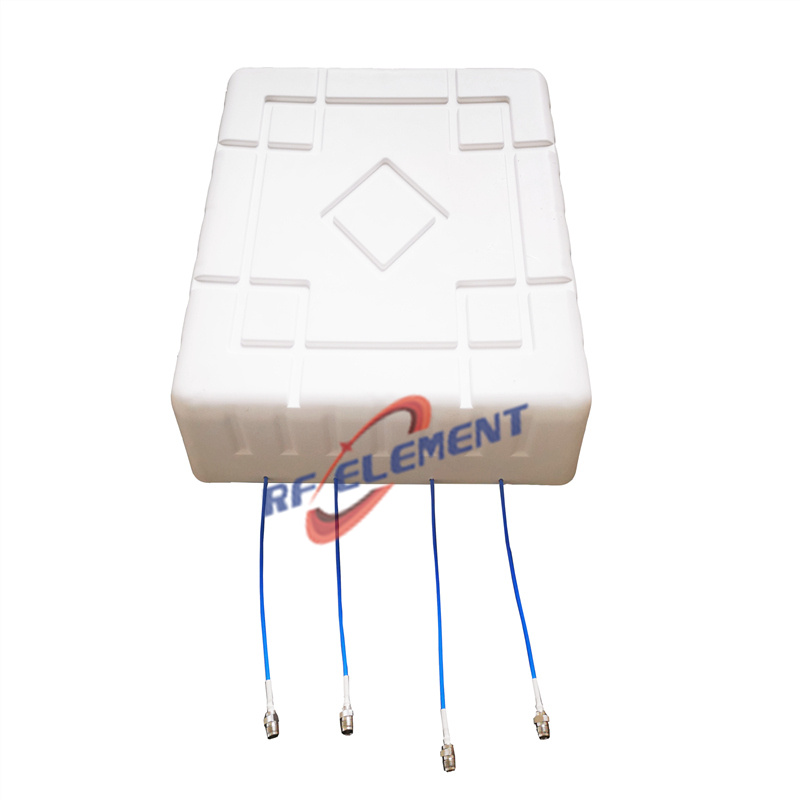
The MIMO ceiling spans 698-3800 MHz and lands it on a pair of female N-type ports kept 15 dB or more apart. That isolation figure is what makes two paths genuinely separate: below it, port A's transmit leaks into port B's receive and the radio un-does the MIMO gain the installer believed was purchased. Third-order
intermodulation stays at or below -97 dBm when the pair is driven at 2×2 W, and the white ABS housing runs 215 mm square by 41 mm deep at 0.8 kg, gain sits at 2±1 dBi across a 360° horizontal by 85±10° vertical pattern, VSWR sits at 1.5 or better, and the power rating is 50 W. One tile, one mounting, two channels — the entire value proposition, and every figure above is printed on the sheet we ship with the part.
Matching the ceiling to the room
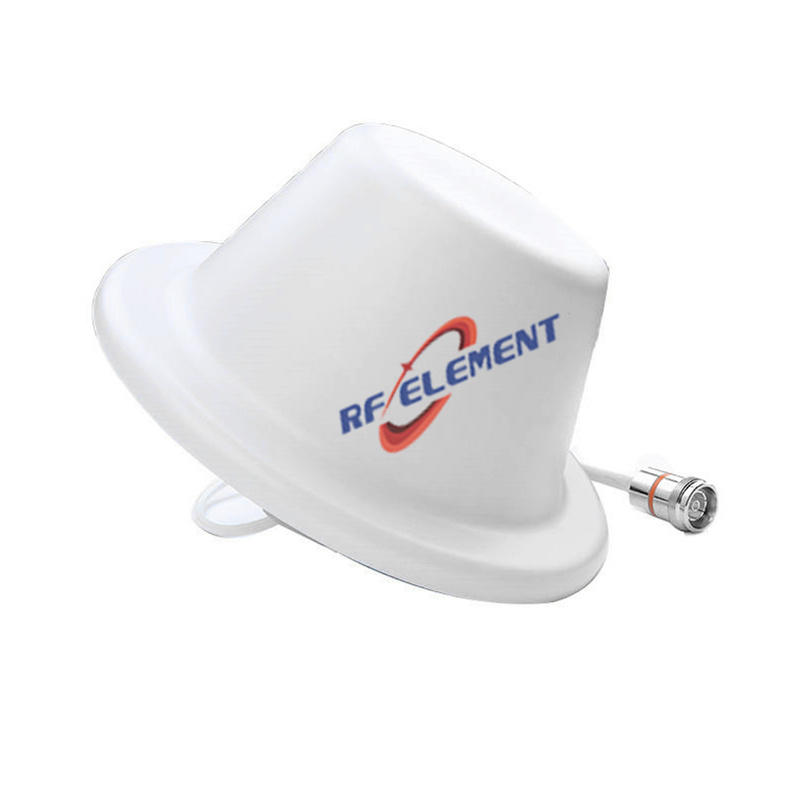
Ceiling gain is deliberately modest, and the reason is worth stating plainly. A disc at 2-3 dBi with a near-hemispherical pattern is a coverage device: it fills a floor zone evenly from directly below, and its beamwidth figures describe how cleanly the zone is cut off at the edges. In the wider family, the cellular disc for dense grids trims a tighter 60-degree vertical zone for dense DAS grids where neighbouring discs must not overlap, while the same family's 15 mm low profile disc gives back a full 90-degree zone inside a body that all but disappears into a designer ceiling. Both carry a -150 dBc rating against 2×43 dBm drive levels — the shared-tower condition, brought indoors — because a distributed system's front end often rides with an outdoor donor whose transmit path sees real power. Both finish at one 4.3-10 female interface and weigh 0.3 kg apiece.
The band question
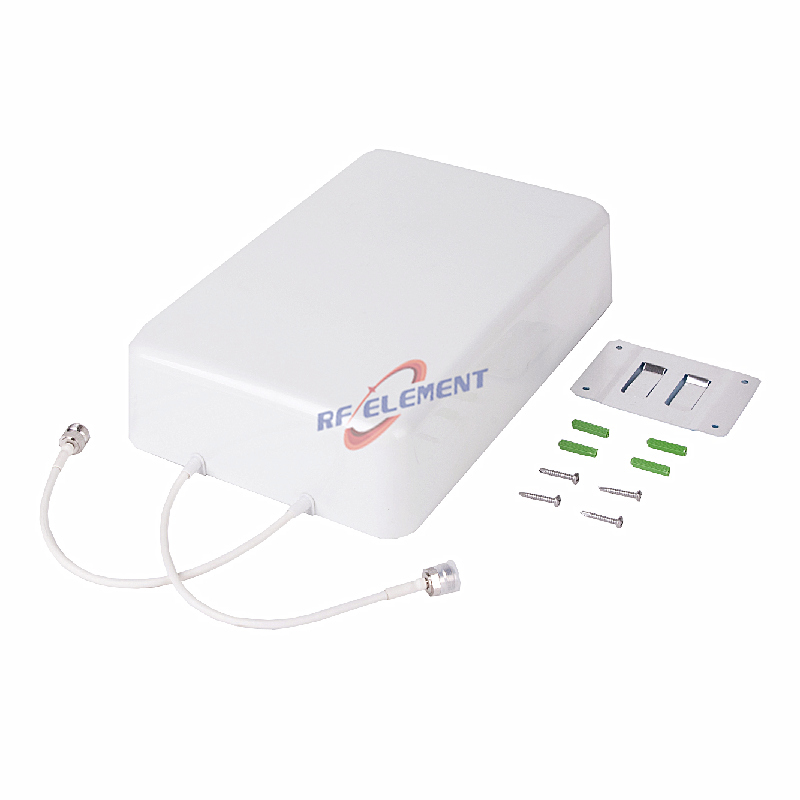
Carrying 698-3800 MHz on one ceiling means the legacy LTE layers and the mid-band 5G layers ride the same disc, which is what keeps a phased indoor rollout from turning into a re-cabling project: rooms upgrade by swapping the radio room, not the ceiling. Where a corridor, an atrium, or an external walkway needs directional mid-band rather than an omni zone, the conversation moves to panels — the n78 panel built for corridors lays a kilogram-scale, 65-degree beam down the length of the space, and the 4×4 small cell panel covers 617-4200 MHz wall-mounted where the radio count per point is higher. Legacy-only rooms that will never see a 5G carrier stay on our 4G LTE ceiling disc — an omnidirectional, 698-2700 MHz part at 0.4 kg — without paying for bands they will not use.
One tile, two operators
Shared buildings create the situation the MIMO ceiling was drawn for: two operators, or two carriers of one operator, that must converge on a single ceiling grid. Feed both through separate discs and the ceiling fills with hardware and crosstalk; feed both through one dual-port part and the separation happens where it can be measured — between the ports, at the 15 dB isolation figure, with the intermodulation cap holding the shared junction honest. That is also why the part is wideband by design: 698-3800 MHz lets a landlord equip a tower once and re-let it band by band without a second ceiling visit.
Where a ceiling is the wrong mount
A ceiling disc fails three familiar briefs. A long room — a corridor running past thirty metres, a warehouse aisle — wants the directional panel aimed down its length rather than an omni disc watching the middle of the floor. A point serving two carriers at real power wants the PIM-rated parts and a junction list short enough to audit by eye, not a generic disc. And a 4×4 radio fed from single-port ceiling points strands half its capacity inside the radio: the dual-port MIMO ceiling or a cross-polarized panel is the honest match for what the radio can use. We would rather have that argument before the ceiling closes than after.
Zoning a floor without re-cabling
Because every disc in the family carries the same wide span, a floor can be zoned without changing hardware between generations of radio. The rooms that host dense traffic take the MIMO ceiling and its two paths; open desks take single-port discs spaced to the zone sketch; corridors and glass lines get an aimed panel instead of a fourth disc. When the operator lights a new band, the swap happens in the radio room and the ceiling stays as it is — the hardware decision was made once, at 698-3800 MHz, and every later decision is a configuration. That is the quiet argument for wideband ceilings over band-specific ones, and it is the reason property managers appear in our inquiry list alongside network engineers.
What the mount asks of the building
The structural conversation indoors is short, and we keep it that way. A ceiling point here weighs 0.3 kg; the heaviest part in the line is 0.8 kg; fasteners and screws are in the box; and the tile grid takes the disc without a bracket of its own. Fire-code and plenum questions belong to the installer's local rules, but nothing in the hardware adds a requirement beyond a flat surface and a cable run. On drawings we are asked to check, the antenna line item is usually the smallest mass in the ceiling — the conversation is about zone shape and port count, which is where we would rather spend the meeting than on load tables.
Installing it is the easy part
Every ceiling part in the line weighs between 0.3 and 0.8 kg, ships with fasteners and screws, is rated -55° to +60° C for plant rooms and unconditioned plenums, and terminates in connectors a field technician already carries. The mechanical drawing, the specification sheet, and zone-sketch guidance go out with the quotation. Evaluation samples ship the same week the drawing is approved; volume scheduling follows agreed quantities, and MOQ lets a single floor be equipped as a pilot before any building-wide commitment. Send the floor plan, the band list, and the port count of the radio to sales@rfelement.com — the reply names a disc or panel per zone with the sheet that production tests against, so what you quote is what the ceiling actually carries.
TAG:5G MIMO Ceiling Antenna: High-Performance Indoor Connectivity Solutions for Modern Networks https://www.rfelement.com