5G Indoor Antenna: Understanding Its Functionality and Importance
A 5G indoor antenna is not a scaled-down outdoor antenna. Inside a building the RF environment behaves differently, and the way a distributed antenna system (DAS) is specified changes with it: the antenna has to carry several operators' bands at once, stay compact enough to mount a few metres above people's heads, and remain electrically clean enough that two strong carriers passing through it do not generate interference in somebody's uplink.
This article explains what an indoor 5G antenna does that an outdoor one does not, which four specifications decide whether an installation passes acceptance testing, and where a ceiling antenna is the wrong tool for the job.
What an Indoor Antenna Does Differently
An outdoor sector antenna pushes energy toward the horizon over hundreds of metres. An indoor antenna does the opposite: it spreads energy across a room and accepts that most of it will bounce off walls, ceilings and furniture before it reaches a handset. Three practical consequences follow.
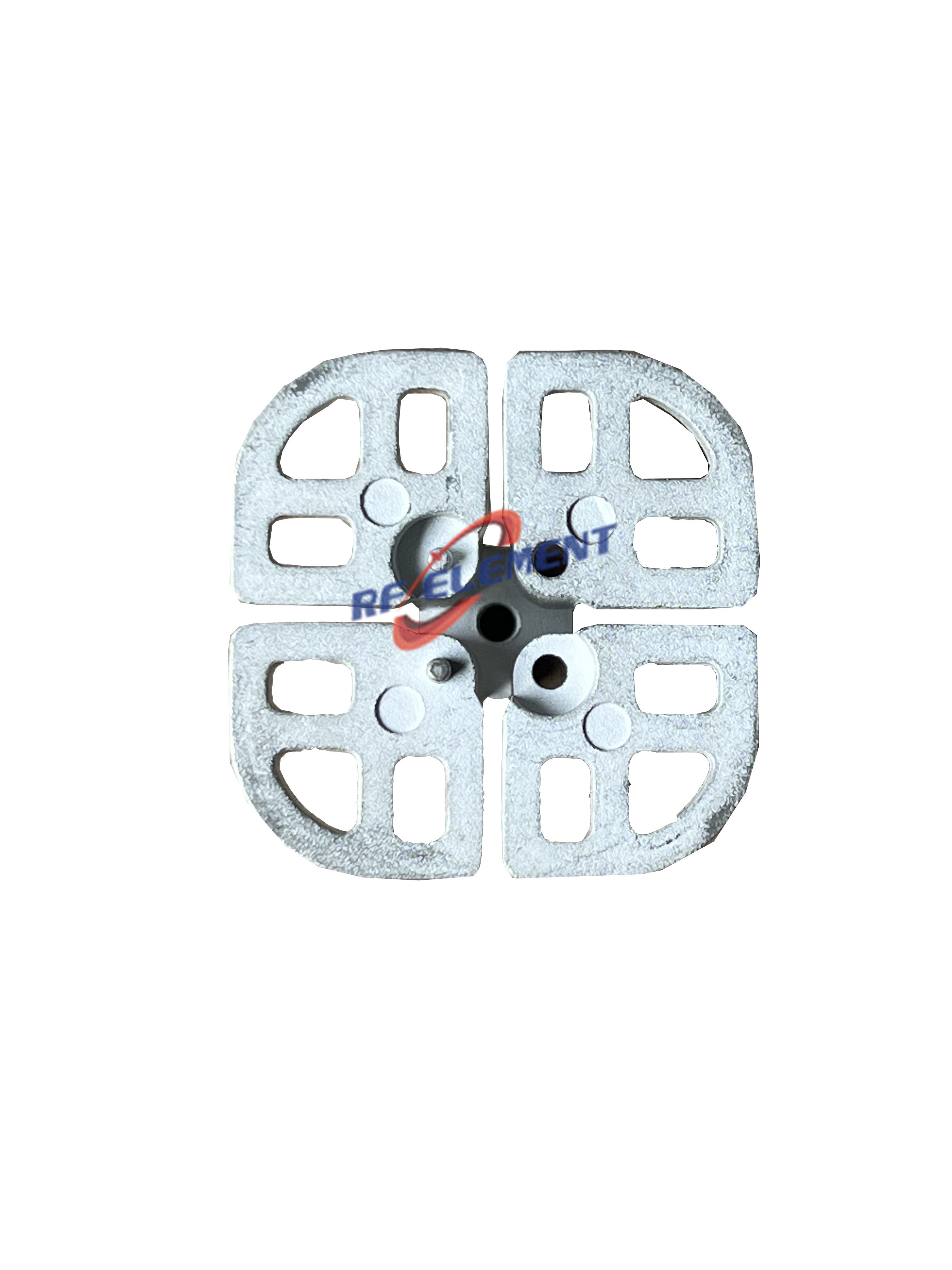
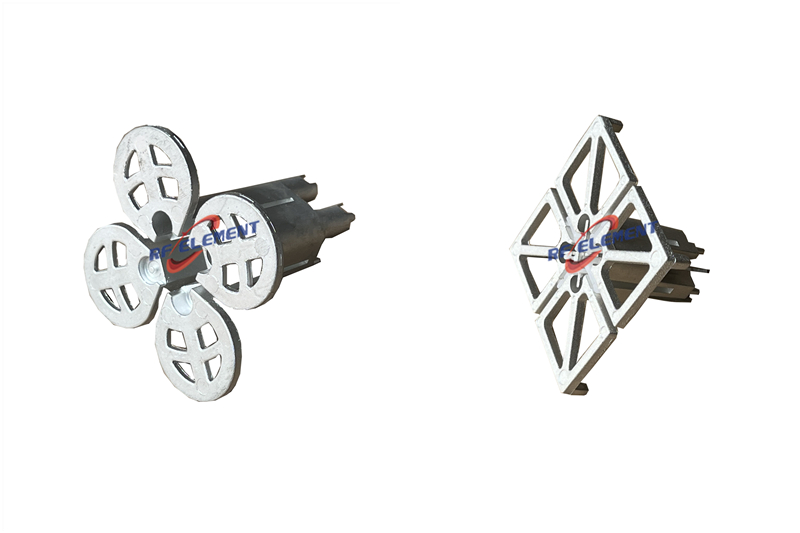
Coverage, not reach. Indoor designs are omni-directional or wide-beam by intent. The 5G MIMO ceiling antenna we build radiates 360° horizontally, with a vertical beamwidth of 85 ± 10° in the low bands (698–960 MHz) narrowing to 50 ± 10° at 3300–3800 MHz, so the higher bands do not overshoot the floor.
Several bands through one radome. A DAS is shared infrastructure. One antenna may have to carry 700 MHz coverage, 1800/2100/2600 MHz LTE and 3.5 GHz 5G from two or three operators at the same time. Our indoor antenna covers 698–3800 MHz in a single housing, with sub-bands at 698–806 / 806–960 / 1710–2700 / 3300–3800 MHz.
Mechanics that suit someone working overhead. The 215 × 215 × 41 mm ABS housing weighs 0.8 kg and mounts with the fasteners and screws supplied. No installer wants to hold a heavy antenna against a ceiling while hunting for the last screw.
Four Specifications That Decide Acceptance Testing
Not every figure on a datasheet carries the same weight indoors. Four do most of the work.
PIM. Passive intermodulation is the failure mode that never shows up in a site photograph. Two high-power carriers mix at a non-linear junction inside the antenna and land a product in the operator's receive band. The symptom is not a coverage gap but degraded uplink throughput in a loaded network, and it usually surfaces during the operator's acceptance test — after the installation is complete. Our 5G MIMO ceiling antenna is specified at ≤ -97 dBm with 2 × 2 W carriers, and every low-PIM unit is measured in our own microwave anechoic chamber before it ships.
VSWR. ≤ 1.5 across every sub-band on this model. A poor match wastes forward power and reflects it back toward the amplifier, which matters more indoors because cable runs are long and one amplifier often feeds several antennas.
Isolation. MIMO indoors means two radiating elements a few centimetres apart. Isolation on this product is ≥ 15 dB at 698–960 MHz, ≥ 18 dB at 1710–2700 MHz and ≥ 20 dB at 3300–3800 MHz — enough to keep the two streams separable.
Beamwidth per band. A single vertical figure would be misleading on a wideband antenna. Here the vertical beamwidth steps from 85 ± 10° at 698–960 MHz to 50 ± 10° at 3300–3800 MHz. That narrowing is deliberate: it is how the higher bands are kept from spilling through the floor plate into the storey below.
Ceiling, Wall or High-Capacity: Choosing an Indoor Format
Three indoor formats cover most projects. The choice is driven by geometry, not by budget.
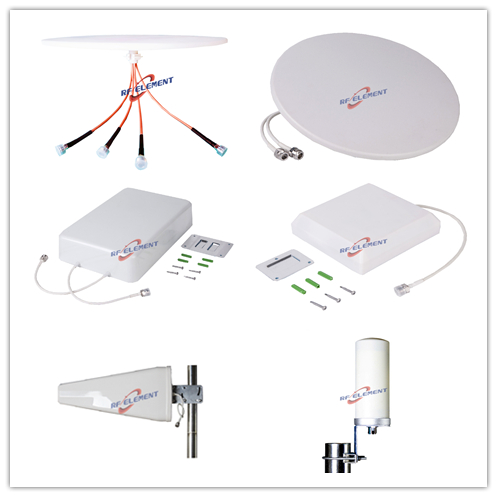
Ceiling omni, 2×2 MIMO. The default for open-plan offices and lobbies — 698–3800 MHz, up to 5 dBi, 360° horizontal coverage. What limits the area one unit covers is not the antenna but the partition density and the ceiling height.
Ceiling omni, 4×4 MIMO, slim profile. For venues where capacity rather than coverage is the binding constraint — conference halls, stadium concourses, transport interchanges. The 4×4 MIMO ceiling antenna runs 698–4200 MHz at 4 dBi and doubles the number of spatial streams available to the system.
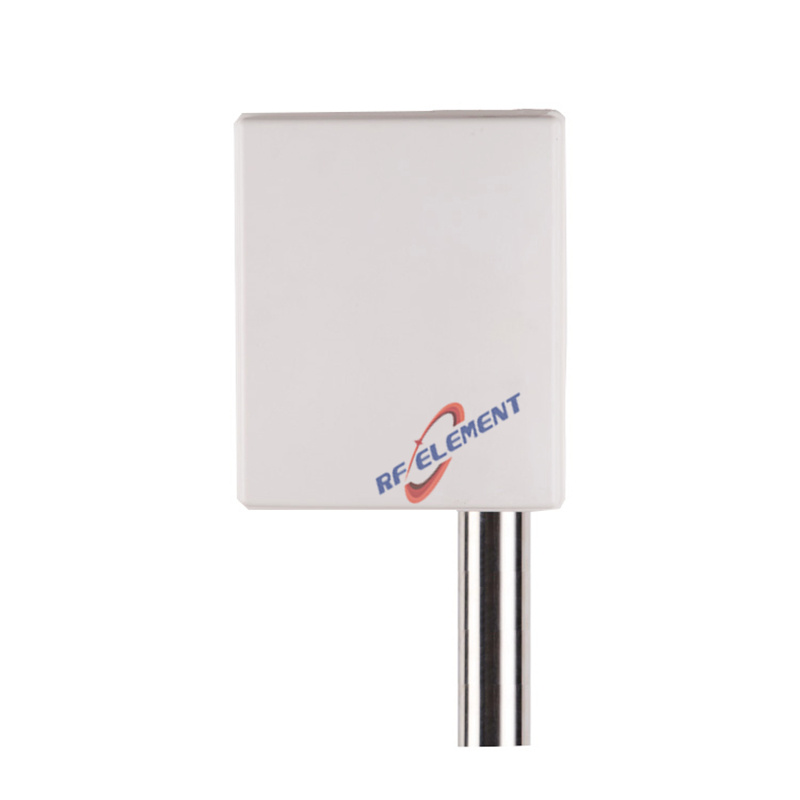
Wall-mount directional panel. Where coverage should follow a corridor or stop at a wall instead of radiating in all directions. The indoor wall-mount panel antenna covers 698–4200 MHz at 8 dBi with a directional pattern.
Where a Ceiling Antenna Is the Wrong Choice
Indoor antennas are not the answer to every coverage problem, and it is worth saying so before a project orders hardware.
High ceilings. Ceiling heights above roughly 6 m are where an omni unit mounted at ceiling level starts to struggle to deliver useful signal at floor level. Tall atria, warehouse roofs and long tunnels normally need directional panels aimed downward, or leaky feeder cable along the length of the space.
Anything outdoors. An indoor radome is not rated for rain or UV, and its pattern is wrong for the job. A car park, a yard or a street needs an outdoor antenna, not a ceiling unit mounted under a canopy for convenience.
A single narrow band. If a site needs one operator's band and nothing else, a full-band indoor antenna is more hardware than the project requires. A band-specific design is usually smaller and cheaper.
What Ships With the Antenna
Every indoor antenna in our catalogue is characterised in our microwave anechoic chamber. For low-PIM part numbers the measured data travels with the shipment instead of staying in our files, because that is the figure the installer will be asked to produce.
Commercial terms are the same across our product lines: low MOQ, so a single site can be equipped before a rollout is committed; 3–5 working days for samples on a standard platform; 15–25 working days for volume production after approval. Connector type, cable tail, mounting hardware, radome colour and mechanical dimensions can all be changed, and gain or beamwidth retuned to suit a specific coverage plan — in house, alongside our CNC machining, die-casting and injection moulding.
If you are planning in-building coverage, the useful things to send us are the band plan, the ceiling height, the floor area and the number of operators the system must serve. With those we can tell you how many antennas the space needs and which format fits. Send the four numbers and we will come back with a plan, or browse the wider 5G indoor antenna range, which includes full-band and slim-profile ceiling models up to 698–6000 MHz.
TAG:5G Indoor Antenna: Understanding Its Functionality and Importance https://www.rfelement.com