
4G LTE Antenna Manufacturer: A Comprehensive Guide
Most articles about choosing a 4G LTE antenna manufacturer give you a checklist: quality, expertise, customization, support. That checklist is correct and completely useless — every supplier claims all four. This guide takes a different approach: we will tell you what a 4G LTE antenna actually has to do, which specifications separate a good one from a bad one, and how a manufacturer (we are one, so you should calibrate for that) proves each point with measurement instead of adjectives.
What a 4G LTE Antenna Must Actually Do
An LTE antenna has one job: transfer power between a radio and the air, across the right frequency bands, without adding distortion. In practice that means three things:
Cover the right bands. LTE deployments live mostly in 698–960 MHz (low bands, coverage) and 1710–2700 MHz (mid bands, capacity), with regional variations. A wideband antenna covering 698–2700 MHz in one radome removes the need to stock separate models per band.
Feed both MIMO ports cleanly. Modern LTE terminals expect 2×2 MIMO. An antenna with poor port-to-port isolation throws away much of the MIMO gain before the radio even starts.
Stay linear under power. With two 20 W carriers sharing an antenna, passive intermodulation (PIM) lands right in your uplink band. This is the specification that fails networks during acceptance testing, not gain.
The Types We Manufacture, and When Each Fits
Our 4G LTE antenna line covers the common form factors:
Omnidirectional antennas — for vehicles, gateways, and any site where the client direction is unknown or moving
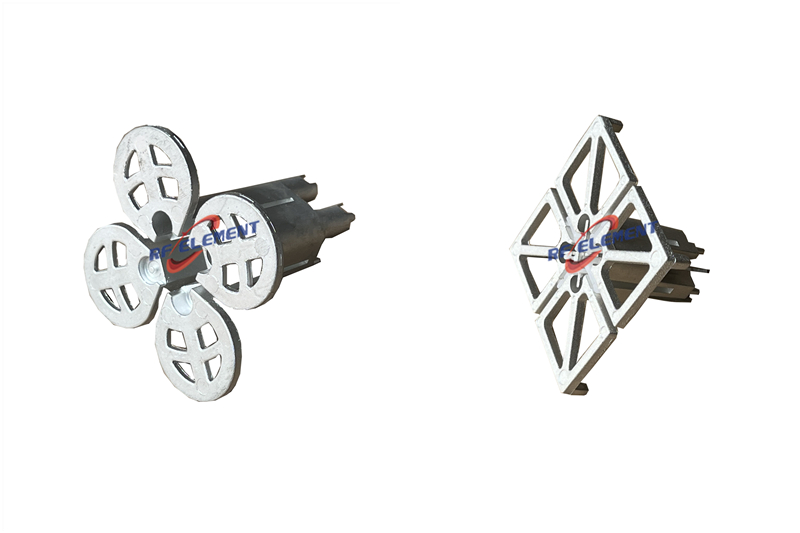
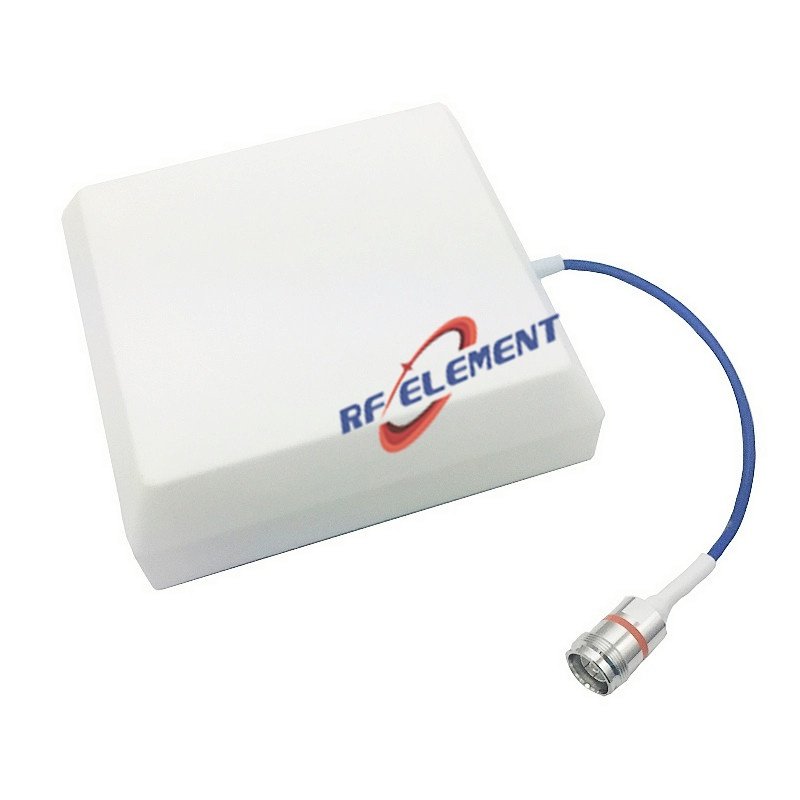
Panel and MIMO panel antennas — directional coverage for fixed sites, DAS, and in-building distribution; ±45° dual-polarized, 2-port
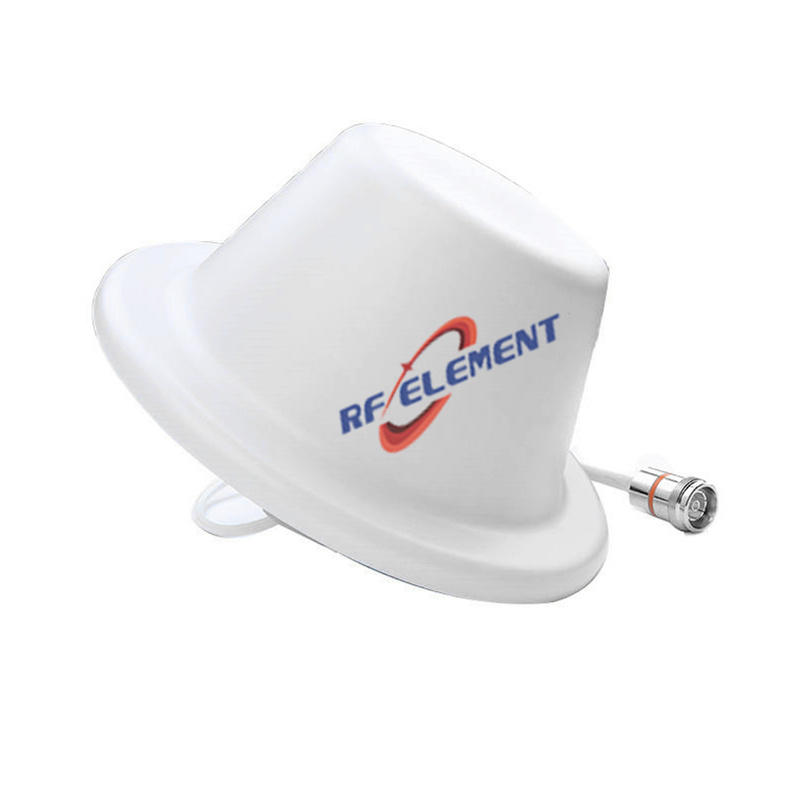
Ceiling and dome antennas — indoor coverage where aesthetics and low profile matter as much as pattern
Booster/external antennas — for signal boosters and repeaters in weak-coverage areas
One example with real numbers — our wideband outdoor panel covers 698–4200 MHz (so it serves LTE today and 5G n78/n79 later), delivers 5–8 dBi per sub-band, keeps VSWR at ≤1.6–2.0, isolates its two ports by ≥20–25 dB, and measures −153 dBc PIM at 2×20 W. Full electricals are on the product page; note that gain here is honest — 8 dBi, not the 12 dBi a catalog with looser definitions might print for the same size radome.
Five Checks Before You Choose Any Manufacturer
1. Ask for the PIM test report, per unit
A "low PIM" label means nothing; a −153 dBc @ 2×20 W measurement with the unit’s serial number means everything. We PIM-test 100% of shipments in our own anechoic chamber and send the data with the product. If your current supplier cannot do this, that is your first filter.
2. Check the gain against the beamwidth
Gain is not free — it is taken from beamwidth. An antenna claiming high gain in a small radome is either narrow-beamed (hard to align, coverage holes at the edges) or exaggerating. Compare gain and beamwidth figures together, from the same datasheet.
3. Match the connector and cable plan early
N-Type Female and 4.3-10 Female behave differently at installation: 4.3-10 saves space and PIM-critical torque consistency; N-Type is everywhere in legacy tooling. Decide the connector before the order, not after the cables arrive. We build both — it is a standard customization, not a special favor.
4. Verify the environmental envelope
Our outdoor radomes are rated −55°C to +60°C operating temperature. If your site sees desert heat or mountain cold, ask for the number — and for the material (we use UV-stabilized ABS). A radome that cracks in year two was not weather-resistant; it was weather-tolerant.
5. Confirm the manufacturer can modify, not just resell
The real difference between a factory and a trading company shows up when you need a 300 mm cable instead of 3 m, a right-angle connector, or a band edge moved. We run RF simulation, CNC machining, die-casting, injection molding, and laser processing in-house in Zhaoqing, so a modified sample takes 3–5 working days and volume follows in 15–25. A reseller cannot promise that, because they do not control the tools.
Where We Are Honest About Limits
We will tell you in the first reply — typically within 1–2 working hours — if your requirement falls outside what we do well. We design Sub-6 GHz and microwave antennas up to 13 GHz; we do not make mmWave antennas, and we do not publish customer case statistics we cannot back with data. For a transparent example of how we document a design, see our published 3200–3800 MHz n78 panel antenna walkthrough, and our low PIM antenna category for PIM definitions and test conditions.
Bottom Line
A 4G LTE antenna is a ten-year component installed once, on a tower or a ceiling, where nobody wants to revisit it. Choose the manufacturer by asking for measurements — PIM report, VSWR sweep, per-unit test data — and by testing how they respond to one small modification request. If the answers come back fast, specific, and verifiable, you have found your supplier. Ours start at the contact page.
TAG:4G LTE Antenna Manufacturer: A Comprehensive Guide https://www.rfelement.com