5G Antenna Manufacturer: RF element Cutting-Edge Solutions for Global Connectivity
When we started RF element in 2017 in Zhaoqing, China, we made one bet: that network operators and system integrators would rather buy antennas from a factory that can show them test data than from a catalog that promises everything. Eight years later, that bet still shapes how we design, test, and ship every 5G antenna we build.
This page explains what we actually manufacture, how we control quality, and where we are honest about our limits. If you are evaluating 5G antenna manufacturers, you should be able to verify everything below — most of it comes straight from our published specification sheets.
What We Build: Wideband 5G MIMO Panel Antennas
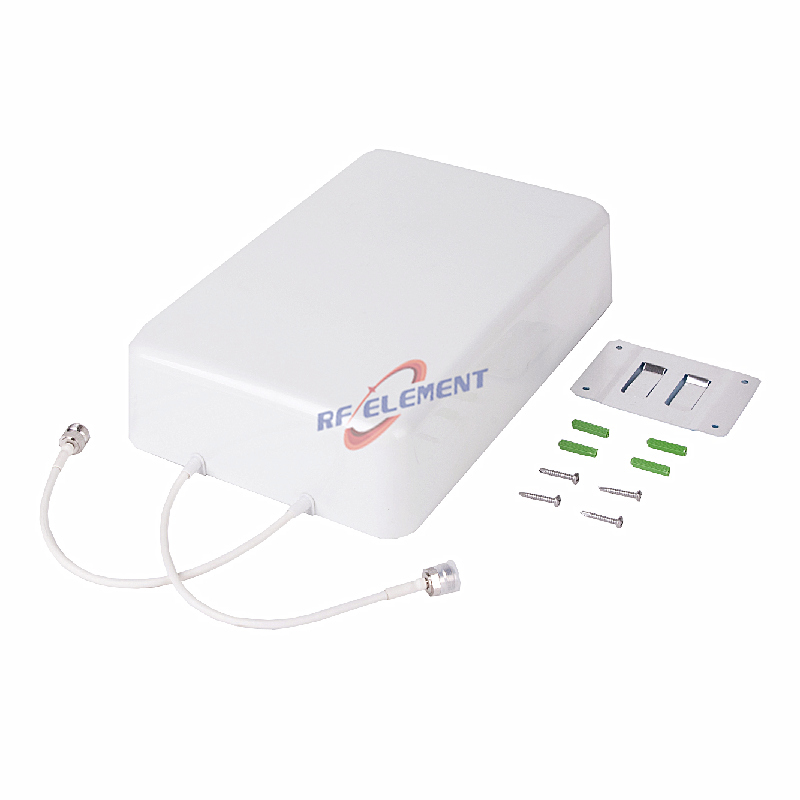
Our core 5G product line is wideband MIMO panel antennas covering 698–4200 MHz in a single radome — one antenna that serves LTE, 5G n78 (3300–3800 MHz), n79 (3800–4200 MHz), and everything in between. A representative model from our catalog:
Frequency sub-ranges: 698–806 / 806–960 / 1350–1550 / 1710–2700 / 3300–3800 / 3800–4200 MHz
Polarization: ±45° dual-linear, 2-port MIMO
Gain: 5–8 dBi depending on sub-band, with 60–80° horizontal beamwidth
VSWR: ≤1.6–2.0 across sub-ranges; port-to-port isolation ≥20–25 dB
3rd-order PIM: −153 dBc @ 2×20 W carriers
Connectors: 2 × 4.3-10 Female or N-Type Female; max input power 50 W
Operating temperature: −55°C to +60°C; pole-mount radome 310 × 230 × 73 mm, 1.0 kg
You can check these numbers against the live datasheet on our 5G 2x2 MIMO panel antenna product page — we publish the full electrical specification for every model, not just marketing highlights. The wider families, including ceiling and booster variants, are listed under our 5G antenna category.
Low PIM Is a Measurement, Not a Slogan
Passive intermodulation (PIM) is where 5G deployments quietly fail: two strong carriers mix inside an imperfect junction and generate interference right in your receive band. You cannot see PIM on an installation photo — you only see it as degraded uplink throughput in a loaded network.
That is why every low-PIM antenna we ship is 100% sweep- and PIM-tested in our own microwave anechoic chamber before it leaves the factory. The panel antenna above measures −153 dBc at 2×20 W — and the test data travels with the product. If a supplier tells you their antenna is "low PIM" but cannot attach a per-unit test report, that claim is worth exactly what you paid for it.
More on how we define and test this on our low PIM antenna category page.
Customization: What We Can Change, and How Fast
Most of our orders start with a standard model and end with a small modification: a different connector, a longer cable tail, a custom gain profile, or a frequency adjustment for a regional band plan. Because we do RF simulation, tooling, and manufacturing in-house — CNC machining, die-casting, plastic injection molding, and laser processing — a custom variant does not mean a subcontracting chain. Typical numbers:
Response to inquiries: within 1–2 working hours
Samples: 3–5 working days for standard-platform modifications
Volume production: 15–25 working days after approval
MOQ: low, so you can validate in the field before committing to volume
If you want to see how we approach a design from scratch — pattern targets, feeding structure, chamber validation — our engineers documented the full process in a published design walkthrough of a 3200–3800 MHz n78 panel antenna.
Where Our Antennas Are Deployed
We concentrate on applications where wideband, low-PIM panel and ceiling antennas are the right tool:
Carrier and DAS installations: urban small cells and in-building distribution, where multiple operators share one antenna and PIM performance decides who passes acceptance testing
Private 5G / LTE networks: factories, campuses, and logistics yards running n78 or n79, needing predictable coverage over a defined area
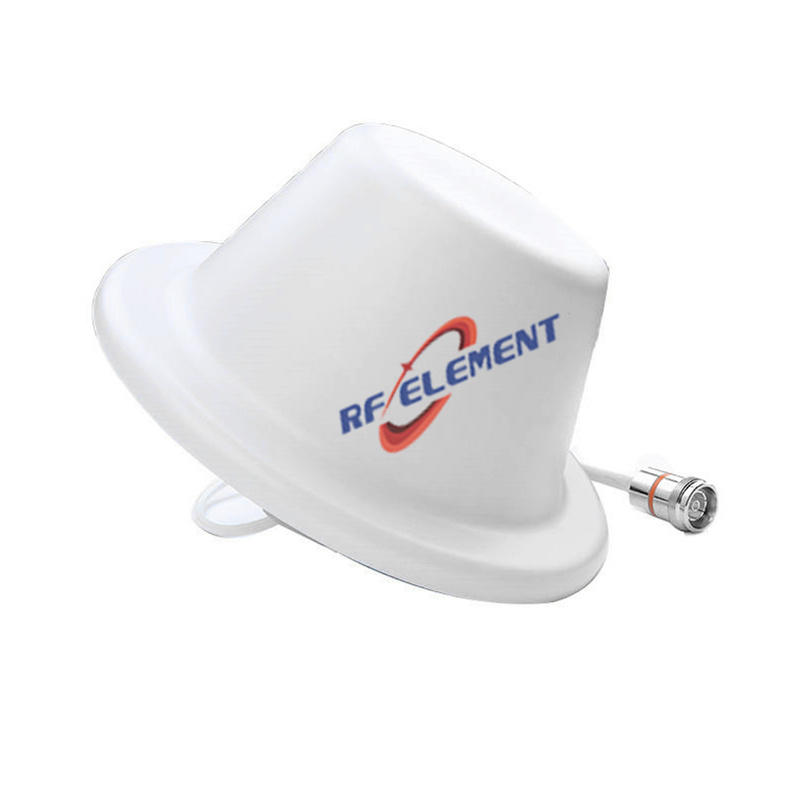
Indoor coverage: ceilings and wall-mount MIMO antennas for offices, metro stations, and public venues
For neighboring frequency ranges we also manufacture WiFi, LoRa, RFID, and GNSS antennas, and our microwave designs extend up to 13 GHz — which brings us to what we do not do.
Talk to the Factory
If you are comparing 5G antenna manufacturers, send us your band plan, mounting constraints, and target coverage. You will get a straight answer about what we can do, a datasheet you can verify, and a sample timeline you can plan around. Start at our contact page or browse the full portfolio on RF element product list.
TAG:5G Antenna Manufacturer: RF element Cutting-Edge Solutions for Global Connectivity https://www.rfelement.com