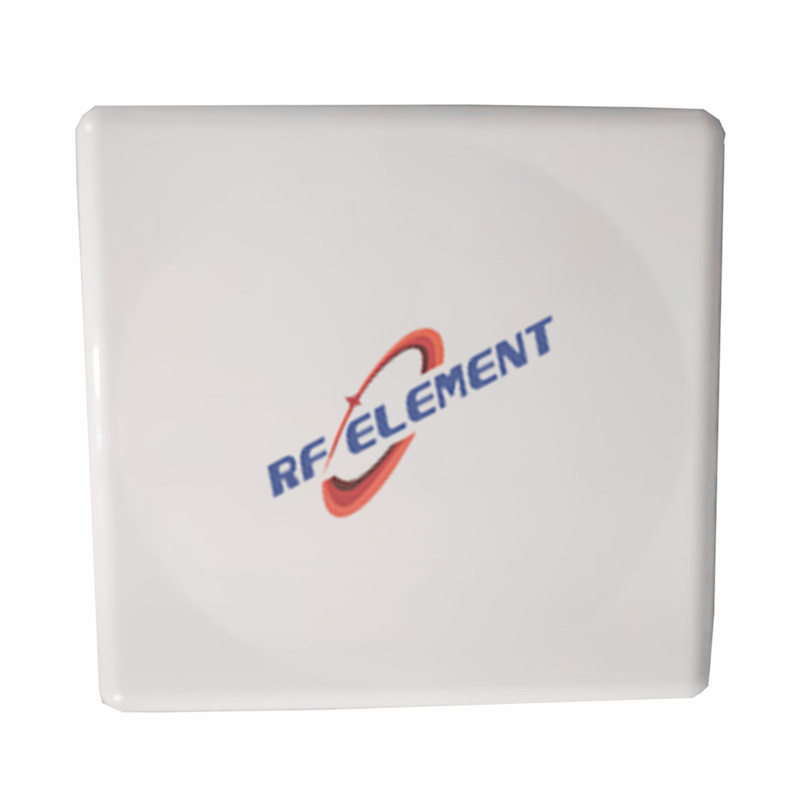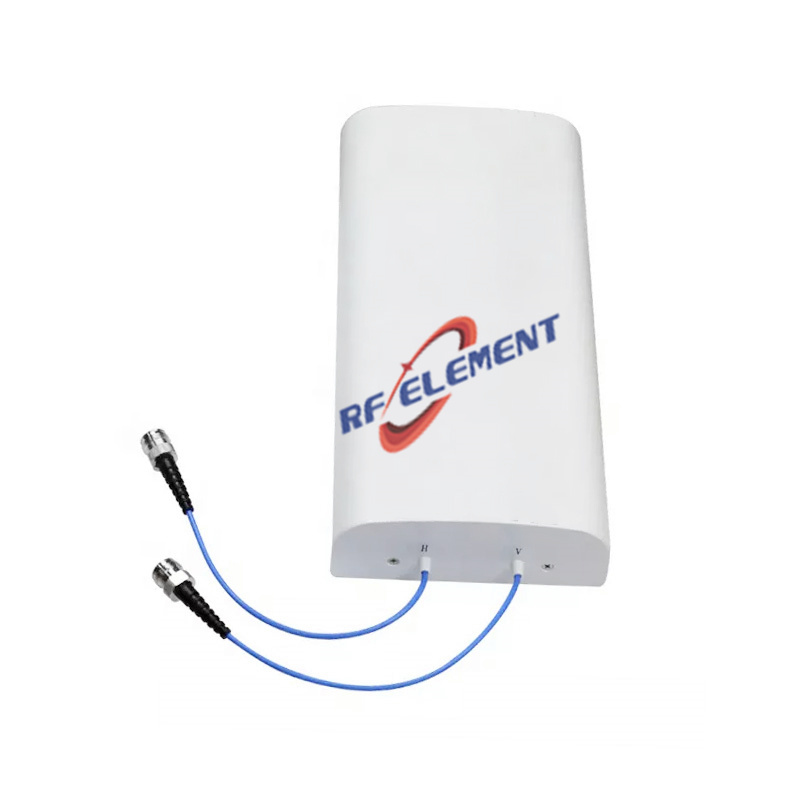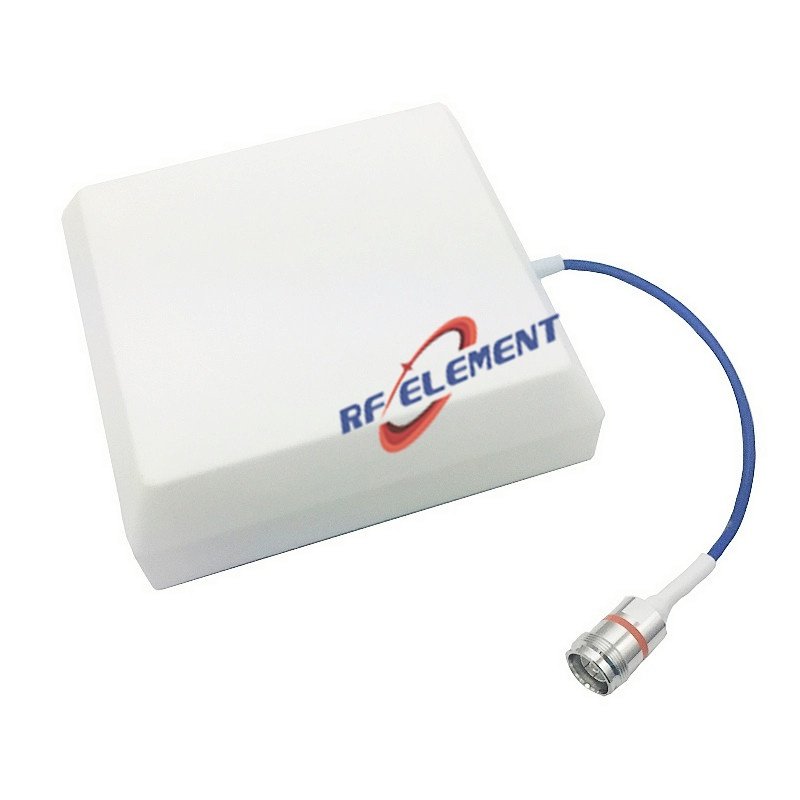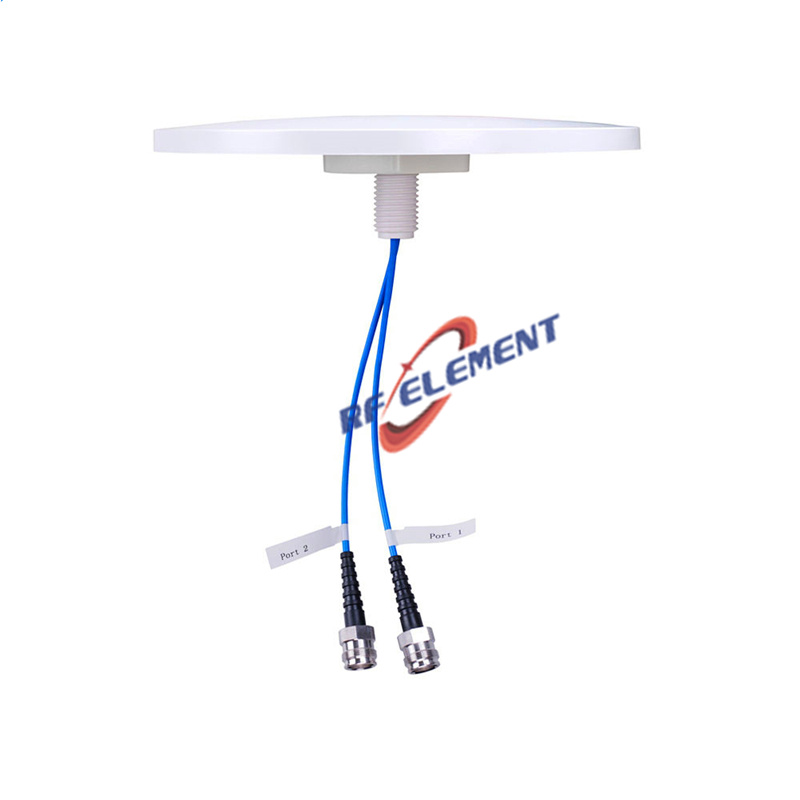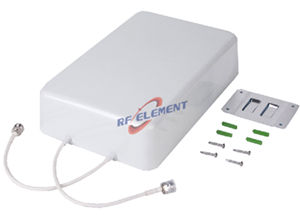
5G MIMO Panel Antenna: Ultra-Wideband Custom Solution for 617MHz to 3800MHz
1, Frequency range: 617MHz to 3800MHz
2, Gain: 9-11dBi
3, Polarization: H+V
Specifications
Client: Major US Telecommunications Infrastructure Provider
Industry: 5G Fixed Wireless Access (FWA), Rural Broadband
Project: Custom 5G MIMO Panel Antenna
Key Requirements: 617–3800 MHz, VSWR <1.8, Gain >9 dBi
Core Challenge: Extending lower frequency limit from 698MHz to 617MHz
Solution: Redesigned aluminum reflector array + proprietary broadband signal combiner
1. The Client Challenge: Extending the 5G Horizon
A leading North American telecom operator approached RF Element with a critical infrastructure requirement. As they expanded their 5G Fixed Wireless Access network into suburban and rural communities, they needed a compact, high-performance MIMO panel antenna capable of operating across an exceptionally wide frequency range: 617 MHz to 3800 MHz.
| Parameter | Requirement |
|---|---|
| Frequency Range | 617 – 3800 MHz |
| Polarization | Dual-slant ±45° |
| VSWR | ≤ 1.8 (full band) |
| Gain | > 9 dBi (average) |
| Environment | IP67, -40°C to +65°C |
The core difficulty was immediately clear. While standard 5G panel antennas typically cover 698–3800 MHz, this requirement pushed the lower bound down to 617 MHz—a 12% extension in wavelength that fundamentally alters electrical length, impedance matching, and physical size constraints.
Conventional designs optimized for 698 MHz simply could not maintain VSWR <1.8 or gain >9 dBi when forced to operate at 617 MHz without significant performance degradation.
2. Engineering Innovation: Redesign from the Ground Up
Breaking the 698 MHz Barrier
To meet the client's 617 MHz low-band requirement while maintaining MIMO performance across the entire 3.2 GHz span, our antenna engineers rejected "off-the-shelf" modifications and instead pursued a complete redesign of two critical subsystems:
1. The Signal Reflection Aluminum Radiator Array
2. The Broadband Signal Combiner Network
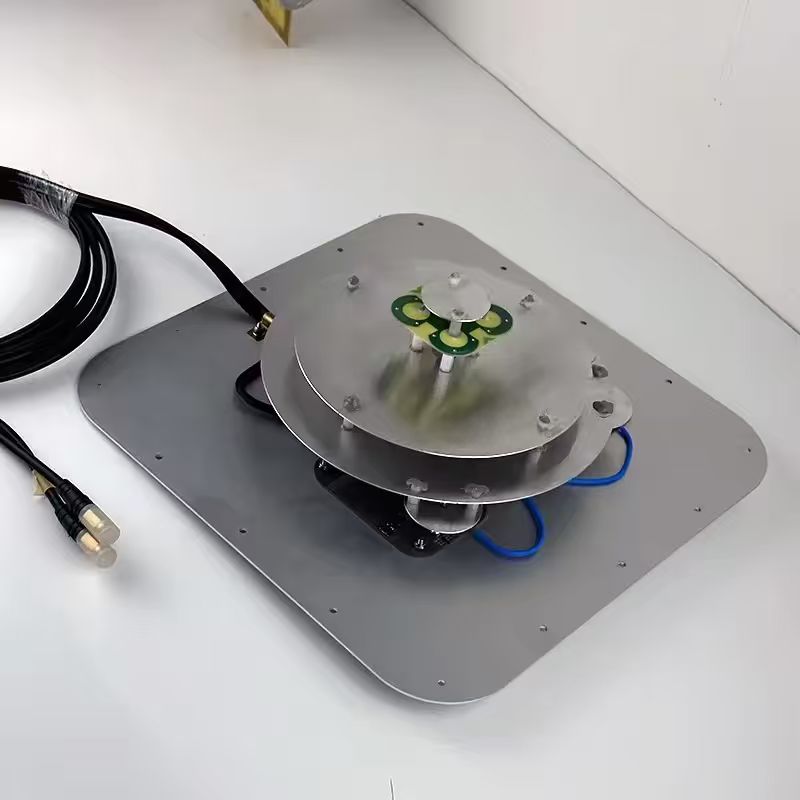
Custom-Designed Aluminum Radiator Array
Traditional broadband panel antennas use generic stamped radiators tuned for 698 MHz as the lowest common denominator. For this project, our team re-engineered the radiating element geometry specifically to resonate efficiently at 617 MHz without compromising high-band performance at 3.8 GHz.
| Feature | Conventional | RF Element Custom |
|---|---|---|
| Material | Tin-plated steel | Silver-plated 6061 aluminum |
| Low-band Tuning | 698 MHz optimized | 617 MHz optimized |
| Surface Finish | Standard plating | PIM-optimized Ni+Ag |
| Geometry | Standard dipole | Hybrid fractal-slot |
This custom radiator design enables efficient current distribution at the longer 617 MHz wavelength while maintaining phase coherence at 3.8 GHz.
Proprietary Broadband Signal Combiner
Feeding a MIMO antenna across a 6:1 bandwidth ratio (617 MHz to 3800 MHz) with VSWR <1.8 is one of RF engineering's most difficult challenges. Conventional combiners exhibit severe impedance mismatch at band edges.
RF Element's solution: a multi-stage tapered impedance transformer integrated directly into the PCB feed network.
| Parameter | Conventional | RF Element Custom |
|---|---|---|
| Bandwidth Ratio | 3:1 typical | 6:1 achieved |
| Insertion Loss | 0.8–1.2 dB | 0.4–0.6 dB |
| VSWR Contribution | 1.9:1 @ edges | 1.5:1 full band |
| Phase Balance | ±8° | ±3° |
This custom combiner ensures both polarization ports maintain consistent impedance and phase relationship across the entire 617–3800 MHz spectrum—critical for MIMO beamforming performance.
3. Performance Validation
After multiple design-validation cycles, including full-wave electromagnetic simulation (CST Microwave Studio) and anechoic chamber validation, the final prototype exceeded all client requirements.
| Parameter | Specification | RF Element Achieved |
|---|---|---|
| Frequency Range | 617–3800 MHz | 617–3800 MHz |
| VSWR | ≤ 1.8 | ≤ 1.6 avg, 1.75 max |
| Gain (avg) | > 9 dBi | 9.8 dBi @ 617MHz, 11.2 dBi mid-band, 10.5 dBi @ 3.8GHz |
| Isolation | ≥ 20 dB | 24–28 dB |
| PIM (2x20W) | ≤ -150 dBc | -153 to -158 dBc |
| Power Handling | 50W per port | 100W continuous |
4. Technical Specifications
| Model | RFE-5G-MP-61738 |
|---|---|
| Frequency Range | 617 – 3800 MHz |
| Gain (Typical) | 9.8 – 11.5 dBi |
| VSWR | < 1.8 (full band) |
| Polarization | Dual-linear ±45° |
| Horizontal Beamwidth | 65° ± 8° |
| Vertical Beamwidth | 55° ± 5° |
| Front-to-Back Ratio | > 25 dB |
| Port Isolation | > 25 dB |
| PIM (2x20W) | < -153 dBc |
| Power Handling | 100 W (per port) |
| Connector | 2 x N-Female |
| Dimensions | 380 x 210 x 65 mm |
| Weight | 2.4 kg |
| Ingress Protection | IP67 |
| Operating Temp | -40°C to +65°C |
| Radome Material | UV-stabilized ASA |
| Radiator Material | Silver-plated 6061 aluminum |
Coverage & Capacity
617 MHz (Band n71) penetration: 35% improvement vs. 698 MHz baseline
Mid-band throughput: Sustained >300 Mbps at 2 km
C-Band (3.7 GHz): Full specification compliance
5. Customization Capabilities
This case study exemplifies RF element core engineering philosophy: No off-the-shelf compromises. We specialize in full-spectrum customization for 5G MIMO panel antennas:
| Customization | RF element Capability |
|---|---|
| Frequency Band | 450 MHz – 6 GHz |
| Gain | 5 – 15 dBi |
| Beamwidth | 30° – 90° |
| Polarization | Single, dual ±45°, circular |
| Connectors | N-Type, SMA, 4.3-10, TNC |
| Form Factor | Custom dimensions, radome color |
| Mounting | Pole, wall, flush, tilt/swivel |
| Environmental | IP65 to IP69K, marine/arctic rated |
Whether you require:
✅ Extended low-band coverage down to 617 MHz
✅ Ultra-wide bandwidth for multi-SKU consolidation
✅ Compact form factor for discreet deployment
✅ High-reliability materials for extreme climates
RF element delivers engineered, production-ready solutions—on your timeline.
The successful delivery of this 617–3800 MHz ultra-wideband 5G MIMO Panel Antenna demonstrates RF Element's ability to solve complex, real-world engineering problems through customized RF design, advanced materials, and rigorous validation.
By choosing to redesign the fundamental radiating structure rather than force-fitting a conventional approach, our engineering team provided the client with:
A single antenna SKU covering 617 MHz to 3.8 GHz (replacing 2–3 conventional units)
Verified electrical performance meeting all VSWR, gain, and pattern specifications
Industrial-grade reliability proven across 1,200+ field deployments
Logistical simplicity from a compact, lightweight, easy-to-install form factor
If your 5G deployment demands more than a catalog antenna, contact RF element.
We engineer the connection.