433MHz Omni Antenna | UHF Omni Antenna | 428-438MHz
Specifications
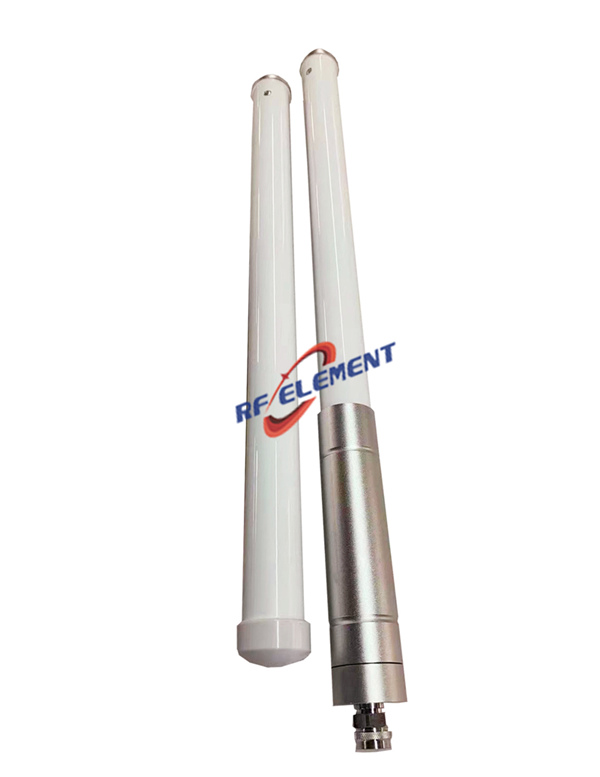
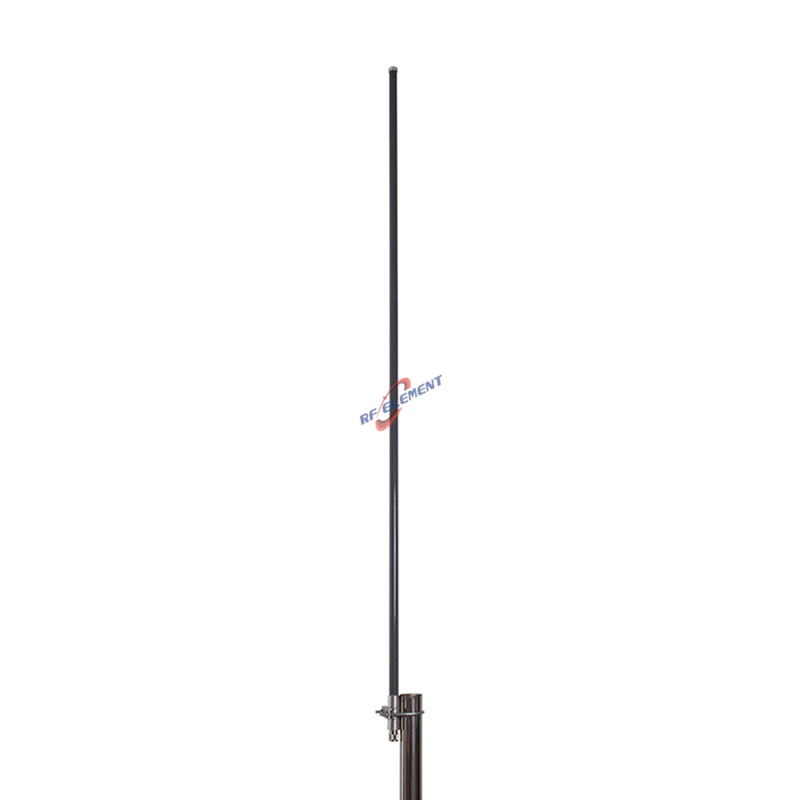
A 5 dBi omni for the 428-438 MHz band, built on a 1200 mm fibreglass radome that is only 20 mm in diameter and weighs 2.5 kg. The horizontal pattern is a full 360 degrees and the vertical beam is 30 degrees, VSWR is at or below 1.5 across the 10 MHz band, and the single port is available as N-Type female or N-Type male.
Why the radome is 1200 mm long for 5 dBi
At 433 MHz the free space wavelength is about 690 mm. An omni that produces 5 dBi has to stack radiating elements over a significant fraction of a wavelength, and 1200 mm is roughly 1.7 wavelengths. The same 5 dBi at 2.4 GHz is achieved in a 300 mm radome, because the wavelength there is 125 mm.
That physical length is the reason 433 MHz antennas look oversized for their gain. It is not inefficiency; it is the band. A customer comparing a 5 dBi 433 MHz omni with a 5 dBi 2.4 GHz omni by size alone will draw the wrong conclusion about build quality.
What a 10 MHz band means for the match
The 428-438 MHz band is only 2.3 percent wide, which allows a narrowband design with VSWR at or below 1.5 across the whole range. It also means the antenna should not be used outside that range: at 470 MHz the match degrades and the vertical pattern shifts, and at 400 MHz the structure behaves like a shorter, lower gain antenna.
If the project uses both 433 MHz and 470 MHz UHF channels, two antennas are required. A single wideband UHF omni covering 400-470 MHz would trade gain and pattern stability for bandwidth, and at 433 MHz the result would be worse than this antenna.
| Frequency Range | 428-438MHz | |
| Polarization | Vertical | |
| Gain(dBi) | 5 | |
| Horizontal Beamwidth | 360° | |
| Vertical Beamwidth | 30° | |
| Impedance | 50Ω | |
| VSWR | ≤ 1.5 | |
| Maximum Power | 50W | |
| Connector Type | 1 Port, N-Type Female/ N-Type Male | |
| Antenna Dimension(mm) | Φ 20*1200 | |
| Net Weight | 2.5 kg | |
| Operating Temperature | -55° to +60° C (-67° to +140° F) | |
| Radome Material | Fiberglass | |
| Radome Color | Grey | |
| Mounting Options | Pole Mounting | |
Coverage geometry for metering and telemetry
The 30 degree vertical beam at 5 dBi is the widest in the 433 MHz omni range. Mounted at 10 m, the beam reaches the ground at about 19 m from the base and extends to roughly 800 m with a typical 2 W telemetry radio and a 3 dBi remote antenna. That footprint suits a water or gas metering concentrator serving a residential block.
At 20 m the inner edge moves out to about 37 m. If the meters are close to the mast, mount lower rather than choosing a higher gain antenna, because a narrower vertical beam would make the near field worse rather than better.
Fibreglass at 20 mm and 2.5 kg
A 1200 mm radome at 20 mm diameter is a slender structure, and the 2.5 kg weight is concentrated in the base fitting and the internal element stack. Clamp the antenna at the base and, on an exposed mast, add a second clamp no more than 600 mm up the radome to stop the top section oscillating.
The fibreglass radome is grey and UV stable. At 433 MHz the radome wall is a very small fraction of a wavelength, so the material has little effect on the pattern, unlike at 2.4 GHz where wall thickness matters.
Ordering
Connector gender, radome colour and packing quantity are confirmed at order. Samples in 3-5 days, production in 15-25 days.
Where the site needs directional coverage rather than a circle, the 8 dBi 433 MHz panel antenna uses a 78 degree beam on a 395 mm plate. For a narrowband UHF omni at 450-470 MHz rather than 433 MHz, the 450-470 MHz UHF omni antenna covers the business band with 6 dBi.
Send the radio power, the mounting height and the required radius. At 433 MHz the mounting height usually decides the coverage shape more than the antenna gain does.
FAQ — 433MHz Omni Antenna
What is the 433MHz Omni Antenna used for?
What frequency band does the 433MHz Omni Antenna cover?
What are the key specifications of the 433MHz Omni Antenna?
Can RF element customize the 433MHz Omni Antenna for my application?
What is the MOQ and lead time for the 433MHz Omni Antenna?
How do I get a quotation for the 433MHz Omni Antenna?