
LoRa Omni Antenna | Detachable LoRa Omni Antenna | 868MHz and 915MHz Bands
Specifications
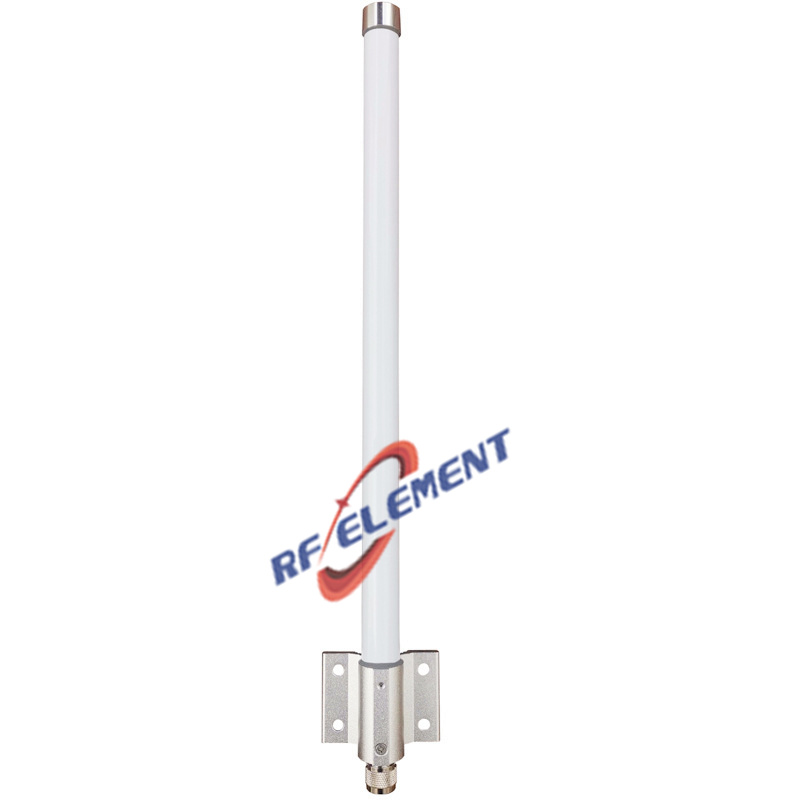
An 8 dBi LoRa omni covering 860-870 MHz and 902-928 MHz in a 1200 mm fibreglass radome 38 mm in diameter, weighing 3.5 kg. The horizontal pattern is 360 degrees and the vertical beam is 20 degrees, VSWR is at or below 1.5, and the single port is available as N-Type female or N-Type male. It is intended for gateway sites that are high above the sensors and have a clear horizon in all directions.
Twenty degrees and a coverage ring
At 8 dBi the vertical beam is 20 degrees, which is narrow enough to be treated as a ring rather than a circle. The beam reaches the ground at a distance set by the mounting height and leaves a cone of reduced coverage directly below the antenna.
At 20 m height the inner edge is about 143 m and the outer edge is roughly 3 km with a typical LoRa gateway and a 2 dBi sensor. At 30 m the inner edge moves out to about 215 m. For a gateway on a water tower or a tall mast serving a rural area, that is the right shape; for a gateway on a two storey building, the 5 dBi version covers the near field better.
Two regional bands in one radome
The 860-870 MHz and 902-928 MHz bands are both covered, so the same antenna serves European and North American gateways. The gain figure of 8 dBi applies across both bands, which is a property of the broadband element design rather than of a tuned narrowband structure.
Because the antenna is broadband, it also covers the 915 MHz ISM band in the middle, which is used by some LPWAN and telemetry systems outside the LoRa ecosystem. That makes it a reasonable general purpose 900 MHz gateway antenna rather than a LoRa-specific part.
| Frequency Range | 860-870MHz/902-928MHz | |
| Polarization | Vertical | |
| Gain(dBi) | 8±0.5 | |
| Horizontal Beamwidth | 360° | |
| Vertical Beamwidth | 20±2° | |
| Impedance | 50Ω | |
| VSWR | ≤ 1.5 | |
| Maximum Power | 50W | |
| Connector Type | 1 Port, N-Type Female/ N-Type Male | |
| Antenna Dimension(mm) | Φ 38*1200 | |
| Net Weight | 3.5 kg | |
| Operating Temperature | -55° to +60° C (-67° to +140° F) | |
| Radome Material | Fiberglass | |
| Radome Color | White or Gray | |
| Mounting Options | Pole Mounting, 2 parts for detachable installation | |
Three and a half kilograms in two parts
The radome is supplied in two sections that join in the middle, which brings the shipping length down and allows the antenna to be carried to a site on foot. At 3.5 kg the assembled antenna is heavy enough that the joint must be seated properly before the antenna is raised; a partially engaged joint will fail under wind load.
Clamp the antenna at the base and at a point about 600 mm up the lower section. The 38 mm diameter is stiffer than the 22 mm LoRa radome, but a 1.2 m section still oscillates in gusty wind if it is held only at the base.
When to choose 5 dBi instead
The 5 dBi detachable LoRa antenna uses a 600 mm radome and a 35 degree beam. If the gateway is at 10 m or lower, or if the sensors are within a few hundred metres, the 5 dBi antenna covers the near field better and the additional range of the 8 dBi unit is not usable.
The 8 dBi version is justified when the gateway is high and the sensors are far, or when the site has a clear horizon in all directions. In a dense urban area with buildings at 15 m, a high gain omni mostly collects interference from distant gateways and the lower gain unit performs better.
Ordering
Connector gender, radome colour and packing quantity are confirmed at order. Samples in 3-5 days, production in 15-25 days.
For a lower mounting height and a wider beam, the 5 dBi LoRa omni antenna uses a 600 mm radome at 1.0 kg. For a directional gateway serving a corridor or a road, the 11 dBi IoT panel antenna concentrates the pattern into 55 degrees.
Send the gateway height, the sensor range and the region. Those three answers decide between the 5 dBi and 8 dBi LoRa antennas, and the region confirms that the dual-band coverage matches the deployment.
FAQ — LoRa Omni Antenna
What is the LoRa Omni Antenna used for?
What frequency band does the LoRa Omni Antenna cover?
What are the key specifications of the LoRa Omni Antenna?
Can RF element customize the LoRa Omni Antenna for my application?
What is the MOQ and lead time for the LoRa Omni Antenna?
How do I get a quotation for the LoRa Omni Antenna?