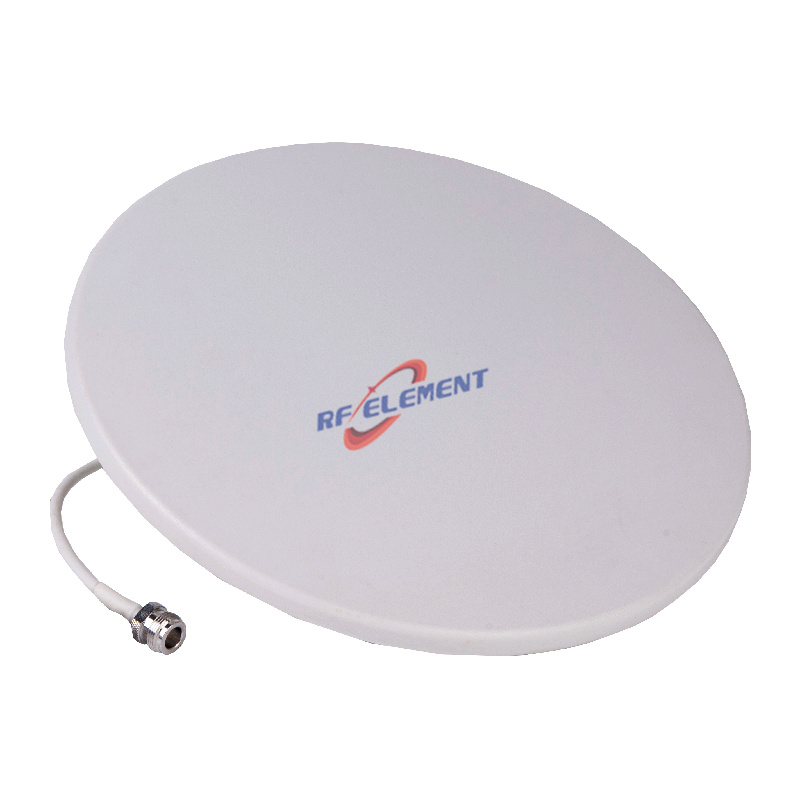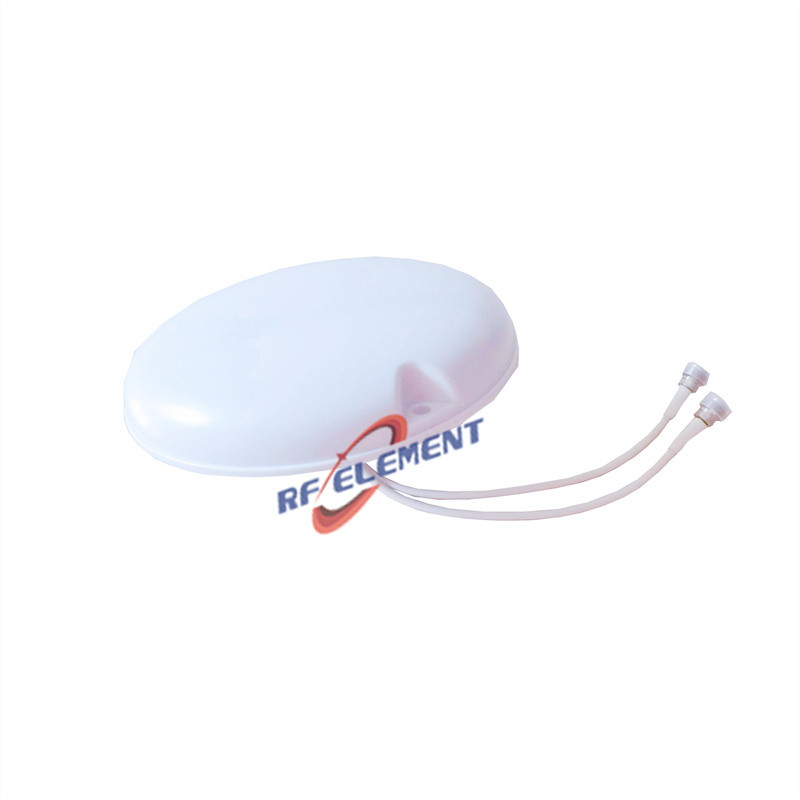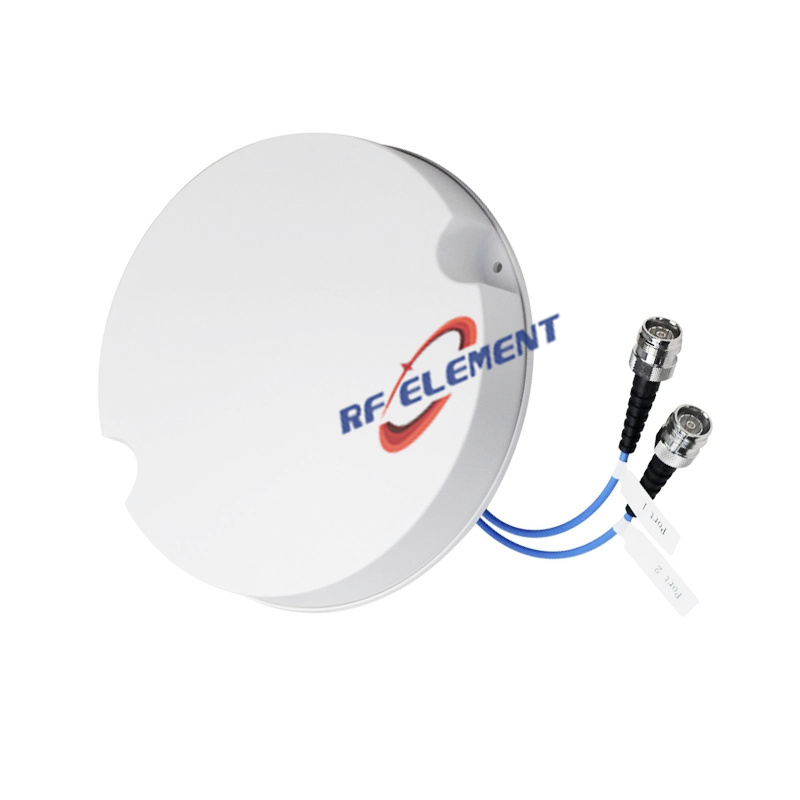
UHF Ceiling Antenna | 5G Ceiling Antenna | Wide Band 380-3800MHz
Achieve comprehensive wireless coverage with RF element's UHF 5G Ceiling Mounted Antenna. Designed for DAS systems, this 3dBi gain antenna covers 380-3800MHz, supporting 5G, 4G/LTE, 3G/GSM, Wi-Fi, UHF, and VHF UHF applications. Its ultrathin profile and easy installation make it ideal for distributing signals throughout your building. Request a quote now!
Specifications
A ceiling antenna that starts at 380 MHz, not 698. That lower edge is the reason the unit exists: it covers the UHF private mobile radio bands used by public safety, utilities, transport and site operations in the same housing as 4G and 5G, so a single ceiling layer serves both the radio system and the cellular system. Coverage runs to 3800 MHz with 1.5 to 5 dBi of gain depending on the sub-range.
The 380-698 MHz gap
Most wideband ceiling antennas begin at 698 MHz because that is where the cellular low band starts. Below it sits a large block of spectrum that is still in daily use: TETRA and P25 around 380-470 MHz, UHF business radio, telemetry and site trunking. A building that needs indoor coverage for both a radio system and a cellular system normally ends up with two antenna types, two cable schedules and two sets of ceiling penetrations. Extending the radiator down to 380 MHz removes the duplication.
The cost is visible in the return loss: 2.0 at 380-400 MHz, 1.8 at 400-698 MHz, tightening to 1.5 through the cellular bands. That 2.0 figure is honest rather than decorative, and it means the bottom 20 MHz of the range should not be the primary design band. If the radio system sits at 380-400 MHz exactly, check the link budget with that figure in hand.
Gain across six sub-ranges
Gain is 1.5 dBi at 380-400 MHz, 2.5 dBi at 400-698 MHz, 3.5 dBi at 698-960 MHz, 4.5 dBi at 1350-1550 MHz, 5.0 dBi at 1710-2700 MHz and 4.5 dBi at 3300-3800 MHz. The peak in the mid band is deliberate: that is where the cellular traffic sits, while the low bands are there for coverage rather than capacity.
| Frequency Range | 380-3800MHz | |||||
| Frequency Sub-Range(MHz) | 380-400 | 400-698 | 698-960 | 1350-1550 | 1710-2700 | 3300-3800 |
| Polarization | Vertical | |||||
| Gain(dBi) | 1.5±0.5 | 2.5±0.5 | 3.5±0.5 | 4.5±0.5 | 5.±0.5 | 4.5±0.5 |
| Horizontal Beamwidth | 360° | |||||
| Impedance | 50Ω | |||||
| VSWR | ≤ 2.0 | ≤ 1.8 | ≤ 1.5 | ≤ 1.5 | ≤ 1.5 | ≤ 1.8 |
| Maximum Power | 50W | |||||
| Connector Type | 1 Port, 4.3-10 Female or N-Type Female | |||||
| Length | 280 mm | |||||
| Width | 280 mm | |||||
| Depth | 18 mm | |||||
| Net Weight | 0.5 kg | |||||
| Operating Temperature | -55° to +60° C (-67° to +140° F) | |||||
| Radome Material | ABS | |||||
| Radome Color | White | |||||
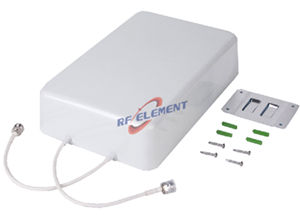
| Mounting Options | Fasteners and screws included for wall mounting | |||||
Maximum power is 50 W and the connector is a single 4.3-10 or N-Type Female. No PIM figure is quoted for this model, which is consistent with a wideband design aimed at combined radio and cellular coverage rather than a multi-operator passive layer. For a shared DAS with high carrier power, a dedicated low PIM unit is the better choice.
Where it earns its cost
Airports, metro stations, hospitals, tunnels and large industrial sites typically run a radio system alongside cellular. In those buildings the marginal cost of a 380-3800 MHz radiator over a 698-3800 MHz one is small compared with the cost of a second antenna type, a second cable schedule and a second commissioning record. In a pure cellular office floor, the lower edge is dead weight and a 698 MHz unit is cheaper.
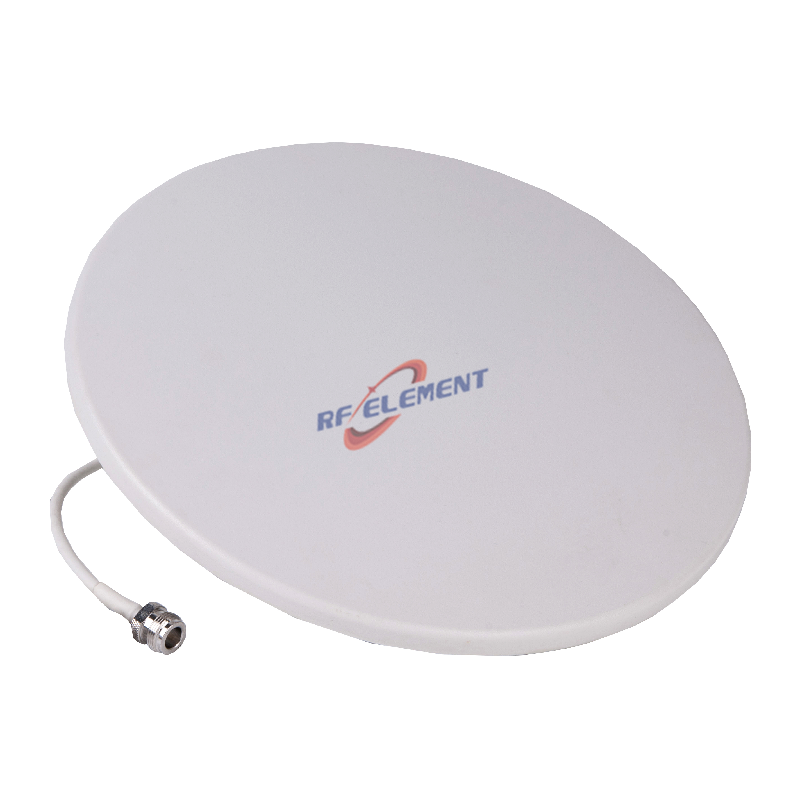
On a 280 mm plate at 18 mm deep, the unit fits a standard grid from below and weighs 0.5 kg. Keep 250 mm clear of metal above it, and be aware that at 380 MHz the wavelength is long enough that nearby structural steel affects the pattern more than it would at 2 GHz.
Pairing with the radio layer
For buildings where the radio system is the primary requirement and cellular is secondary, the public safety antenna range covers dedicated UHF and TETRA designs with the same connector and mounting conventions. Where the cellular layer needs PIM performance below -150 dBc, the low PIM cellular ceiling unit covers 698-3800 MHz without the UHF extension.
Customisation and ordering
Connector type, radome colour and packing quantity are selectable. The 380 MHz lower edge is set by the radiator length and cannot be extended downward without a larger housing. Samples in 3-5 days, production in 15-25 days.
Send the radio system frequency, the cellular band plan and the ceiling height. If the radio system sits above 450 MHz, a 450-3800 MHz variant may be possible on request; below 400 MHz the current housing is the limit.
FAQ — UHF Ceiling Antenna
What is the UHF Ceiling Antenna used for?
What frequency band does the UHF Ceiling Antenna cover?
What are the key specifications of the UHF Ceiling Antenna?
Can RF element customize the UHF Ceiling Antenna for my application?
What is the MOQ and lead time for the UHF Ceiling Antenna?
How do I get a quotation for the UHF Ceiling Antenna?